Unlocking Your Garden’s Butterfly Magnetism: 5 Essential Tips for a Thriving Haven
Imagine a garden alive with the gentle flutter of wings, a kaleidoscope of colors dancing among your blooms. Attracting butterflies isn’t just about beauty; it’s about creating a vibrant, ecological sanctuary that supports these vital pollinators and enriches your outdoor space. Many gardeners dream of a thriving butterfly haven, but sometimes feel unsure where to begin. The good news is, it’s simpler than you might think to transform your garden into a irresistible destination for monarchs, swallowtails, and countless other species. With a few thoughtful strategies, you can provide everything butterflies need to flourish, from essential nourishment to safe shelter, all while enjoying the magic they bring. Let’s explore five practical gardening tips that will help you cultivate a truly magnetic butterfly garden.
The Core Principles of a Butterfly-Friendly Garden
Creating a garden that draws butterflies consistently boils down to understanding their fundamental needs: food, water, and shelter throughout their life cycle. This means providing nectar sources for adult butterflies, host plants for their caterpillars, protection from predators and harsh weather, and safe places to overwinter. By integrating these elements into your landscape, you’re not just planting flowers; you’re building a miniature ecosystem. Each of the following tips contributes to one or more of these crucial requirements, making your garden a complete and welcoming habitat.
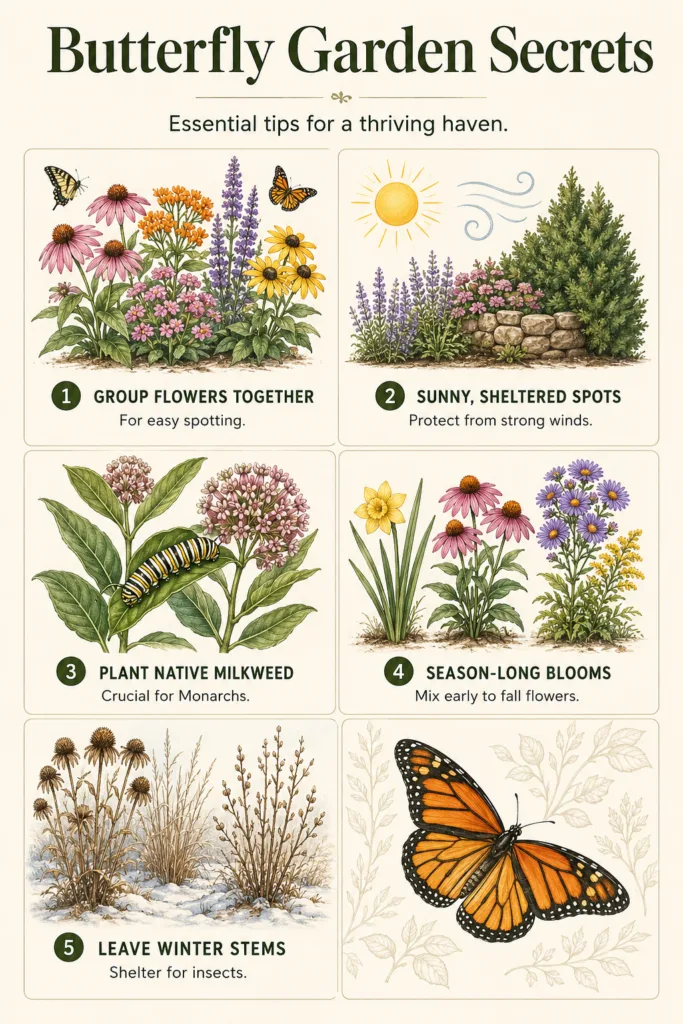
1. Group Flowers Together for Maximum Impact
Butterflies are highly efficient foragers. When they spot a large, concentrated patch of their favorite nectar-rich flowers, it signals a plentiful food source, saving them energy as they move from bloom to bloom. Planting flowers in drifts or large groups (at least 3-5 feet wide, if space allows) makes your garden more visible and appealing from above, acting like a beacon. This strategy also simplifies their feeding process, allowing them to gather more nectar with less effort compared to scattered individual plants.
- Planting Tip: Choose diverse flower shapes and sizes to accommodate different butterfly species. Flat-topped clusters like Yarrow (Achillea millefolium) and open daisy-like flowers such as Coneflower (Echinacea purpurea) and Black-eyed Susan (Rudbeckia hirta) are particularly attractive. For taller plants, consider planting them behind shorter varieties to create a tiered effect that’s both visually appealing and accessible.
- Sunlight & Soil: Most nectar plants thrive in full sun (6+ hours daily) and well-draining soil.
- Watering: Ensure consistent moisture, especially during establishment, but avoid soggy conditions.
2. Design Sunny, Sheltered Spots
Butterflies are cold-blooded creatures, relying on external heat to warm their bodies for flight. They often bask in sunny areas to regulate their temperature, especially in the morning. However, strong winds can make it difficult for them to feed and fly, and can even damage their delicate wings. Creating sheltered sun traps is therefore key.
- Placement: Position your butterfly garden where it receives ample direct sunlight throughout the day. Consider planting near a south-facing wall, a fence, or a dense evergreen shrub to provide a windbreak. Stone walls or large rocks in sunny spots can absorb heat, offering butterflies a warm surface to rest on.
- Plant Choices: Plants like Lavender (Lavandula angustifolia) and Butterfly Bush (Buddleja davidii – though choose sterile or native alternatives where invasive concerns exist) thrive in sunny, well-drained spots and are excellent nectar sources. Evergreen shrubs, like Junipers or certain Hollies, not only provide shelter but can also offer a continuous backdrop.
- Water Source: A shallow dish filled with moist sand or pebbles (a “puddling station”) allows butterflies to drink water and absorb essential minerals without getting their wings wet.
3. Plant Native Milkweed for Monarchs
This is arguably the single most critical tip for supporting Monarch butterflies. Milkweed (Asclepias spp.) is the ONLY host plant for Monarch caterpillars, meaning they cannot complete their life cycle without it. Female Monarchs lay their eggs exclusively on milkweed plants, and the caterpillars feed on its leaves before pupating. Planting native species of milkweed ensures you’re providing the most suitable food source for Monarchs in your region.
- Which Milkweed? Avoid tropical milkweed (Asclepias curassavica) in warmer climates (USDA Zones 8-11) as it can disrupt Monarch migration patterns and promote parasite buildup. Instead, opt for species native to your area. Common native options include:
- Common Milkweed (Asclepias syriaca): Hardy zones 3-9, adaptable to various soils.
- Swamp Milkweed (Asclepias incarnata): Hardy zones 3-9, prefers moist soil, good for rain gardens.
- Butterfly Weed (Asclepias tuberosa): Hardy zones 3-9, prefers dry, sandy soil, bright orange flowers.
- Whorled Milkweed (Asclepias verticillata): Hardy zones 3-9, tolerant of dry soils.
- Exposure: All milkweed varieties prefer full sun.
- Planting: Plant milkweed in groups to make it easier for Monarchs to find and for a sustained food source for caterpillars. Be prepared for the caterpillars to chew leaves extensively – this is a sign of success!
4. Ensure Season-Long Blooms
Butterflies are active from early spring through late fall, depending on your climate. To support them continuously, your garden needs a succession of blooming plants that provide nectar throughout the growing season. This ensures that early emerging butterflies, summer residents, and late-season migrators (like Monarchs heading south) always have a food source.
- Early Spring: Crocuses, Daffodils (Narcissus spp.), and early blooming trees like Serviceberry (Amelanchier spp.) provide crucial nectar for the first emerging butterflies.
- Mid-Summer: This is when your garden should be bursting with color. Coneflowers (Echinacea), Phlox (Phlox paniculata), Bee Balm (Monarda spp.), and Zinnia (Zinnia elegans) are excellent choices.
- Late Summer/Fall: As other plants fade, late bloomers become vital. Asters (Symphyotrichum spp.), Goldenrod (Solidago spp.), and Sedum (Hylotelephium spectabile) provide essential fuel for migrating butterflies.
- Planning: When selecting plants, check their bloom times and stagger them to ensure continuous nectar flow. Research native plant nurseries for species adapted to your USDA hardiness zone and local conditions.
5. Leave Winter Stems for Overwintering Insects
While a tidy garden might seem appealing, it can be detrimental to beneficial insects, including butterflies and native bees, that overwinter in plant stems and leaf litter. Many species spend the colder months as eggs, larvae, pupae, or even adults tucked away in hollow stalks, under bark, or beneath fallen leaves.
- Delayed Cutback: Instead of cutting back all your perennials in the fall, leave the dried stalks and seed heads standing through winter. Plants like Coneflowers (Echinacea), Black-eyed Susans (Rudbeckia), and various grasses offer valuable shelter and food (seeds for birds) during the dormant season.
- When to Prune: Wait until early spring, after temperatures consistently stay above freezing and new growth begins to emerge, to cut back old stems. Aim for late March or April in many temperate zones. This allows overwintering insects to safely emerge when conditions are favorable.
- Leaf Litter: Where possible, allow some leaf litter to remain under shrubs and trees. This provides critical insulation and shelter for many insects and small wildlife.
Common Mistakes to Avoid in Your Butterfly Garden
Even with the best intentions, some practices can inadvertently harm your butterfly efforts:
- Using Pesticides: Insecticides, even “organic” ones, can be deadly to butterflies and their caterpillars. Avoid all pesticides in and around your butterfly garden. Embrace a little natural munching on leaves; it’s a sign your host plants are working!
- Over-Tidying: As mentioned, removing all plant debris in fall eliminates critical overwintering sites. A slightly “messy” garden is a healthy one for wildlife.
- Ignoring Host Plants: Nectar plants feed adult butterflies, but host plants are essential for their offspring. Without host plants, you’re only seeing transient visitors, not supporting a sustainable population.
- Lack of Diversity: Relying on just one or two types of plants limits the variety of butterflies you can attract. A diverse mix of native plants will draw a wider array of species.
- Insufficient Sun/Shelter: Butterflies need warmth to fly. Planting nectar sources in consistently shaded or overly windy areas will render them less effective.
Regional Considerations Across the U.S.
Gardening for butterflies is always enhanced by understanding your local climate and ecosystem. While the core tips remain true, the specific plant choices will vary significantly:
- Zones 3-5 (Northern States): Focus on cold-hardy native perennials like Bee Balm (Monarda), Blazing Star (Liatris), and native milkweeds. Winter survival for insects is paramount, so leaving stems standing is even more critical.
- Zones 6-8 (Mid-Atlantic to Pacific Northwest): A broader range of plants is available. Incorporate long-blooming perennials like Coneflowers, Phlox, and Asters. Research local native plant societies for best milkweed varieties.
- Zones 9-11 (Southern & Southwestern States): Many tropical plants can thrive here, but prioritize native alternatives to avoid invasive species and support local butterfly populations. Choose native milkweeds carefully to avoid disrupting monarch migration. Consider drought-tolerant options if in arid regions.
Always check with your local university extension office or native plant society for the most accurate and up-to-date recommendations for your specific microclimate and USDA hardiness zone.
Cultivate a Living Masterpiece
Creating a butterfly garden is a journey of observation, learning, and immense reward. By grouping flowers, providing sunny, sheltered spots, planting native milkweed, ensuring season-long blooms, and leaving winter stems, you’re not just growing plants; you’re nurturing life. Each butterfly that graces your garden is a testament to your efforts, a tiny, vibrant ambassador of nature’s delicate balance. Step by step, you can transform your outdoor space into a sanctuary that brings joy to you and vital support to these magnificent pollinators. Start today, and watch your garden come alive!