Are your tomato plants sprawling across the garden? Do your cucumbers look like they’re trying to escape their bed? If so, you’re not alone! Many gardeners face the challenge of managing vigorous climbing vegetables. The secret to a tidy, productive, and healthy garden often lies in one simple solution: the perfect trellis!
Trellises aren’t just for aesthetics; they are hardworking garden tools that provide essential support, improve air circulation, reduce pest issues, and make harvesting a breeze. Let’s explore why trellising is a game-changer for your climbing vegetables and how to choose the best one for your home harvest.
Why Trellis Your Climbing Vegetables?
Before diving into the types of trellises, let’s understand the immense benefits they bring to your garden:
- Maximizes Space: Climbing plants grow vertically, freeing up precious ground space for other crops or simply making your garden feel larger and less crowded.
- Improves Air Circulation: Lifting plants off the ground allows for better airflow around foliage, reducing humidity and the risk of fungal diseases like powdery mildew.
- Reduces Pest and Disease Issues: Keeping leaves and fruit off the soil minimizes contact with soil-borne pathogens and makes it harder for ground-dwelling pests to reach your plants.
- Cleaner, Healthier Produce: Vegetables grown off the ground are less likely to be muddy, damaged by slugs, or rot from constant contact with moist soil.
- Easier Harvesting: No more bending and searching through dense foliage! Trellised plants present their harvest at a convenient height, making picking quick and enjoyable.
- Increases Yield: Healthy, well-supported plants often put more energy into producing fruit, leading to a more abundant harvest.
Choosing the Perfect Trellis for Your Garden
The best trellis depends on the type of plant you’re growing, your available space, and your aesthetic preference. Here are some popular options:
1. A-Frame Trellises
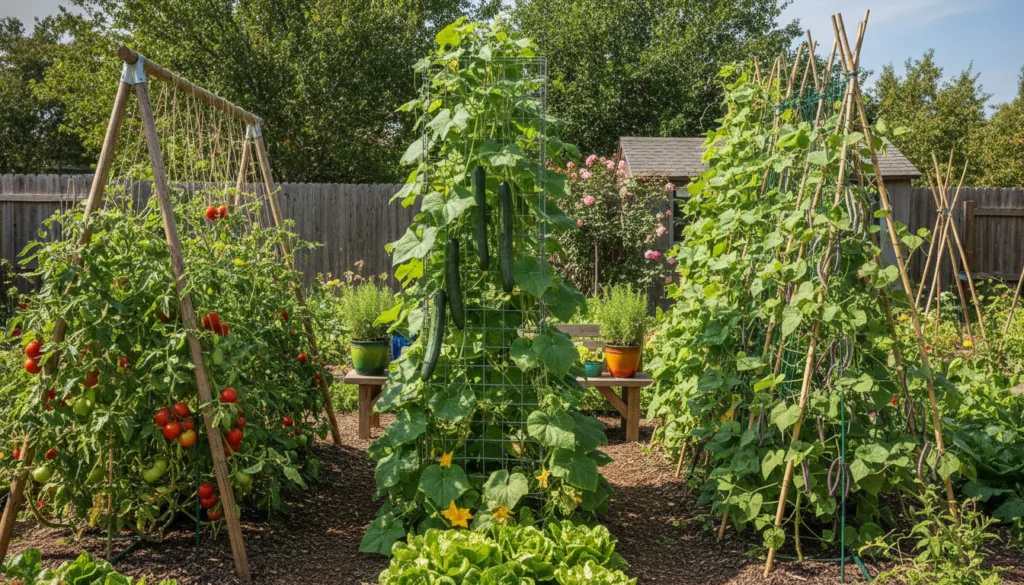
These trellises form an ‘A’ shape, with two panels leaning against each other. They are excellent for vining plants like cucumbers, pole beans, and some squash varieties. They offer good stability and allow for easy access to plants from both sides.
- Best for: Cucumbers, pole beans, small vining squash.
- Pros: Stable, easy access, good air circulation.
- Cons: Can take up more ground space than vertical options.
2. Obelisk or Teepee Trellises
An obelisk or teepee trellis is a conical structure made from stakes or a metal frame. They create a beautiful focal point in the garden and are perfect for plants that naturally climb upwards in a spiraling fashion.
- Best for: Peas, small indeterminate tomatoes, vining flowers like morning glories.
- Pros: Visually appealing, sturdy, space-efficient for single plants.
- Cons: May not provide enough support for very heavy, sprawling plants.
3. Netting or Mesh Trellises
Made from nylon, plastic, or metal mesh, these are versatile and can be strung between posts or along a fence. They offer numerous attachment points for tendrils and vining stems.
- Best for: Cucumbers, peas, pole beans, vining squash, gourds.
- Pros: Flexible, cost-effective, great for extensive vertical growth.
- Cons: Can be difficult to remove plant matter at the end of the season; some materials may not be as durable.
4. Staked Trellises (for Tomatoes)
While often used for single plants, sturdy stakes can form a simple trellis system. For tomatoes, cages are a popular form of ‘trellising’ that provides all-around support.
- Best for: Indeterminate tomatoes, peppers, eggplants (for extra support).
- Pros: Simple, effective for heavy fruit-bearing plants.
- Cons: Requires individual staking or caging, can be less aesthetically pleasing than other options.
5. Fence Trellises
If you have an existing fence, you already have a built-in trellis! Simply train your climbing plants along the fence line using ties or clips. This is an excellent way to utilize vertical space efficiently.
- Best for: Almost any climbing plant, especially those that spread widely like vining squash or grapes.
- Pros: Utilizes existing structures, cost-effective, great for long rows.
- Cons: Can make accessing plants from both sides challenging if the fence is solid.
Tips for Trellising Success
Once you’ve chosen your trellis, here are a few extra tips to ensure your climbing veggies thrive:
- Install Early: Put your trellises in place when plants are young. This prevents disturbing established root systems and makes guiding plants much easier.
- Guide Gently: As your plants grow, gently guide their tendrils or main stems onto the trellis. You may need to use soft ties (like old pantyhose or fabric strips) to secure them initially.
- Choose Strong Materials: Ensure your trellis material is strong enough to support the mature weight of your plants, especially for heavy-fruit bearers like squash and large tomatoes.
- Consider Sun Exposure: Position your trellises so that taller plants don’t shade out shorter, sun-loving crops.
- Maintain Regularly: Prune excess foliage to improve air circulation further and remove any dead or diseased parts. Keep an eye out for any plants that might be trying to escape their support!
Grow Strong, Harvest Abundant!
Incorporating trellises into your garden is a simple yet incredibly effective way to boost plant health, maximize your space, and enjoy a more bountiful harvest. Whether you opt for a classic A-frame or a decorative obelisk, providing your climbing veggies with the support they need will lead to stronger plants and happier gardening experiences. Get ready to watch your garden reach new heights!
What are your favorite climbing vegetables to trellis? Share your tips and experiences in the comments below!