Are you accidentally showering your houseplants with too much love? It might sound counterintuitive, but some of our green friends actually thrive when given a bit of space and less fuss! Many popular houseplants secretly prefer minimal watering and a hands-off approach, leading to healthier, happier growth. It’s all about understanding their natural rhythm and transforming your green thumb approach to truly bring out their natural beauty.
Ready to discover which plants love a little neglect? The most common reason indoor houseplants die is not neglect—it is over-attention. Excessive watering, constant repotting, and frequent chemical fertilizing suffocate root systems, alter soil chemistry, and invite destructive root rot. Many popular houseplant species evolved in rocky, nutrient-poor, or drought-prone environments. For these 6 resilient varieties, stepping back and doing less is the key to lush, thriving growth.
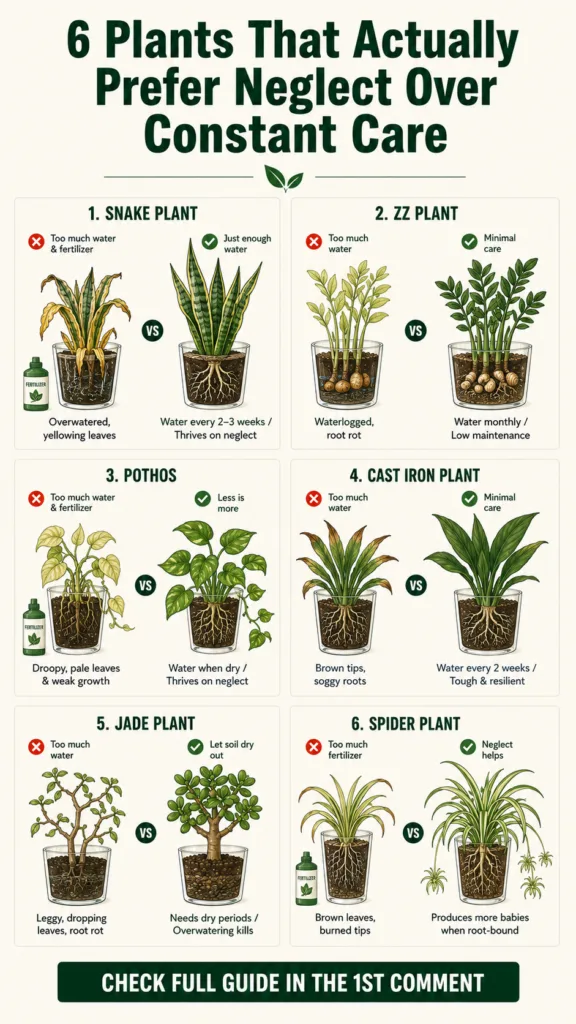
6 Plants That Actually Prefer Neglect Over Constant Care
1. Snake Plant (Dracaena trifasciata)
Snake plants are native to arid tropical West Africa, where they survive long periods between rainfall.
- The Problem with Constant Care: Frequent watering and heavy feeding cause root systems to turn mushy and foul-smelling, leading to soft, yellowing, collapsed leaves.
- Why Neglect Works: Snake plants store water in their dense, fibrous leaf tissues and utilize Crassulacean Acid Metabolism (CAM) to minimize water loss.
- Care Routine: Water once every 2 to 3 weeks during summer and once a month in winter. Allow the potting soil to dry out 100% between waterings.
2. ZZ Plant (Zamioculcas zamiifolia)
Originating from Eastern Africa, the ZZ plant is built like a natural survivor.
- The Problem with Constant Care: Similar to snake plants, overwatering is the biggest killer. It leads to rhizome rot, yellowing leaves, and a general decline in health.
- Why Neglect Works: ZZ plants have large, potato-like rhizomes underground that store water, allowing them to endure long periods without rainfall. Their waxy leaves also help reduce water loss.
- Care Routine: Water only when the soil is completely dry, typically every 2-4 weeks. Err on the side of underwatering rather than overwatering.
3. Pothos (Epipremnum aureum)
Originating from the Solomon Islands, Pothos are famously resilient jungle vines.
- The Problem with Constant Care: Daily watering or consistently moist soil causes root rot, leading to yellow leaves, black stems, and a wilted appearance even though the soil is wet.
- Why Neglect Works: Pothos can tolerate a wide range of conditions, including drought. Their sturdy stems and leaves retain moisture, and they prefer their soil to dry out significantly between waterings.
- Care Routine: Water thoroughly when the top 2-3 inches of soil are dry. This might be once a week in summer and less often in winter. They’ll tell you they’re thirsty by slightly drooping leaves.
4. Spider Plant (Chlorophytum comosum)
Native to Southern Africa, spider plants are incredibly forgiving and propagate easily.
- The Problem with Constant Care: Overwatering leads to mushy roots and black tips on their leaves. Excessive fertilizing can burn their delicate foliage.
- Why Neglect Works: Spider plants have fleshy roots that can store water and nutrients, making them tolerant of occasional dryness. They thrive on consistency, not constant fussing.
- Care Routine: Allow the top inch or two of soil to dry out between waterings. They prefer slightly moist but never soggy soil. Fertilize sparingly, if at all.
5. Aloe Vera (Aloe barbadensis miller)
A succulent native to the Arabian Peninsula, well-known for its medicinal properties.
- The Problem with Constant Care: As a succulent, aloe vera is highly susceptible to root rot if overwatered. Its fleshy leaves will turn yellow and soft, eventually collapsing.
- Why Neglect Works: Aloe stores water in its thick, gel-filled leaves, allowing it to survive in arid conditions. It needs very infrequent watering, especially in cooler temperatures.
- Care Routine: Water deeply but infrequently, only when the soil is completely dry. In winter, reduce watering significantly. Good drainage is crucial.
6. Cast Iron Plant (Aspidistra elatior)
Originating from the dark forest floors of Japan and Taiwan, it lives up to its name.
- The Problem with Constant Care: Overwatering and rich soil can lead to root rot and brown spots on the leaves. They are sensitive to too much fertilizer.
- Why Neglect Works: This plant is incredibly tough and can tolerate low light, infrequent watering, and poor soil conditions. It prefers a stable, undisturbed environment.
- Care Routine: Water only when the top few inches of soil are dry. It’s better to underwater than overwater. Fertilize once a year at most, or not at all.
General Tips for Happy, “Neglected” Plants
- Check Soil Moisture: Always feel the soil before watering. Don’t water on a rigid schedule; instead, let the plant tell you when it’s thirsty.
- Drainage is Key: Ensure all pots have drainage holes to prevent waterlogging, which is a common cause of root rot.
- Less Fertilizer: Most “neglect-loving” plants don’t need frequent feeding. Over-fertilizing can do more harm than good.
- Observe Your Plants: Learn to read the signs your plant gives you – slight wilting often means it’s thirsty, not dying. Yellowing or mushy leaves usually point to too much water.
Embracing a ‘less is more’ approach can transform your houseplant game, turning struggling plants into vibrant, healthy companions. By understanding their natural preferences, you’re not neglecting them – you’re giving them exactly what they need to thrive. So go ahead, give your green friends a little space, and watch them flourish!
Tell us in the comments: What’s your go-to low-maintenance houseplant?