Welcome, fellow garden enthusiasts! Are you dreaming of a vibrant indoor jungle or a bountiful harvest from your home garden? One of the most common challenges aspiring gardeners face is understanding the magic ingredient that makes plants thrive: light. It’s more than just turning on a lamp or placing a pot by a window; getting light right is essential for happy, healthy plants.
Today, we’re going to demystify plant light. Whether you’re a seasoned green thumb or just starting your gardening journey, this ultimate guide will help you understand your plants’ light needs and how to meet them, turning your home into a lush, thriving oasis.
Why Light Matters: The Photosynthesis Powerhouse
Think of light as food for your plants. Just like we need nutrients to grow and stay healthy, plants need light for a process called photosynthesis. This incredible natural process allows plants to convert light energy, water, and carbon dioxide into sugars (their food) and oxygen. Without enough light, plants can’t produce enough energy, leading to stunted growth, yellowing leaves, and ultimately, a struggling or dying plant.
The Role of Light in Plant Growth:
- Energy Production: Fuels all growth processes, from root development to leaf expansion and flowering.
- Chlorophyll Production: Light is crucial for producing chlorophyll, the green pigment that captures light energy and gives plants their vibrant color.
- Flowering and Fruiting: Specific light durations and intensities trigger flowering and fruit development in many plants.
Decoding Light: Intensity, Duration, and Spectrum
To truly understand plant light, we need to look beyond just ‘bright’ or ‘dim’. Three key aspects determine how effective light is for your plants:
1. Light Intensity
This refers to the brightness or strength of the light. Too little intensity means your plant isn’t getting enough energy, while too much can burn its leaves. For home gardeners, common ways to gauge intensity include:
- Window Direction: South-facing windows offer the most intense light, followed by west, east, and then north (which provides the least).
- Distance from Light Source: Light intensity decreases significantly with distance. A plant right by a window gets much more light than one several feet away.
- Grow Light Specifications: If using artificial lights, check for measurements like PAR (Photosynthetically Active Radiation) or PPFD (Photosynthetic Photon Flux Density), though often simpler terms like ‘full spectrum’ or ‘high output’ are used for home-use lights.
2. Light Duration (Photoperiod)
This is simply how long your plants are exposed to light each day. Most plants prefer 12-16 hours of light per day, followed by a period of darkness for respiration and growth regulation. Interrupting this dark period can confuse some plants, especially those that rely on specific light cycles for flowering.
3. Light Spectrum (Color)
Different colors (wavelengths) of light play different roles in plant growth. While plants use the full spectrum, red and blue light are particularly important:
- Blue Light: Essential for vegetative growth (leaves and stems) and sturdy plant structure.
- Red Light: Crucial for flowering, fruiting, and overall plant development.
- Full Spectrum: Mimics natural sunlight, providing all necessary wavelengths for balanced growth. Most general-purpose grow lights aim to provide full-spectrum light.
Natural Light vs. Artificial Light for Indoor Plants
Understanding the pros and cons of each will help you decide the best approach for your home garden.
Natural Light: Harnessing the Sun’s Power
Natural light is free, abundant (depending on your location and season), and ideal for plants. However, its intensity and duration vary significantly with factors like:
- Window Orientation: As mentioned, south windows are strongest, north are weakest.
- Season: Winter days are shorter and light is weaker than summer days.
- Obstructions: Trees, buildings, or even dirty windows can significantly reduce light.
Tips for Natural Light: Place light-loving plants closer to south-facing windows. Rotate plants regularly to ensure even growth. Clean your windows to maximize light penetration.
Artificial Light: Supplemental Sunshine
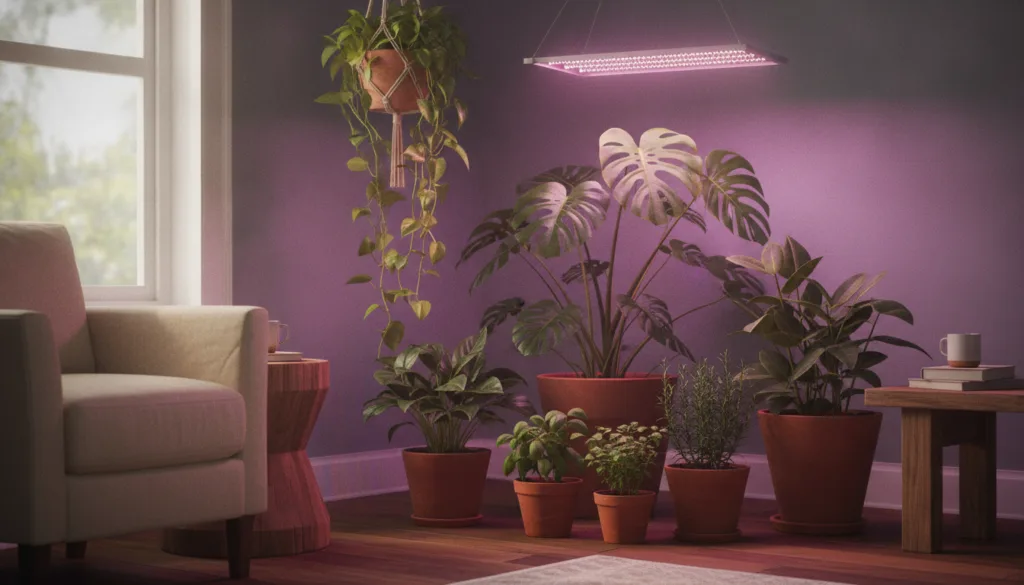
For many indoor gardeners, natural light alone isn’t enough, especially during darker months or in homes with limited sunny spots. This is where grow lights come in.
- LED Grow Lights: Energy-efficient, long-lasting, and emit little heat. Available in various spectra, including full spectrum.
- Fluorescent Lights: Good for seedlings and leafy greens, less intense than LEDs but affordable.
- Incandescent Lights: Generally not recommended for plant growth due to high heat output and inefficient spectrum.
Tips for Artificial Light: Choose a grow light with a full spectrum. Place the light at the recommended distance for your plants (check the product instructions). Use a timer to ensure consistent light duration.
Knowing Your Plant’s Needs: Low, Medium, High Light
Plants are diverse, and so are their light requirements. Matching the right plant to the right light conditions is key to success.
Low-Light Plants:
These plants prefer indirect or diffused light and can tolerate shadier spots. They often come from forest understories where they receive filtered light.
- Examples: Snake Plant (Sansevieria), ZZ Plant (Zamioculcas zamiifolia), Pothos (Epipremnum aureum), Peace Lily (Spathiphyllum).
- Signs of Too Much Light: Scorch marks, faded leaves, stunted growth.
Medium-Light Plants:
Most common houseplants fall into this category. They thrive in bright, indirect light, often a few feet away from a sunny window or in an east- or west-facing window.
- Examples: Monstera, Fiddle Leaf Fig (Ficus lyrata), Spider Plant (Chlorophytum comosum), Prayer Plant (Maranta leuconeura).
- Signs of Insufficient Light: Leggy growth, small leaves, lack of variegation (if applicable).
- Signs of Too Much Light: Yellowing leaves, crispy edges.
High-Light Plants:
These sun-lovers need at least 6-8 hours of direct, intense light daily to thrive. They are often found in open, sunny environments in nature.
- Examples: Succulents, Cacti, Herbs (Basil, Rosemary), Citrus Trees, some flowering plants (e.g., Geraniums).
- Signs of Insufficient Light: Stretching towards the light (etiolation), pale foliage, no flowering.
- Signs of Too Much Light: Burnt spots, bleached-out leaves.
Practical Tips for Optimizing Light in Your Home Garden
- Observe Your Plants: Your plants will tell you if they’re happy! Yellowing, leggy growth, or scorched leaves are all clues.
- Rotate Regularly: Turn your plants a quarter turn every week or two to ensure all sides get even light exposure and prevent uneven growth.
- Clean Leaves: Dust on leaves can block light, hindering photosynthesis. Gently wipe leaves with a damp cloth periodically.
- Supplement with Grow Lights: If natural light is lacking, invest in a good quality grow light. Timers make it easy to provide consistent light duration.
- Reflective Surfaces: White walls or reflective surfaces can help bounce light back to your plants, increasing overall intensity.
- Prune for Airflow and Light: Occasionally prune dense foliage to allow more light to penetrate inner leaves and improve air circulation.
- Group Plants by Light Needs: Create ‘light zones’ in your home to group plants with similar requirements, making care easier.
Cultivate Your Green Thumb with Confidence!
Understanding and providing the right light for your plants is a game-changer. It transforms struggling plants into flourishing beauties and allows you to expand your gardening horizons, even indoors. With this guide, you’re now equipped to diagnose light issues and create the perfect environment for your green companions.
Happy gardening!