Known as the “sunshine vitamin,” Vitamin D plays a crucial role in maintaining overall health. From strengthening your bones to supporting your immune system, its benefits are far-reaching. Many people don’t get enough of this vital nutrient, leading to potential health issues.
This article will guide you through why Vitamin D is so important, how you can get more of it from sunlight and food, and answer common questions to help you stay healthy and vibrant. Get ready to illuminate your understanding of this essential vitamin!
Why Vitamin D Matters: Key Benefits
Vitamin D is more than just a vitamin; it’s a powerful hormone that influences nearly every system in your body. Ensuring adequate levels can lead to a host of positive health outcomes.
- Strong Bones and Teeth: Vitamin D is essential for calcium absorption, which is critical for building and maintaining strong bones. It helps prevent conditions like osteoporosis in adults and rickets in children.
- Immune System Support: Research suggests Vitamin D plays a vital role in modulating the immune system, helping your body fight off infections and potentially reducing the risk of autoimmune diseases.
- Mood Regulation: Low levels of Vitamin D have been associated with mood disorders, including seasonal affective disorder (SAD) and depression. Adequate intake may help support a positive mood.
- Muscle Function: It contributes to normal muscle function and strength, which can be particularly important for balance and preventing falls in older adults.
- Heart Health: Emerging research indicates that sufficient Vitamin D levels may be linked to better cardiovascular health.
Understanding Your Vitamin D Needs
The recommended daily intake of Vitamin D can vary based on age, lifestyle, and other factors. Most adults need around 600-800 International Units (IU) per day, though some experts recommend higher amounts.
Different Forms of Vitamin D
- Vitamin D2 (Ergocalciferol): Primarily found in plant-based sources like mushrooms, and fortified foods.
- Vitamin D3 (Cholecalciferol): Produced in your skin when exposed to sunlight, and found in animal-based foods like fatty fish, and some fortified dairy products. Vitamin D3 is generally considered more effective at raising blood levels of vitamin D.
How Vitamin D Works in Your Body
When your skin is exposed to sunlight, it produces Vitamin D3. This D3, along with D2 from your diet, travels to your liver. There, it’s converted into a form called 25-hydroxyvitamin D [25(OH)D], which is the main circulating form measured in your blood to determine your Vitamin D status. This form then travels to your kidneys, where it’s converted into the active form, 1,25-dihydroxyvitamin D. This active form then goes to work, regulating calcium and phosphate levels, supporting immune function, and influencing cell growth.
Best Ways to Get More Vitamin D
Boosting your Vitamin D levels can be achieved through a combination of sun exposure, dietary choices, and sometimes supplementation.
1. Harness the Sunshine
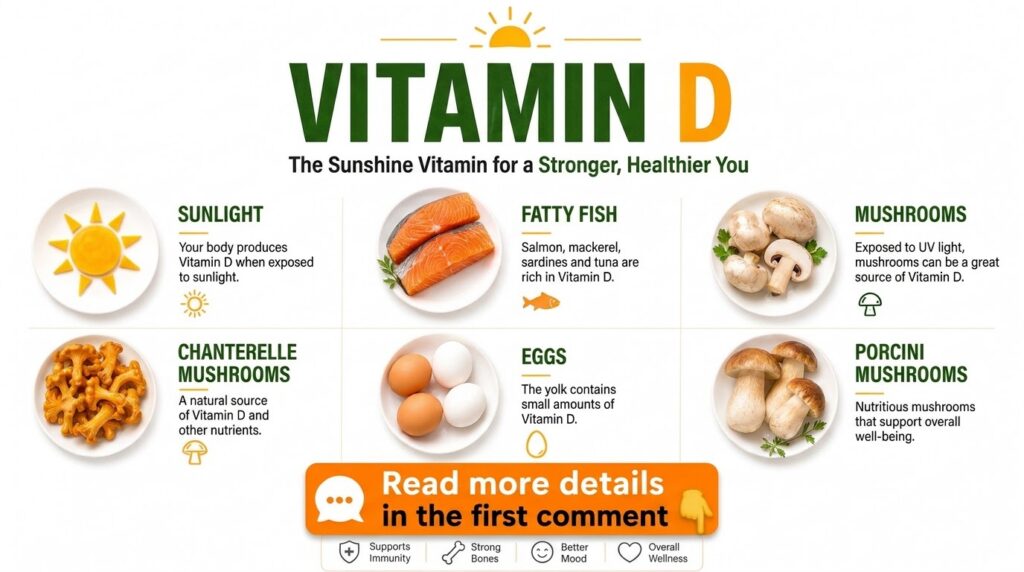
Your body naturally produces Vitamin D when your skin is exposed to ultraviolet B (UVB) rays from the sun. Short, regular sun exposure (10-30 minutes, several times a week, depending on skin type, location, and time of year) can be an effective way to maintain healthy levels. Remember to protect your skin from sunburn, especially during peak sun hours.
2. Incorporate Vitamin D-Rich Foods
While food sources alone may not provide enough Vitamin D for everyone, they are an excellent way to supplement your intake. Here are some top picks:
| Food | Calories | Protein | Carbs | Fat | Fiber | Main Nutrients | Best Benefit |
|---|---|---|---|---|---|---|---|
| Salmon (3 oz cooked) | ~175 | 25g | 0g | 8g | 0g | Vitamin D, Omega-3s | Heart health, Anti-inflammatory |
| Fortified Milk (1 cup) | ~120 | 8g | 12g | 5g | 0g | Vitamin D, Calcium | Bone strength |
| Mushrooms (UV-exposed, 1 cup) | ~20 | 2g | 3g | 0g | 1g | Vitamin D2, B Vitamins | Bone health, Vegan-friendly |
| Eggs (1 large) | ~70 | 6g | 0g | 5g | 0g | Vitamin D, Protein | Immune support |
| Canned Tuna (light, 3 oz) | ~100 | 22g | 0g | 1g | 0g | Vitamin D, Omega-3s | Convenient source, affordable |
3. Consider Supplements
If sun exposure is limited or dietary intake isn’t sufficient, your doctor may recommend a Vitamin D supplement. It’s best to discuss this with a healthcare professional to determine the right dosage for you, as excessive intake can lead to adverse effects.
Potential Risks and Deficiencies
While vital, both too little and too much Vitamin D can be problematic.
Vitamin D Deficiency
A common issue, deficiency can lead to:
- Bone pain and muscle weakness
- Increased risk of infections
- Fatigue and low mood
- Impaired bone mineralization (rickets in children, osteomalacia in adults)
Excessive Vitamin D (Toxicity)
It’s rare to get too much Vitamin D from sun or food. Toxicity almost always occurs from high-dose supplements. Symptoms of Vitamin D toxicity can include:
- Nausea, vomiting, and poor appetite
- Constipation
- Kidney problems
- Weakness and confusion
Always consult your healthcare provider before starting any new supplement regimen.
Practical Tips for Boosting Your Vitamin D
- Embrace Smart Sun Exposure: Spend 10-20 minutes outdoors most days, exposing your arms and legs. Do this during times when the UV index is moderate, and always avoid sunburn.
- Include Fatty Fish Regularly: Aim for two servings of fatty fish like salmon, mackerel, or sardines per week.
- Look for Fortified Foods: Check labels for milk, plant-based milk alternatives, cereals, and orange juice that are fortified with Vitamin D.
- Explore UV-Treated Mushrooms: Some mushrooms are specifically grown to have higher Vitamin D levels; check the packaging.
- Talk to Your Doctor: If you suspect a deficiency, get your Vitamin D levels tested. Your doctor can advise on appropriate supplementation.
FAQs About Vitamin D
Q1: How much sun exposure do I need for enough Vitamin D?
A: Generally, 10-20 minutes of midday sun exposure (when the UV index is appropriate) on exposed skin several times a week can be sufficient for many people. However, this varies based on skin type, location, and season.
Q2: Can I get enough Vitamin D from food alone?
A: It can be challenging to meet all your Vitamin D needs through food alone, especially for those with limited sun exposure. Fatty fish and fortified foods are good sources, but supplements may be necessary.
Q3: What are the symptoms of Vitamin D deficiency?
A: Symptoms can include fatigue, bone pain, muscle weakness or aches, mood changes, and frequent infections.
Q4: Are there any vegetarian or vegan sources of Vitamin D?
A: Yes, UV-exposed mushrooms (which contain D2) and fortified plant milks (soy, almond, oat) and cereals are good options. Vitamin D2 supplements are also plant-based.
Q5: Is it safe to take Vitamin D supplements every day?
A: For most people, taking a daily supplement within the recommended dosage (e.g., 600-2000 IU) is safe. Always consult a healthcare professional to determine your specific needs and avoid excessive intake.
Q6: Does sunscreen prevent Vitamin D production?
A: Yes, sunscreen effectively blocks the UVB rays that trigger Vitamin D synthesis. This is why short, unprotected sun exposure (before applying sunscreen for prolonged periods) is often recommended for Vitamin D production.
Conclusion
Vitamin D is a powerhouse nutrient vital for strong bones, a robust immune system, and a positive mood. By understanding its sources – from the sunshine on your skin to nutrient-rich foods like salmon and fortified milk – you can take proactive steps to ensure your body gets enough.
Remember, a balanced approach combining smart sun exposure, a healthy diet, and professional guidance on supplementation is key to maintaining optimal Vitamin D levels. Keep exploring our blog for more tips on healthy living and nutritious eating!
This content is for educational purposes only and should not be considered medical advice. Consult a qualified healthcare professional for personalized dietary recommendations.