Ever wonder why you sometimes feel tired, even after a good night’s sleep? Or why your energy levels seem to dip throughout the day? The answer might be closer than you think: iron! This vital mineral plays a crucial role in keeping your body running smoothly.
Iron is an essential nutrient responsible for carrying oxygen in your blood, supporting energy production, and maintaining a healthy immune system. Without enough iron, your body can’t produce enough healthy red blood cells, leading to a condition called iron-deficiency anemia, which can leave you feeling fatigued and weak.
In this article, we’ll dive into the world of iron-rich foods, explore why this mineral is so important, and share practical tips to help you boost your intake and feel your best. Get ready to discover your new favorite iron sources!
Why Iron Matters: The Powerhouse Mineral
Iron is more than just a mineral; it’s a building block for your health. Here’s a quick look at its main roles:
- Oxygen Transport: Iron is a key component of hemoglobin, a protein in red blood cells that carries oxygen from your lungs to every part of your body. It’s also part of myoglobin, which stores oxygen in your muscles.
- Energy Production: By ensuring adequate oxygen delivery, iron helps your cells produce energy efficiently. This means more stamina for your daily activities and workouts.
- Immune Function: A healthy immune system relies on sufficient iron to fight off infections and illnesses.
- Cognitive Function: Iron supports brain development and function, impacting concentration, memory, and learning.
Top Iron-Rich Foods: Your Go-To Sources
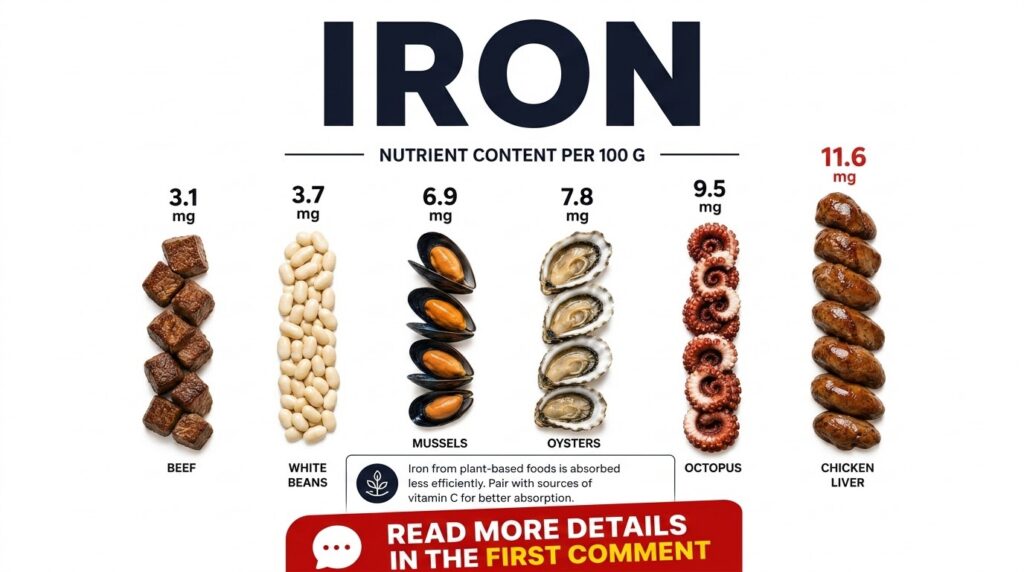
Getting enough iron is vital, and thankfully, nature provides a wealth of delicious options. Here’s a chart featuring some of the best iron sources, including both heme (animal-based) and non-heme (plant-based) iron. Remember, values are approximate and can vary.
| Food (100g serving) | Calories | Protein (g) | Carbs (g) | Fat (g) | Fiber (g) | Iron (mg) | Main Nutrients | Best Benefit |
|---|---|---|---|---|---|---|---|---|
| Lean Beef | 180-250 | 25-30 | 0 | 8-15 | 0 | 2-3 | Protein, Zinc, B12 | Muscle health, energy |
| White Beans (canned, drained) | 130-140 | 8-9 | 23-25 | 0-1 | 6-7 | 3-4 | Fiber, Folate, Magnesium | Digestive health, satiety |
| Mussels (cooked) | 80-90 | 11-12 | 3-4 | 2-3 | 0 | 6-7 | B12, Manganese, Selenium | Heart health, thyroid |
| Oysters (cooked) | 70-80 | 7-8 | 3-4 | 2-3 | 0 | 7-8 | Zinc, B12, Copper | Immune support, skin |
| Octopus (cooked) | 80-90 | 15-16 | 2-3 | 1-2 | 0 | 5-6 | Protein, B12, Selenium | Brain health, metabolism |
| Chicken Liver (cooked) | 160-170 | 24-25 | 1-2 | 6-7 | 0 | 9-10 | Vitamin A, Folate, B12 | Red blood cell formation |
| Spinach (cooked) | 20-25 | 2-3 | 3-4 | 0-1 | 2-3 | 2.5-3.5 | Vitamin K, A, Folate | Bone health, vision |
| Lentils (cooked) | 115-120 | 9-10 | 20-21 | 0-1 | 8-9 | 3-4 | Fiber, Folate, Manganese | Blood sugar control |
| Quinoa (cooked) | 120-130 | 4-5 | 21-22 | 2-3 | 2-3 | 1.5-2 | Protein, Fiber, Magnesium | Complete protein source |
| Dark Chocolate (70-85%) | 550-600 | 7-8 | 45-50 | 40-45 | 10-12 | 10-12 | Antioxidants, Magnesium | Heart health, mood |
Heme vs. Non-Heme Iron: What’s the Difference?
Not all iron is absorbed equally by your body. There are two main types:
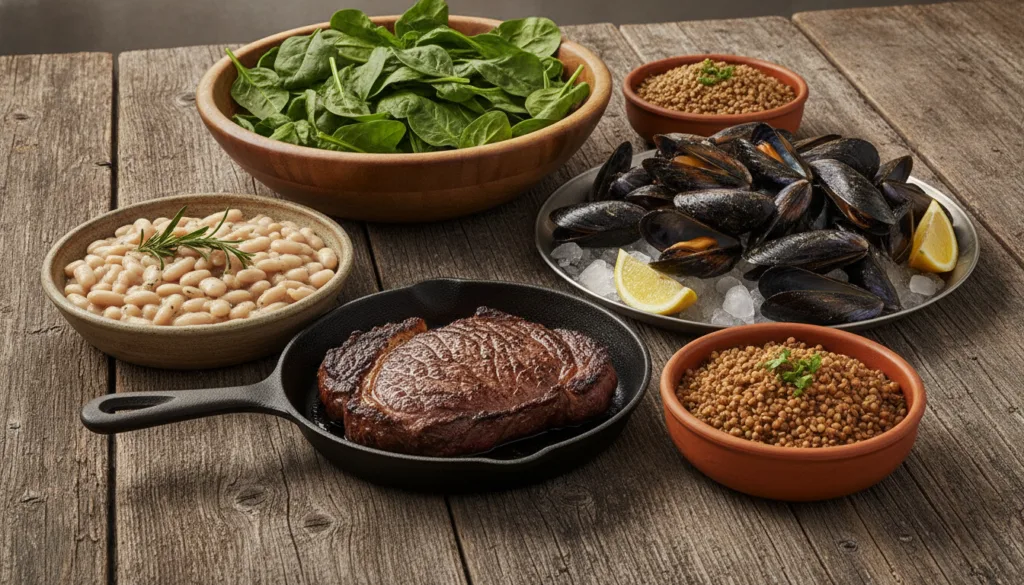
- Heme Iron: Found in animal products like red meat, poultry, and fish. It’s highly absorbable, meaning your body can use a significant portion of it.
- Non-Heme Iron: Found in plant-based foods like grains, legumes, vegetables, and some animal products (like eggs). It’s less absorbable than heme iron, but its absorption can be significantly improved.
Boost Your Iron Absorption
Even if you’re eating iron-rich foods, you might not be absorbing all the iron you need. Here’s how to maximize your intake:
- Pair with Vitamin C: This is a game-changer for non-heme iron! Vitamin C helps convert non-heme iron into a form that’s easier for your body to absorb. Think citrus fruits, bell peppers, tomatoes, and broccoli. For example, add bell peppers to your lentil soup or a squeeze of lemon juice over spinach.
- Avoid Tannins and Phytates: Compounds found in tea, coffee, and some whole grains and legumes can inhibit iron absorption. While these foods have their own benefits, try to consume them separately from iron-rich meals, or at least an hour or two apart.
- Cook in Cast Iron: Cooking in cast iron cookware can actually increase the iron content of your food, especially acidic foods like tomato sauce.
Serving Suggestions for Iron-Rich Meals
Incorporating more iron into your diet can be delicious and easy:
- Breakfast Boost: Add cooked spinach to your scrambled eggs or omelet. Enjoy oatmeal with a sprinkle of pumpkin seeds and a handful of berries (for Vitamin C!).
- Lunch Power: A lentil or white bean salad with plenty of colorful veggies. A tuna salad sandwich on whole wheat bread.
- Dinner Delights: Lean beef stir-fry with broccoli and bell peppers. Mussels steamed in white wine with garlic. A hearty chicken liver pate on whole-grain toast.
- Snack Smarts: A small handful of dark chocolate (70%+ cocoa) or a bowl of edamame.
Who Should Pay Extra Attention to Iron Intake?
While everyone needs iron, certain groups are at higher risk of deficiency:
- Women of Reproductive Age: Due to menstrual blood loss.
- Pregnant Women: Increased blood volume and fetal development demand more iron.
- Vegetarians and Vegans: Rely solely on non-heme iron sources, requiring careful planning.
- Endurance Athletes: Intense physical activity can increase iron needs.
- Infants and Young Children: Especially those who are rapidly growing.
- Individuals with Certain Health Conditions: Such as celiac disease or inflammatory bowel disease, which can impair absorption.
Practical Tips for a Balanced Iron-Rich Diet
- Prioritize Whole Foods: Focus on real, unprocessed foods to get a wider spectrum of nutrients.
- Read Food Labels: Check the iron content of fortified cereals and plant-based milks.
- Meal Prep for Success: Prepare iron-rich components like cooked lentils or grilled chicken at the start of the week.
- Consult a Professional: If you suspect an iron deficiency, speak to your doctor or a registered dietitian. They can provide personalized advice and recommendations.
FAQs About Iron and Your Diet
What are the signs of iron deficiency?
Common signs include fatigue, weakness, pale skin, shortness of breath, dizziness, cold hands and feet, brittle nails, and unusual cravings for non-food items like ice (pica).
Can I get too much iron from food?
It’s very difficult to get too much iron from food sources alone. Iron overload (hemochromatosis) is usually caused by genetic conditions or excessive supplementation. Always consult a doctor before taking iron supplements.
Are plant-based iron sources as good as meat sources?
Plant-based (non-heme) iron is less bioavailable than heme iron. However, by strategically pairing non-heme iron foods with Vitamin C, you can significantly boost its absorption, making plant-based diets perfectly capable of providing adequate iron.
How much iron do I need daily?
Daily iron needs vary by age, sex, and life stage. Adult men typically need 8 mg/day, while adult women (19-50 years) need 18 mg/day due to menstruation. Pregnant women require even more, around 27 mg/day. Consult health guidelines or a professional for personalized recommendations.
What foods inhibit iron absorption?
Foods high in calcium (like dairy products), phytates (in whole grains and legumes), and tannins (in tea, coffee, and red wine) can inhibit non-heme iron absorption. It’s best to consume these in moderation around iron-rich meals.
Is fortified cereal a good source of iron?
Many breakfast cereals are fortified with iron, making them a convenient source, especially for non-heme iron. Pair them with a glass of orange juice or berries to enhance absorption.
Conclusion
Iron is an indispensable mineral for maintaining your energy, vitality, and overall health. By understanding the best food sources and smart absorption strategies, you can easily ensure your body gets the iron it needs. Whether you prefer the rich flavors of lean beef and mussels or the wholesome goodness of lentils and spinach, there are plenty of delicious ways to power up your plate.
Start experimenting with these iron-rich foods today and feel the difference in your energy levels and well-being!
This content is for educational purposes only and should not be considered medical advice. Consult a qualified healthcare professional for personalized dietary recommendations.