Welcome, fellow garden lovers! Growing your own vegetables is one of life’s most rewarding pleasures, offering fresh flavors and a connection to nature. But have you ever wondered why some plants thrive while others struggle, even with the best soil and watering habits? Often, the secret lies in one crucial element: sunlight!
Understanding how much sun your vegetables need is fundamental to a bountiful harvest. Just like us, plants have specific preferences when it comes to sun exposure, and getting it right can transform your garden from mediocre to magnificent. Let’s dig into the sunshine secrets that will help your veggies flourish!
Decoding Sunlight: What Do These Terms Mean?
Before we jump into specific veggies, let’s clarify what gardening terms like ‘full sun’ or ‘partial shade’ actually mean for your garden. Knowing these definitions will empower you to choose the perfect spot for every plant.
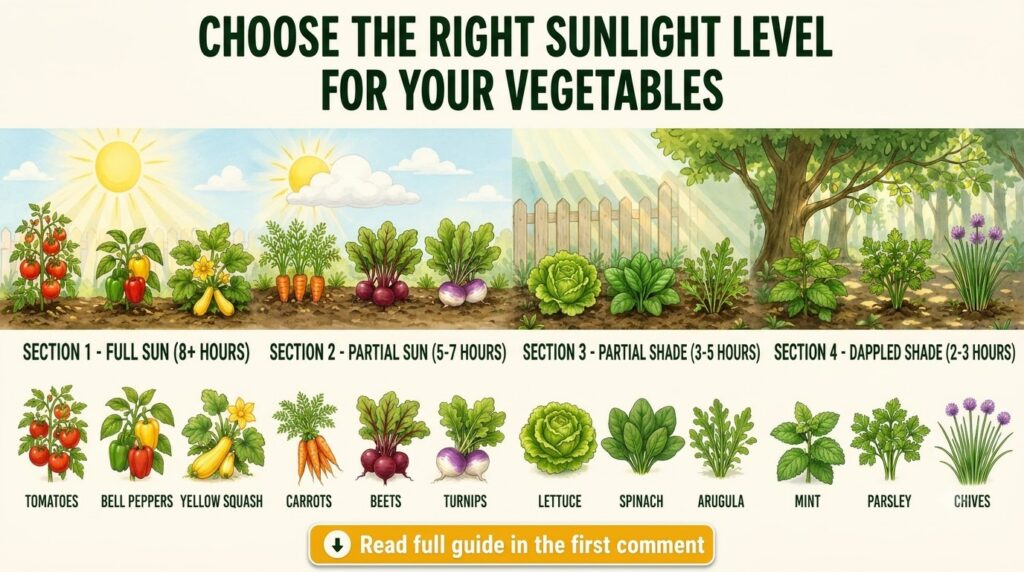
Full Sun (6+ hours of direct sunlight)
This is the prime real estate for many sun-loving vegetables. Full sun means your plants receive at least six, and ideally eight or more, hours of direct, unfiltered sunlight per day. Think of it as a plant’s all-day beach vacation!
Partial Sun (4-6 hours of direct sunlight)
Plants in a ‘partial sun’ spot prefer a good amount of sunshine but can also benefit from some afternoon shade, especially in hotter climates. They need a solid 4-6 hours of direct sun daily to produce well.
Partial Shade (2-4 hours of direct sunlight)
This term describes areas that get some direct sun, typically 2-4 hours, but are shaded for the rest of the day. Often, this means morning sun and afternoon shade, which can be ideal for certain delicate greens.
Dappled Shade (Filtered sunlight throughout the day)
Dappled shade is when sunlight filters through tree leaves or a trellis, creating a soft, shifting light pattern throughout the day. It’s not direct sun, but rather a gentle, intermittent light that some plants adore.
Sunlight Preferences for Your Favorite Veggies
Now that we understand the lingo, let’s look at which vegetables thrive in each light condition. This guidance will help you plan your garden layout like a pro!
Veggies That Crave Full Sun
Most fruiting vegetables, which produce flowers that turn into fruits (like tomatoes or peppers), are true sun worshippers. They need intense light to develop their fruits to their full potential.
- Tomatoes: The quintessential full-sun veggie!
- Peppers: Both sweet and hot varieties need ample sun.
- Eggplant: Loves the heat and light.
- Squash & Zucchini: These prolific growers need lots of energy from the sun.
- Cucumbers: Produce best with long hours of direct sunlight.
- Corn: Needs full sun to develop those tall stalks and sweet ears.
- Beans (Pole & Bush): While tolerant, they yield more in full sun.
Veggies for Partial Sun or Partial Shade
These vegetables can tolerate or even prefer a break from the most intense afternoon sun, especially in warmer zones. They still need a good amount of light but can benefit from some protection.
- Lettuce & Leafy Greens: Many varieties will bolt (go to seed) faster in full, hot sun. Morning sun with afternoon shade is perfect.
- Spinach: Similar to lettuce, it prefers cooler conditions provided by partial shade.
- Radishes: Quick growers that appreciate some shade, preventing them from becoming too spicy.
- Carrots: While they can take full sun, partial shade can prevent soil from drying out too quickly, aiding root development.
- Beets: Tolerant of partial shade, especially for their greens.
- Broccoli & Cauliflower: These brassicas can appreciate afternoon shade to prevent bolting in hot weather.
- Swiss Chard: A versatile leafy green that does well with partial sun.
Veggies for Dappled Shade
While most vegetables prefer at least some direct sun, a few can still produce in dappled shade or benefit from very light, filtered sun.
- Herbs (Mint, Cilantro, Parsley): Many herbs prefer partial or dappled shade, especially in the afternoon. Mint can even become invasive in full sun!
- Some Leafy Greens: Very tender greens might do okay, but growth will be slower and less robust than in partial sun.
Tips for Sunlight Success in Your Garden
- Observe Your Garden: Before planting, spend a full day observing different spots in your garden. Note where the sun hits and for how long. Use a sun calculator app or simply a notepad and a timer.
- Plan Your Layout: Group plants with similar sun requirements together. Place taller plants (like corn or pole beans) where they won’t shade out shorter, sun-loving plants.
- Consider the Season: Sunlight patterns change throughout the year. A spot that gets full sun in spring might be partially shaded by a mature tree in summer.
- Use Raised Beds or Containers: These offer flexibility. You can move containers to optimize sun exposure or use raised beds in the sunniest parts of your yard.
- Prune for Light: If an overgrown shrub or tree is casting too much shade, consider judicious pruning to allow more light to reach your garden beds.
Cultivate Your Bountiful Home Harvest!
Mastering sunlight requirements is a game-changer for any gardener. It’s not about finding the perfect garden, but about understanding and working with the light you have. By matching your plants to their ideal sun exposure, you’re setting them up for success, leading to healthier plants and a more abundant home harvest.
So grab your gardening hat, observe your sun patterns, and get ready to enjoy the fruits (and veggies!) of your labor. Happy gardening, everyone!