Imagine stepping into your garden on a crisp winter day and harvesting fresh, homegrown vegetables! While many gardeners pack up their tools as autumn arrives, September actually opens up a fantastic opportunity to plant for a bountiful winter harvest. With a little planning and the right choices, you can extend your gardening season and enjoy fresh produce long after the first frost.
At Garden – L. Quyên, we believe that gardening is a year-round joy. Sowing certain vegetables in September allows them to establish before the deep cold sets in, maturing slowly through the cooler months or being ready for an early spring pick. It’s an incredibly rewarding way to maximize your garden’s potential and enjoy fresh, organic produce even when the snow flies!
Why Sow in September for Winter?
September planting takes advantage of several key benefits:
- Milder Soil Temperatures: The soil is still warm enough from summer for seeds to germinate effectively, but the scorching heat is gone, reducing stress on young seedlings.
- Moisture: Autumn often brings more consistent rainfall, which can aid germination and growth.
- Fewer Pests: Many common summer pests become less active as temperatures drop, giving your young plants a head start.
- Extended Harvest: Enjoy fresh greens and root vegetables throughout the colder months, reducing your grocery trips and increasing your self-sufficiency.
- Early Spring Start: Some plants, like garlic, overwinter and are ready for an early spring harvest.
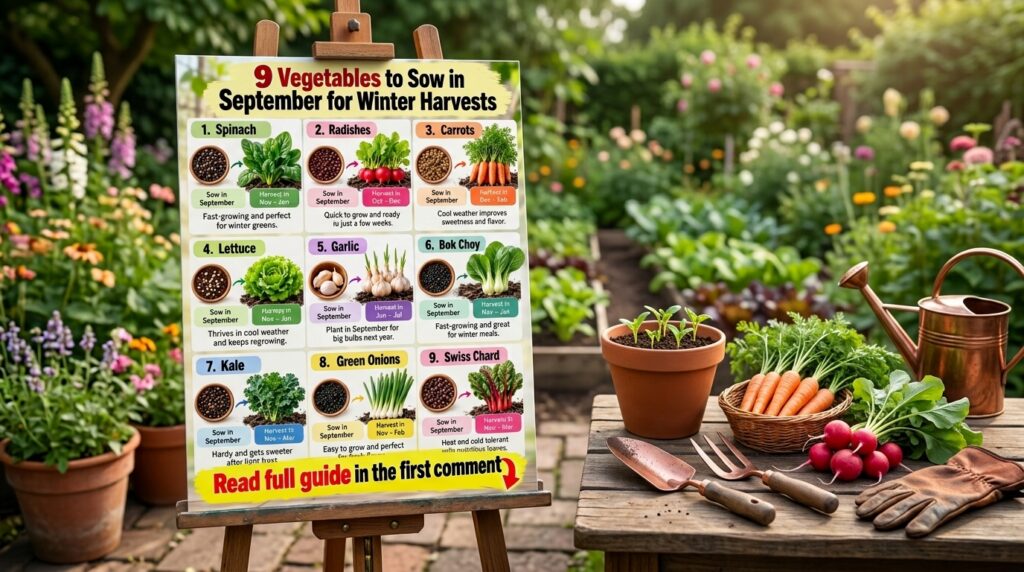
Top 9 Vegetables to Plant in September for Winter Harvests
Ready to get started? Here are some fantastic choices for your September sowing:
1. Spinach
Spinach is a cool-season superstar! Sowing in September allows it to establish strong roots before winter. You can often harvest tender leaves throughout fall and even into early winter in milder climates. It’s packed with nutrients and perfect for salads, smoothies, or sautéing.
2. Radishes
Fast-growing radishes can provide quick harvests even in cooler weather. Plant them in succession every couple of weeks for a continuous supply. They add a delightful peppery kick to salads and make a refreshing snack.
3. Carrots
While often seen as a spring vegetable, carrots sown in September can develop a fantastic sweetness after being exposed to some light frosts. They grow slowly through the cooler months, producing tender, delicious roots. Ensure your soil is loose and free of rocks for straight carrots!
4. Lettuce
Similar to spinach, many varieties of lettuce thrive in cooler temperatures. Choose hardy, loose-leaf varieties for best results. You can often harvest outer leaves for an extended period, allowing the plant to continue producing.
5. Garlic
September is the ideal time to plant garlic for a summer harvest next year. Plant individual cloves point-up in well-drained soil. They will establish roots before winter and then emerge with vigorous growth in the spring, yielding large, flavorful bulbs.
6. Bok Choy
This crisp, tender Asian green is perfect for fall planting. Bok choy prefers cooler weather, which helps prevent it from bolting (going to seed prematurely). It’s excellent in stir-fries or lightly steamed.
7. Kale
Kale is incredibly cold-hardy, and many gardeners find its flavor even sweeter after a light frost. Sow in September for continuous harvesting of nutritious leaves throughout the fall and winter. It’s a powerhouse of vitamins and minerals!
8. Green Onions (Scallions)
Green onions are easy to grow from seed or by planting the white bottoms of store-bought scallions. Plant them in September for a steady supply of fresh, mild onion flavor to add to virtually any dish.
9. Swiss Chard
With its vibrant stems and nutritious leaves, Swiss chard is both beautiful and delicious. It tolerates cooler temperatures well and can provide harvests well into winter. Use it like spinach or kale, adding a pop of color and goodness to your meals.
General Tips for a Successful Winter Garden
- Soil Preparation: Ensure your garden beds are enriched with compost or well-rotted manure for optimal growth. Good drainage is key!
- Sunlight: Even in winter, aim for a spot that receives at least 4-6 hours of sunlight.
- Watering: While plants need less water in cooler months, don’t let the soil dry out completely, especially for newly sown seeds and young plants.
- Pest Management: Keep an eye out for slugs and snails, which can still be active in cool, damp conditions.
- Frost Protection: In colder regions, consider using row covers, cold frames, or cloches to protect your plants from harsh frosts. This can extend your harvest even further!
Don’t let the end of summer mark the end of your gardening joy! By sowing these essential vegetables in September, you can look forward to a rewarding and delicious winter harvest. Happy gardening!