Ever wondered what 20 grams of protein actually looks like on a plate? It may surprise you. Protein helps build and repair muscles, supports fullness between meals, and plays a role in many body functions. Knowing how much you eat can help you make more confident choices at every meal.
In this guide, you will see how common foods add up to about 20 grams of protein. You will also find easy ways to fit these portions into your day.
How Much Protein Do Most Adults Need?
Protein needs vary by age, body size, activity level, and health goals. The Dietary Reference Intake for adults is 0.8 grams per kilogram of body weight per day, which is a baseline rather than a target for everyone. Many people spread protein across meals, and that approach can feel more manageable than eating one large serving.
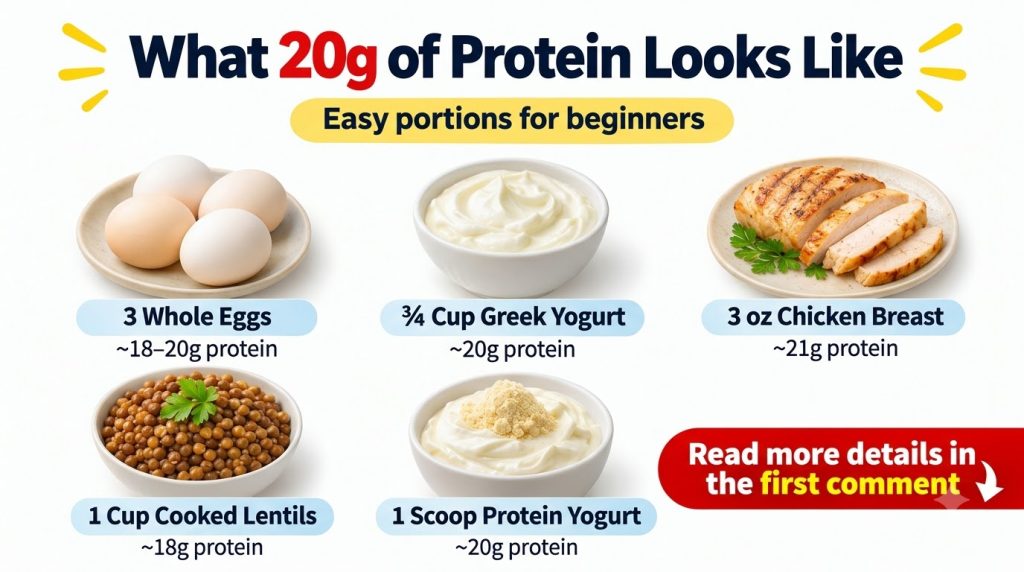
What 20 Grams of Protein Looks Like
These portions are approximate, since brands and cooking methods can change the numbers a little.
- Three large eggs: about 18 grams, a simple breakfast option.
- One cup of plain Greek yogurt: roughly 20 grams, great with fruit or nuts.
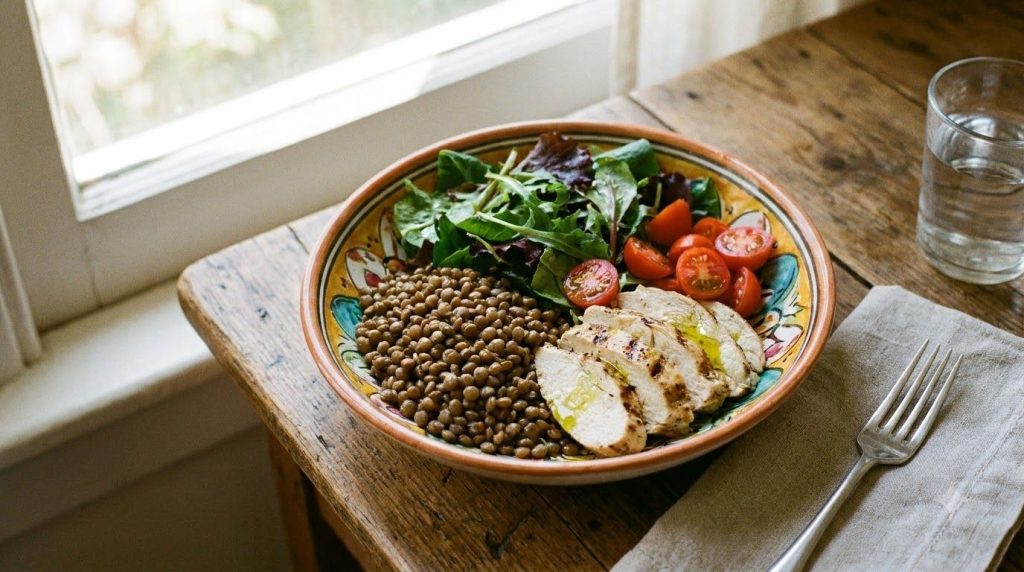
- About 2.5 ounces of cooked chicken breast: around 20 grams, ideal for salads and wraps.
- One cup of cooked lentils: about 18 grams, a budget-friendly plant option.
- One scoop of protein powder: often 20 to 25 grams, depending on the product.
Protein Comparison Table
| Food | Approximate Serving | Protein (about) | Main Benefit |
|---|---|---|---|
| Large eggs | 3 eggs | 18 g | Choline and easy to cook |
| Greek yogurt, plain | 1 cup | 20 g | Calcium and probiotics |
| Chicken breast, cooked | 2.5 oz | 20 g | Lean protein with low fat |
| Lentils, cooked | 1 cup | 18 g | Fiber and plant-based protein |
| Protein powder | 1 scoop | 20 to 25 g | Convenient protein boost |
Ways to Work These Portions Into Your Meals
You do not need to track every gram to eat well. Small, consistent choices usually matter more than perfect numbers.
- Start your morning with two eggs and a handful of spinach for about 12 grams.
- Add a half cup of Greek yogurt to your afternoon snack with berries.
- Build dinner around a palm-sized portion of chicken or a cup of lentils in soup.
- Use a scoop of protein powder in a smoothie when your schedule is busy.
Practical Tips for Hitting Your Protein Goals
- Include a protein source at breakfast, lunch, and dinner.
- Pair protein with vegetables and whole grains for balanced meals.
- Keep canned beans, eggs, and plain yogurt on hand for quick options.
- Choose lean cuts and cook with minimal added oil.
- Read labels on protein powders and check added sugars.
Potential Considerations
Protein is important, but more is not always better. People with kidney conditions, food allergies, or specific medical needs should talk with a healthcare professional before changing their protein intake. Plant sources like lentils also bring fiber, which many people benefit from.
Frequently Asked Questions
Is 20 grams of protein enough for one meal?
For many people, 20 to 30 grams per meal is a practical target. Your needs depend on your size, activity, and goals.
Are plant foods a good source of protein?
Yes. Lentils, beans, tofu, and edamame provide protein along with fiber and other nutrients. Combining different plant foods over the day offers a variety of amino acids.
Can I get enough protein without meat?
Many people do. Eggs, dairy, legumes, nuts, and soy foods can all help you meet your needs when planned well.
Is protein powder necessary?
No. Whole foods are a great foundation. Protein powder is simply a convenient option when you need a quick boost.
How can I tell how much protein is in my food?
Check the Nutrition Facts label or a trusted food database. Serving sizes matter, so measure when you can.
Does protein help with fullness?
Research suggests protein can support feelings of fullness, which may help with appetite management as part of a balanced diet.
Conclusion
Twenty grams of protein is easier to reach than you might think. Eggs, Greek yogurt, chicken, lentils, and protein powder all make it possible with simple portions. Start with one meal, notice how you feel, and build from there. For more easy ideas, explore our healthy breakfast recipes, high protein meal prep guides, and budget-friendly grocery tips.
This content is for educational purposes only and should not be considered medical advice. Consult a qualified healthcare professional for personalized dietary recommendations.