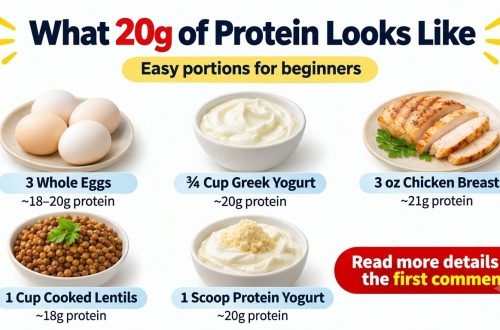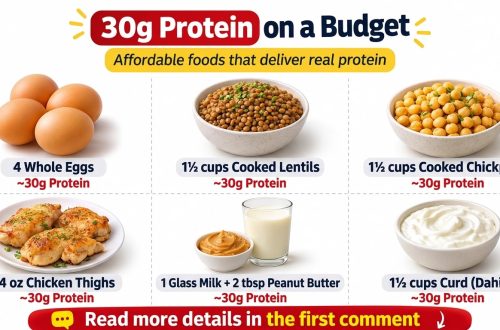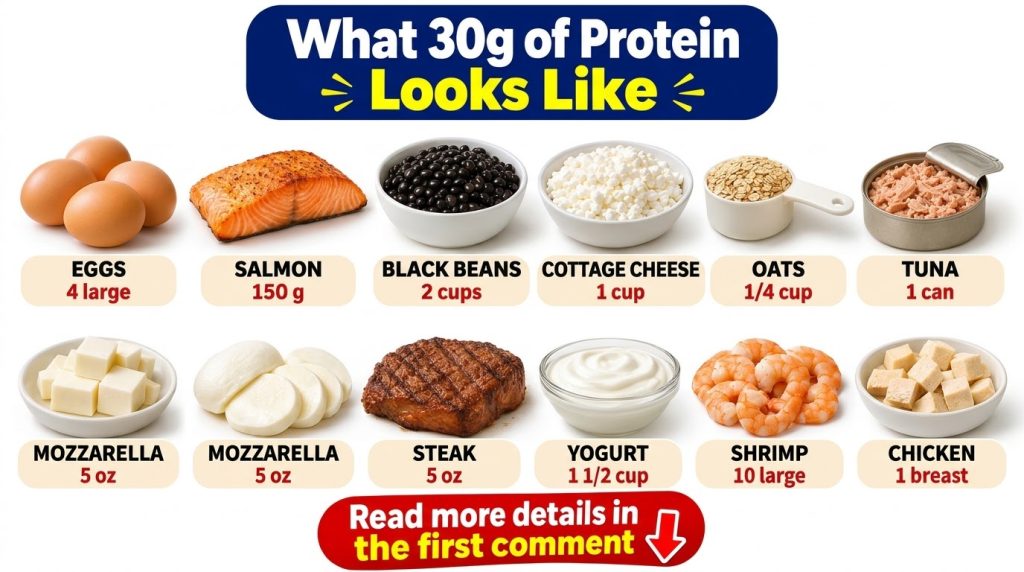
Have you ever wondered how much food it takes to get 30 grams of protein? You are not alone. Many people guess, and the answer can surprise you. This simple guide shows approximate portions for popular animal and plant protein sources so you can plan meals with more confidence.
Whether you are meal prepping, building a healthy lunch, or just curious about your nutrition, knowing these portions makes everyday choices easier.
Why 30 Grams of Protein Is a Useful Benchmark
Protein helps build and repair muscle, keeps you feeling full between meals, and supports many everyday body functions. Many adults aim for a steady amount of protein at each meal rather than saving it all for dinner. Research suggests that spreading protein across the day may help with muscle maintenance, especially as we age.
Thirty grams is a practical target for one meal for many people. Your personal needs depend on your age, body size, activity level, and health goals, so a healthcare professional can help you find your number.
Protein Portions at a Glance
The amounts below are approximate. Brands, cooking methods, and serving sizes can change the numbers a little.
| Food | Approximate Portion for 30g Protein | Main Benefit |
|---|---|---|
| Cooked chicken breast | About 3.5 oz (100 g) | Lean and very versatile |
| Cooked lean steak | About 4 oz (115 g) | Rich in iron and zinc |
| Cooked salmon | About 4 oz (120 g) | Provides omega-3 fats |
| Canned tuna, drained | About 4 oz (120 g) | Affordable and shelf-stable |
| Cooked shrimp | About 4.5 oz (125 g) | Low in calories |
| Large eggs | About 5 eggs | Contains choline and vitamin D |
| Low-fat cottage cheese | About 1 1/4 cups | Slow-digesting protein |
| Part-skim mozzarella | About 4 to 5 oz | Good source of calcium |
| Firm tofu | About 7 to 8 oz (200 g) | Plant protein that takes on any flavor |
| Cooked lentils | About 1 2/3 cups | High in fiber and folate |
| Cooked black beans | About 2 cups | Rich in fiber |
Animal Protein Sources
Animal foods tend to be dense in protein, so the portions are often smaller. Chicken, fish, and lean meat are common choices for dinner. Eggs and dairy work well at breakfast or as quick snacks.
- Chicken and lean beef are easy to batch cook for the week.
- Salmon and tuna add healthy fats and convenience.
- Shrimp cooks in minutes and suits stir-fries and salads.
- Cottage cheese and mozzarella make filling snacks and easy additions to meals.
Plant Protein Sources
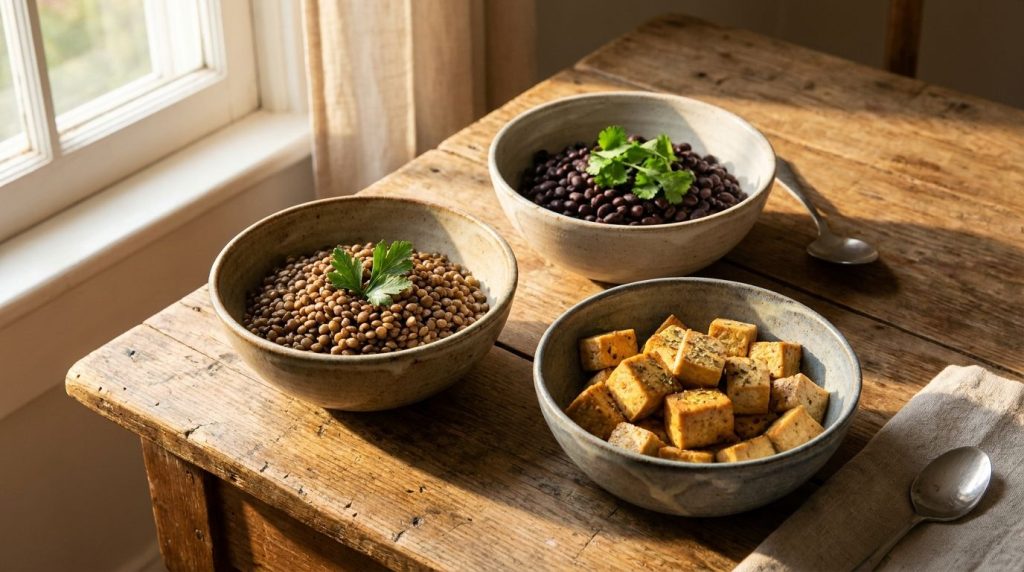
Plant foods can help you reach 30 grams too, especially when you combine them. Beans, lentils, and tofu are the most efficient options. Oats contain some protein, but you would need a very large bowl to reach 30 grams, so they work better as part of a bigger meal.
- Pick one main protein for each meal.
- Add a second source, such as beans in a salad or tofu in a bowl.
- Pair plant proteins with vegetables and whole grains for balanced meals.
Practical Tips for Reaching Your Protein Goals
- Measure portions for a week to learn what your usual servings look like.
- Keep canned tuna, beans, and eggs in the pantry for quick meals.
- Cook a large batch of chicken or lentils on Sunday and portion them into containers.
- Add cottage cheese or Greek yogurt to breakfast for an easy protein boost.
- Use a kitchen scale for meat and tofu until you can estimate by eye.
Frequently Asked Questions
Is 30 grams of protein enough for one meal?
For many adults, 30 grams is a helpful amount for one meal. Needs vary, so a healthcare professional can suggest the right target for you.
Which protein food gives the most protein for the least calories?
Lean options such as chicken breast, shrimp, and white fish are often high in protein relative to calories.
Are plant proteins as good as animal proteins?
Plant proteins can be a healthy part of your diet. Eating a variety of beans, lentils, tofu, and whole grains over the week helps you get a good mix of nutrients.
How can I eat more protein on a budget?
Eggs, dried or canned beans, lentils, canned tuna, and cottage cheese are usually budget-friendly choices.
Do I need protein supplements?
Most people can meet their needs with whole foods. Supplements are not necessary for everyone, so check with a healthcare professional before adding one.
Does cooking change the protein amount?
Cooking does not destroy most protein, but water loss can change the weight. Measuring cooked and raw portions consistently helps you track more accurately.
Conclusion
Seeing 30 grams of protein in real food makes planning meals much easier. Mix animal and plant sources, use the portions above as a starting point, and enjoy a variety of flavors. For more ideas, explore our guides on high protein breakfast ideas, healthy meal prep recipes, and budget-friendly protein foods.
This content is for educational purposes only and should not be considered medical advice. Consult a qualified healthcare professional for personalized dietary recommendations.