Meta description: Discover how walnuts, pistachios, almonds and more can support heart health and energy. Simple tips for adding healthy nuts to your daily routine at home.
Why Nuts Deserve a Spot in Your Day
Which nut would you choose for a health boost? Each nut is a small powerhouse. Nuts are easy to carry, simple to store, and satisfying enough to keep hunger in check between meals.
This guide walks you through a few popular nuts, what they offer, and how to enjoy them without overdoing it. It is written for everyday readers who want simple, practical ideas.
Nutrition Highlights of Popular Nuts
Nutrition values vary by brand and portion size. The numbers below are approximate for a one-ounce serving, which is about a small handful.
| Nut | Calories (approx.) | Protein (approx.) | Fiber (approx.) | Standout Nutrient |
|---|---|---|---|---|
| Walnuts | 185 | 4 g | 2 g | Plant-based omega-3 (ALA) |
| Almonds | 165 | 6 g | 3.5 g | Vitamin E |
| Pistachios | 160 | 6 g | 3 g | Protein and potassium |
| Cashews | 157 | 5 g | 1 g | Magnesium and iron |
| Hazelnuts | 176 | 4 g | 2.7 g | Vitamin E and folate |
Walnuts: Heart-Friendly Crunch
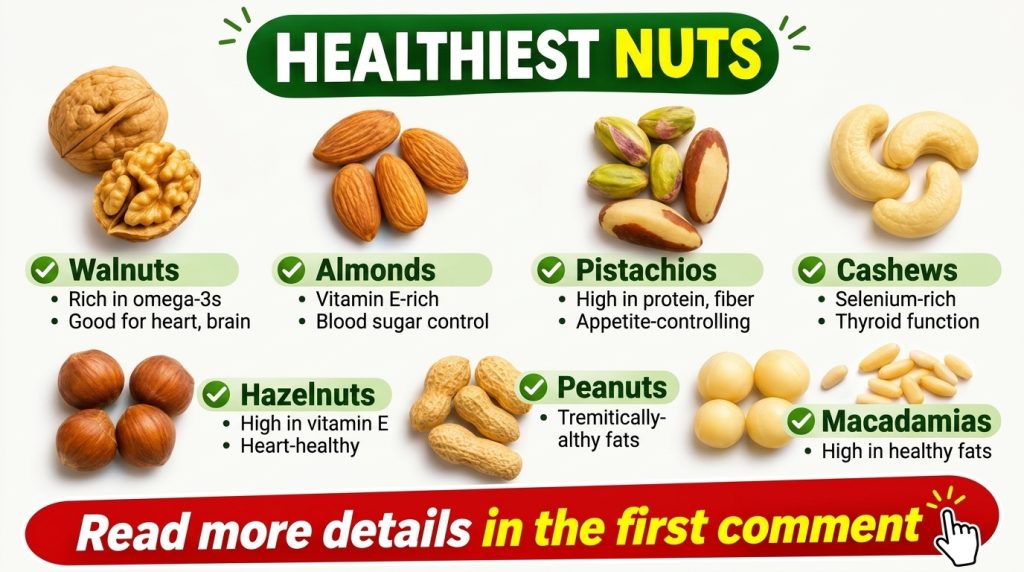
Walnuts are rich in plant-based omega-3 fats. Research suggests that diets including nuts like walnuts are associated with heart-healthy patterns. Try them sprinkled over oatmeal or tossed into a leafy salad.
Pistachios: A Protein Boost
Pistachios offer a satisfying amount of protein and fiber for a snack. They are also easy to portion, since shelling them slows down how fast you eat.
Almonds and Other Everyday Choices
Almonds bring vitamin E and fiber to the table. Cashews add creaminess to sauces, while hazelnuts pair well with fruit and whole-grain snacks.
Practical Tips for Eating Nuts Every Day
- Measure a one-ounce portion before snacking to avoid overeating.
- Choose unsalted or lightly salted nuts when possible.
- Add chopped nuts to yogurt, smoothies, or stir-fries for extra texture.
- Rotate between different nuts to enjoy a wider range of nutrients.
- Store nuts in an airtight container in a cool place to keep them fresh.
Common Mistakes to Avoid
Nuts are calorie-dense, so portion size matters. Candied, honey-roasted, or heavily salted varieties can add extra sugar and sodium. Watch for allergies, since nuts are a common food allergen.
Frequently Asked Questions
How many nuts should I eat per day?
A common portion is about one ounce, roughly a small handful. Your needs depend on your overall diet and goals.
Are roasted nuts as healthy as raw nuts?
Plain dry-roasted or raw nuts are both good choices. Avoid versions with added sugar, oil, or heavy salt.
Which nut has the most protein?
Almonds and pistachios are both strong choices for protein, with roughly six grams per ounce.
Can nuts help with weight management?
Nuts may support fullness when eaten in measured portions. Pair them with fruits or vegetables for balanced snacks.
Are nuts safe for kids?
Nuts can be a healthy snack for many children, but whole nuts can be a choking hazard for young kids. Ask your pediatrician for guidance.
Can I eat nuts if I have a nut allergy?
No. If you have a nut allergy, avoid nuts and check labels carefully. Speak with a qualified healthcare professional for personal advice.
Conclusion
Healthy nuts can be an easy, flavorful part of your daily routine. Start with a measured portion and rotate your favorites. If you enjoyed this guide, explore more healthy snack and nutrition ideas on our site.
This content is for educational purposes only and should not be considered medical advice. Consult a qualified healthcare professional for personalized dietary recommendations.
Related Article Ideas
- High Protein Snacks for Busy Days
- Healthy Breakfast Ideas with Nuts
- Best Foods for Heart Health
- Easy Homemade Trail Mix Recipes