Healthy plants start below the surface. Before you mix anything into your garden bed, it helps to understand what your soil already contains and what it truly needs. Adding the wrong amendment can throw off nutrient balance, change pH, or harm the soil life that keeps plants growing well. This checklist walks through six common soil amendments and the key questions to ask before using each one.
Start With a Soil Test
Before adding any amendment, consider testing your soil. A basic soil test can reveal pH, nutrient levels, and texture. Many local extension offices and garden centers offer testing services or kits. Knowing your starting point helps you avoid guesswork and apply only what your garden actually needs.
Six Amendments to Check Before You Apply Them
1. Compost
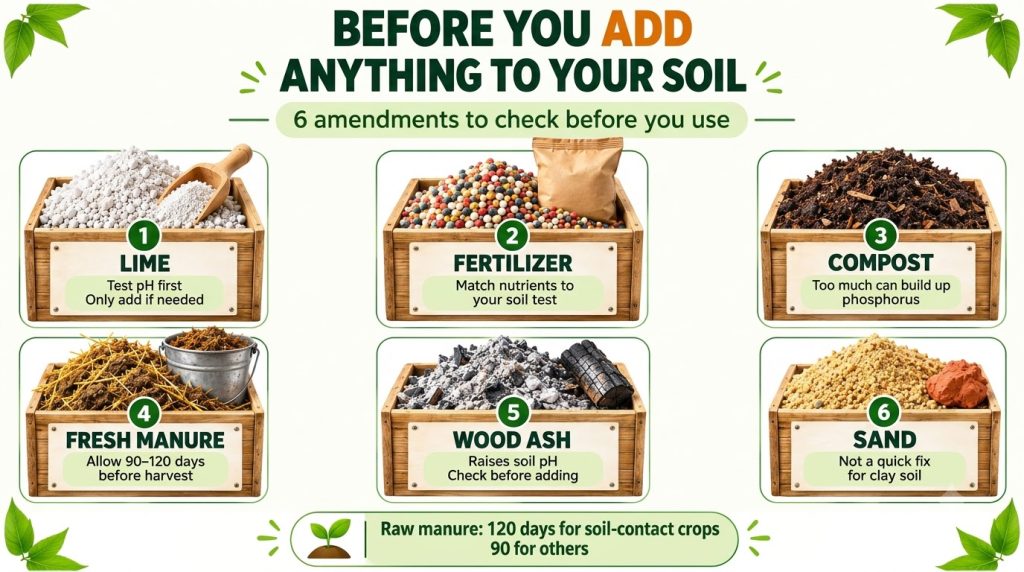
Compost is one of the most versatile additions for garden soil. It adds organic matter, improves structure, helps soil hold moisture, and supports beneficial microorganisms. When checking compost, look for a dark, crumbly texture and an earthy smell. Avoid material that smells sour or still looks like recognizable food scraps, since it may not be fully broken down.
2. Well-Rotted Manure
Animal manure can enrich soil with nutrients and organic matter, but fresh manure can be too strong for plants and may carry pathogens. Choose well-rotted manure that has aged long enough to lose its sharp odor. As a general habit, apply manure in advance of planting and work it into the soil rather than placing it directly against young roots.
3. Lime
Lime is used to raise soil pH in acidic soils. Because it changes soil chemistry, it should only be added when a soil test shows it is needed. Adding lime to soil that is already alkaline can cause problems, so checking pH first is essential.
4. Wood Ash
Wood ash contains potassium and calcium and can have a liming effect. It should be used sparingly and only from untreated, fully cooled wood. Never use ash from treated lumber, painted wood, or charcoal briquettes that contain additives. Keep it away from plants that prefer acidic soil, such as blueberries.
5. Sand
Sand is often suggested for heavy clay soil, but it is not a simple fix. Adding small amounts of sand to clay can produce a dense, brick-like mixture. If you want to improve drainage in clay, focus first on adding organic matter such as compost, and only consider sand in larger quantities with expert guidance.
6. Fertilizer
Fertilizers supply specific nutrients, but they work best when matched to a plant’s actual needs. Look at the nutrient numbers on the label, follow application rates carefully, and avoid overfeeding. Excess fertilizer can burn roots, wash into waterways, and encourage weak growth. When possible, pair fertilizer use with a soil test.
A Simple Pre-Application Checklist
- Have I tested my soil’s pH and nutrient levels?
- Do I know exactly what problem this amendment is meant to solve?
- Is the material fully decomposed and suitable for garden use?
- Have I checked the recommended application rate?
- Will I mix it into the root zone and water it in properly?
Build Soil Health Gradually
Good soil is built over time through steady care rather than one large addition. Mulching, regular composting, planting cover crops, and avoiding soil compaction all support a thriving garden ecosystem. By checking each amendment before you use it, you can keep your soil balanced and your plants healthier season after season.