Healthy plants start below the surface. Before you choose seeds, buy new shrubs, or plan a vegetable bed, it helps to understand the soil you are working with. Once you can recognize the main soil types and their pH levels, you can make smarter decisions about what to plant and how to care for your garden.
Why Soil Type Matters
Soil does much more than hold plants upright. It stores water, supplies nutrients, supports helpful microbes, and gives roots room to grow. Soil that drains too quickly may leave plants thirsty, while soil that stays soggy can cause roots to rot. Understanding your soil helps you prevent many common problems, such as plants that keep dying or struggle to thrive.
The Main Soil Types
Sandy Soil
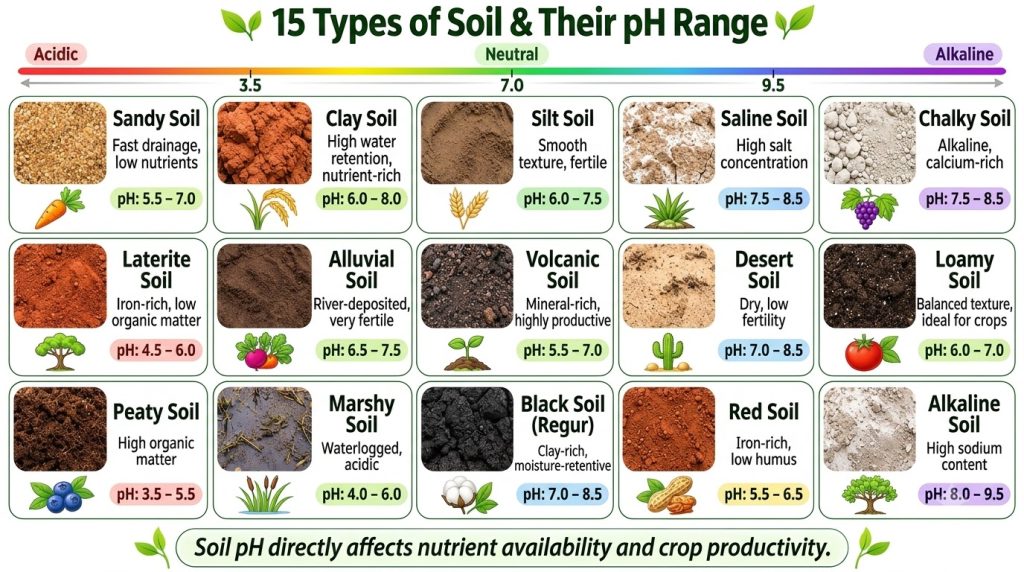
Sandy soil feels gritty and drains quickly. Water and nutrients can wash away before plants absorb them, so sandy beds often need regular feeding and mulching. Carrots, radishes, and lavender usually do well in these conditions.
Clay Soil
Clay soil feels sticky when wet and hard when dry. It holds nutrients well but drains slowly. Adding organic matter such as compost gradually improves its structure and makes it easier to work. Many shrubs and cabbage-family vegetables tolerate clay once it is amended.
Loam Soil
Loam is often considered the ideal garden soil because it balances sand, silt, and clay. It drains well, retains moisture, and holds nutrients. If you are lucky enough to have loam, a yearly layer of compost is usually enough to keep it productive.
Silt and Peaty Soil
Silt feels smooth and soft, and it holds moisture well, though it can compact easily. Peaty soil is dark, spongy, and rich in organic material, and it tends to be acidic. Peaty conditions suit blueberries, azaleas, and other acid-loving plants.
Chalky Soil
Chalky soil is light, stony, and often alkaline. It drains quickly and can lock up some nutrients, so plants that prefer acidic conditions may show yellowing leaves. Choosing lime-tolerant plants or adding organic matter can help.
Understanding Soil pH
Soil pH measures how acidic or alkaline your soil is, on a scale from 0 to 14. A reading of 7 is neutral. Most vegetables and many flowers grow well between pH 6.0 and 7.0, though some plants have different preferences. Inexpensive home test kits or a digital pH meter can give you a quick reading before you plant.
- Below 6.0: acidic soil, suitable for blueberries and azaleas.
- 6.0 to 7.0: slightly acidic to neutral, suitable for most vegetables and flowers.
- Above 7.0: alkaline soil, suitable for plants such as lavender and clematis.
Simple Steps to Improve Your Soil
- Test your soil before making big changes.
- Add compost or well-rotted organic matter each season.
- Use mulch to protect the surface, retain moisture, and slowly feed the soil.
- Avoid walking on wet garden beds to reduce compaction.
- Rotate vegetable crops to help limit pests and disease buildup.
Final Thoughts
Learning to identify your soil is one of the most rewarding first steps in gardening. Start with a simple observation of texture, drainage, and pH, then build up the soil gradually with organic matter. With patience and regular care, your garden can become healthier and more productive season after season.