Your houseplants and garden plants are always communicating, even if they can’t speak. Leaves are often the first place where problems show up, and learning to read them can save you from losing a plant you’ve worked hard to grow. This guide walks through the most common leaf symptoms, what they usually mean, and how to respond with simple, practical care.
Why Leaves Tell the Story
Leaves are the plant’s food factory and its early warning system. When a plant lacks water, light, nutrients, or protection from pests and disease, the leaves often change color, texture, or shape before other parts of the plant show damage. Paying attention to these signals helps you act early, when fixes are easiest.
Common Leaf Symptoms and What They Mean
Browning Leaf Edges or Tips
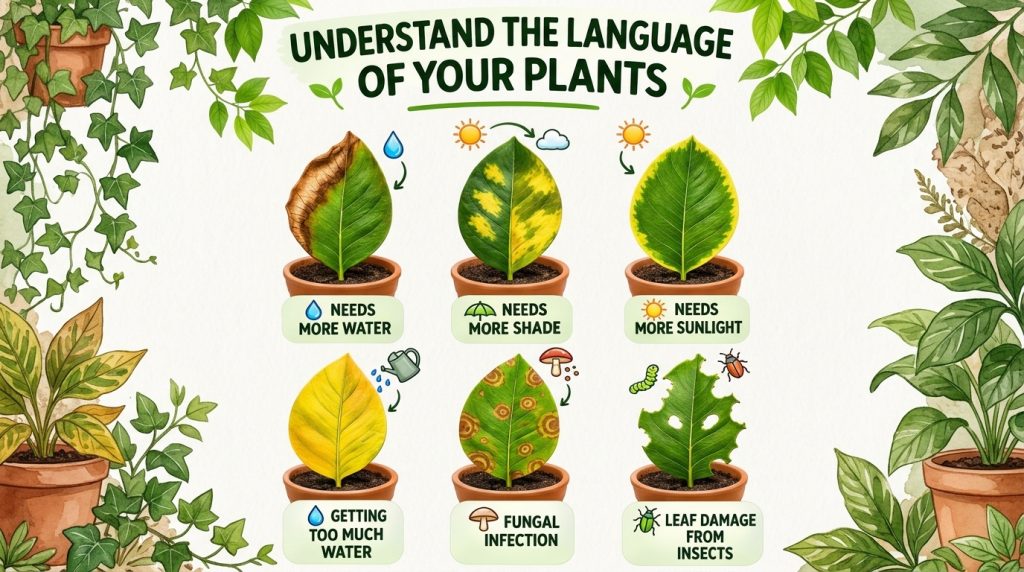
Crispy brown edges often point to low humidity, uneven watering, or a buildup of salts from fertilizer. Check whether the soil is drying out completely between waterings, and consider grouping plants together or using a tray of pebbles and water to raise humidity around them.
Yellowing Leaves
Yellow leaves can mean overwatering, poor drainage, or a nutrient shortage. If the soil stays soggy, let it dry out more between waterings and make sure the pot has drainage holes. If the plant is otherwise healthy, a balanced, diluted fertilizer during the growing season may help.
Brown or Black Spots
Spots that spread across the leaf can be a sign of fungal or bacterial issues, often made worse by water sitting on foliage and poor air circulation. Water at the soil level, remove affected leaves with clean scissors, and give the plant more space to breathe.
Holes or Chewed Edges
Irregular holes and chewed edges usually come from insects or slugs. Inspect the undersides of leaves and the soil surface in the evening. Hand-picking pests, rinsing leaves with water, or using a gentle insecticidal soap are practical first steps.
Wilting Despite Moist Soil
Drooping leaves can seem confusing when the soil is wet. This often happens when roots are damaged by rot from overwatering, or when the pot is too large for the root system. Gently check the roots; firm, pale roots are healthy, while mushy, dark roots need trimming and repotting in fresh, well-draining soil.
Pale or Leggy Growth
Stretched stems with small, pale leaves usually mean the plant is not getting enough light. Move it closer to a bright window or give it supplemental grow light for several hours a day, and rotate the pot every week so growth stays even.
A Simple Routine for Healthier Plants
Most leaf problems come from a few repeatable causes. A regular check-in routine makes them easier to catch early.
- Look over leaves, including undersides, once a week.
- Check soil moisture with a finger before watering.
- Make sure every pot has proper drainage.
- Rotate plants so all sides receive light.
- Keep a simple notebook to track changes over time.
Final Thoughts
Learning your plant’s language takes a little observation, but it becomes second nature with practice. Start with one plant, notice how its leaves respond to changes in care, and build your confidence from there. Your garden will reward your attention with stronger growth and more beautiful foliage.