There is something quietly satisfying about a lunch box where every food has its own spot. A bento-style box turns a busy school morning into a simple assembly job, and it gives kids a small, colorful surprise when they open it at lunchtime. This guide covers why compartments work so well, a simple formula you can reuse all week, easy ideas for each section, and practical tips for freshness, leak-proofing, and food safety.
Why Compartments Help Picky Eaters
Many children are more willing to try new foods when the plate looks inviting and nothing is touching. Separate sections let each item stay distinct, so a child can see what is on offer without digging through a jumble. Small portions in separate spaces also feel less overwhelming than one big pile of food. Over time, familiar items in the same spots become a predictable routine, and predictability often helps a hesitant eater relax about trying something new.
A Simple Formula for Every Day
You do not need a new recipe each morning. Try building the box around four slots: one fruit, one protein, one crunchy snack, and one small treat. The fruit adds freshness and fiber, the protein keeps energy steady until the afternoon, the crunchy snack adds texture, and the treat makes the box feel fun. Rotating options within each category keeps lunches interesting without extra planning.
Easy Ideas for Each Compartment
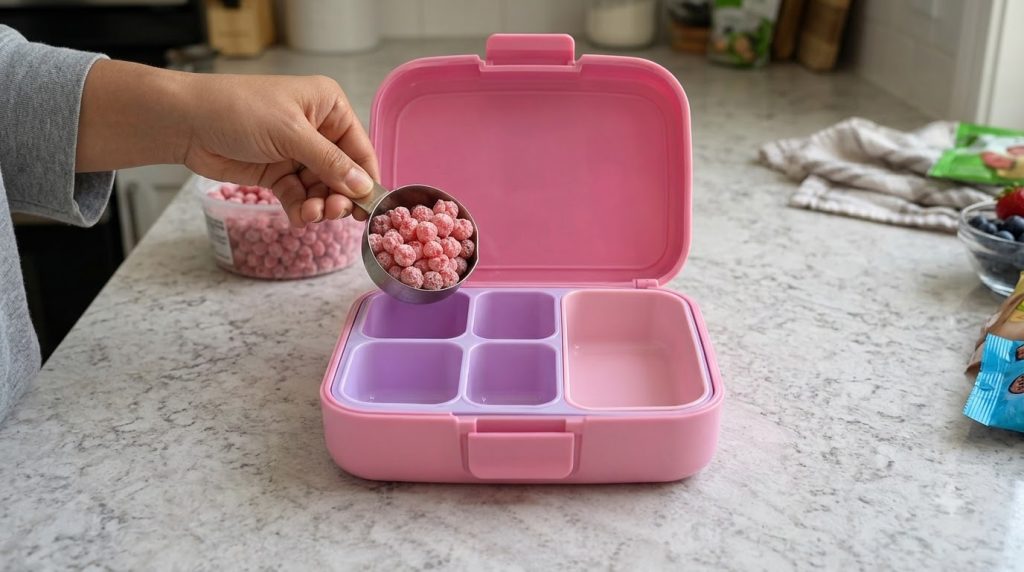
For fruit, think about grapes halved for small mouths, apple slices tossed lightly in lemon juice, mandarin segments, or berries. For protein, try cheese cubes, hard-boiled eggs cut in half, slices of turkey or chicken, hummus with soft pita strips, or edamame. For crunchy snacks, good choices include cucumber sticks, baby carrots, whole-grain crackers, or roasted chickpeas. For the treat, consider a few dark chocolate chips, a small square of homemade granola bar, or a handful of freeze-dried fruit puffs, which add a bright pop of color without much mess.
Keeping Food Fresh Until Lunch
Freshness depends on a few small habits. Let cooked foods cool fully before packing them, because warm food creates condensation that makes crackers soggy and bread damp. Keep crunchy items in their own compartment, away from wet fruit or sauces. Cut fruit that browns quickly, such as apples and pears, just before packing or brush it with a little citrus juice. Pack the lunch box in the morning rather than the night before when possible, and store it in a cool place until your child is ready to leave.
Leak-Proof Tips
Yogurt, dips, and juicy fruit are the usual sources of leaks. Choose small containers with snug lids for dips and sauces, and place them upright in a compartment with a little padding around them. Freeze a juice box or a small bottle of water overnight to act as an extra cold pack and to keep other foods chilled. Before closing the box, check that the seal is clean and dry, since a little crumb or juice on the rim can stop the lid from sealing properly. Wrapping soft items in parchment can also keep them from sliding around.
A Weekly Prep Routine
A short prep session on the weekend can save time all week. On Sunday, wash and dry a batch of fruit, cut vegetables into sticks, and boil a few eggs. Portion crackers and snacks into reusable containers so they are ready to grab. Mix one simple dip or spread for the week. Keep everything in clearly labeled containers in the refrigerator, and plan to use cut produce within a few days. Each morning then takes only a few minutes: pick one item from each category and close the lid.
Food Safety Notes
Perishable foods such as meat, eggs, cheese, cooked pasta, and cut fruit should stay cold until lunchtime. Use a reusable ice pack or a frozen gel pack and place it on top of or beside the perishable items. Keep the lunch box out of direct sunlight, in a bag or a cupboard, rather than on a warm windowsill or near a heater. Where possible, ask the school whether the lunch area has a refrigerator. As a general rule, if a perishable food has been out of the cold for more than a couple of hours, it is safer to leave it out of the box. Wash hands, boards, and containers thoroughly after each use, and replace worn or cracked containers promptly.
Once you have settled into a rhythm, you may find that packing lunch becomes one of the calmer parts of your morning. Share your own go-to compartment ideas in the comments and see what other families are packing this week.