Why a Portable USB Blender Fits Your Morning
A portable USB blender is a small, cordless cup that charges over a cable and mixes a single serving in a minute or two. It will not replace a full-size kitchen blender, but it does one job well: turning soft fruit, yogurt, milk and a little ice into a drink you can take with you. Many people use them at the desk, in the car, or at the gym for a quick protein shake.
What Portable Blenders Are Good For
- Single-serve fruit smoothies made with berries, banana, mango or peach.
- Protein shakes after a workout or during a busy workday.
- Quick breakfasts for people who skip the morning rush.
- Mixing milk-based drinks, protein powder or meal replacement shakes.
How to Load the Blender Correctly
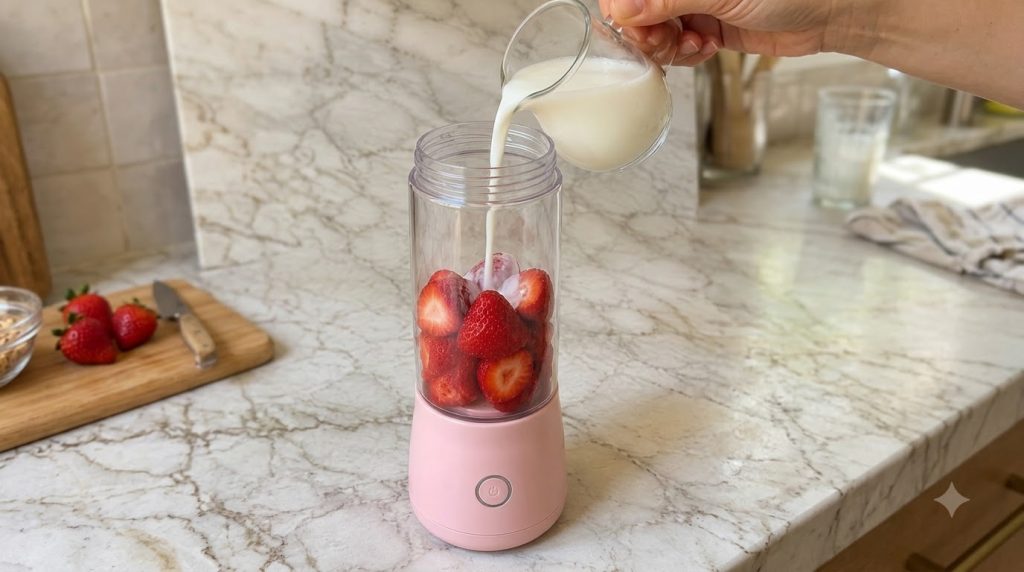
Start with liquid. Pour in milk, yogurt, juice or water first, then add soft fruit on top. Liquid at the bottom helps the blade move freely and reduces the chance of a stuck, chunky mix. Stay below the max fill line printed on the cup, because overfilling can cause leaks and makes the motor work harder.
Choose soft or pre-cut fruit. Strawberries, ripe bananas, peaches and spinach blend easily. Cut larger pieces into small chunks, about the size of a grape, so the blade can pull them into the swirl. Frozen fruit can work in small amounts, but check the manufacturer’s notes first, since many portable models are designed for fresh ingredients.
Blending Time and Texture
Most single servings need short bursts rather than long runs. Blend for 20 to 40 seconds, pause to scrape down the sides if needed, then blend again until smooth. Over-blending can warm the drink slightly and make it foamy, so stop once the color is even and no fruit pieces are visible.
Cleaning Your Blender Cup
Rinse the cup right after use, while milk and fruit are still soft. Add a drop of dish soap and warm water, put the lid on, and blend for a few seconds. Rinse again and let the parts air dry upside down. Never put the motor base under running water. Wipe it with a damp cloth instead.
Battery, Charging and Safety
Charge the blender fully before the first use and keep the cable and port dry. Unplug it once it is full and avoid leaving it on the charger for long periods. Store it in a cool place, away from direct sunlight.
Safety matters because the blade is sharp and spins fast. Never run the blender empty, since dry running can damage the motor. Always fit the lid and cup securely before switching on, and keep your fingers away from the blade when removing the cup. Wait for the blade to stop before you open the lid. Do not use the blender with a cracked cup or a damaged seal.
Understanding the Limits
Portable blenders have small motors, so they struggle with ice, hard frozen chunks and whole nuts. Crushed ice can dull the blade or stall the motor. Hard nuts like almonds may need soaking and a longer blend, and the texture can still stay gritty. For nut butters, thick hummus or large batches, a full-size blender is the better tool.
A Simple Starter Smoothie
Try this easy combination: a cup of milk, a spoonful of plain yogurt, half a cup of fresh strawberries and a small banana. Add the liquid first, then the fruit, blend until smooth, and drink right away. Add a little honey or a few oats if you like a thicker breakfast.
Final Thoughts
A portable USB blender is a practical helper for a busy morning. Load it in the right order, keep the fruit soft and the fill line respected, clean it promptly, and treat the blade with care. With those habits, it can make a quick and nutritious start to your day. Tell us in the comments which fruit combination you like best!