Depth is one of the most overlooked details when planning a raised bed. The soil depth determines how far roots can spread, how well water drains, and which vegetables will thrive. A bed that is too shallow can stress plants during dry spells, while a deeper bed gives roots room to grow freely and access more nutrients.
Why Raised Bed Depth Matters
Every vegetable has a root system with its own needs. Some crops spread their roots near the surface, while others send taproots or tubers deep into the soil. When your bed depth matches those needs, plants tend to establish faster, handle weather changes better, and produce more consistently over the season.
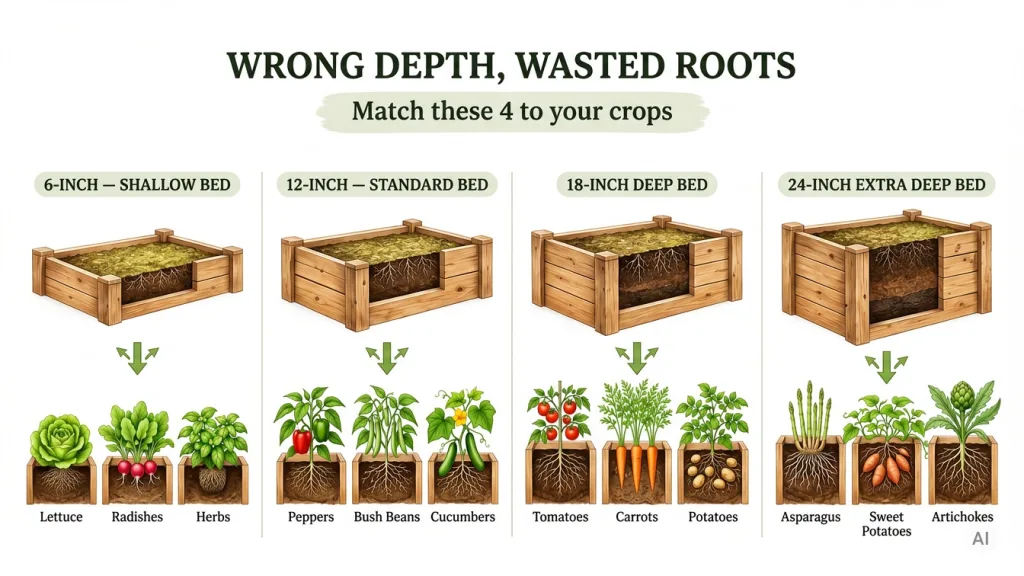
Shallow Beds: About 6 to 8 Inches
Shallow beds work well for crops with compact root systems. Leafy greens such as lettuce, spinach, and kale perform nicely in these beds, and quick-growing radishes can be harvested in a few weeks. A shallow bed is also a practical choice for small patios, balconies, or gardeners who want a simple starter project.
Medium Beds: About 10 to 12 Inches
A medium-depth bed offers more flexibility. Peppers, bush beans, herbs, and many salad crops grow well here. Carrots also appreciate loose soil at this depth, since it helps them develop straight roots without obstruction.
Deep Beds: About 18 to 24 Inches
Deep beds suit crops with larger root systems or underground harvests. Tomatoes, potatoes, eggplant, and large root vegetables benefit from the extra soil volume. Deeper soil holds moisture longer, reduces how often you need to water, and gives roots space to explore for nutrients.
How to Choose the Right Depth
Before you build or buy a raised bed, consider the following factors:
- The vegetables you plan to grow most often.
- The space and budget you have available.
- Your soil quality beneath the bed and how well it drains.
- How accessible the bed needs to be for you, especially if bending is difficult.
Tips for Building and Filling Your Bed
- Choose untreated wood or other materials that are safe for food gardens.
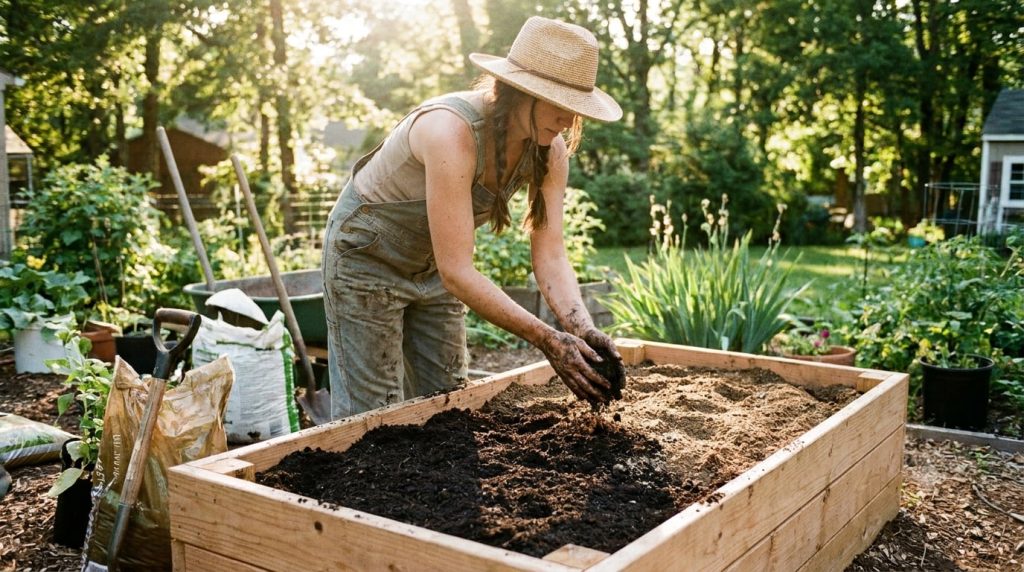
- Fill the bed with a balanced mix of topsoil, compost, and organic matter.
- Leave space between beds for walking and easy harvesting.
- Check moisture regularly, since raised soil can dry out faster at the surface.
- Rotate crops each season to help reduce pest and disease buildup.
Final Thoughts
Matching bed depth to your favorite vegetables is a simple step that can make a big difference in plant health and harvest quality. Start with the crops you enjoy most, measure your space, and build a bed that gives those roots room to thrive. With a little planning, your raised bed can become a productive and beautiful part of your garden.