Do you dream of fresh, homegrown produce but think you don’t have enough space? Think again! Hanging baskets aren’t just for petunias and impatiens anymore. They’re a fantastic, often overlooked solution for maximizing small spaces and turning even the tiniest balcony or patio into a flourishing edible garden. Imagine plucking a ripe strawberry or a juicy cherry tomato right from a basket hanging just outside your door – it’s gardening goals brought to life!
At Garden – L. Quyên, we believe everyone deserves the joy of growing their own food. Hanging baskets offer a unique blend of practicality, aesthetics, and delicious rewards, making them perfect for urban gardeners, apartment dwellers, or anyone looking to add more greenery (and tastiness!) to their outdoor areas.
Why Choose Hanging Baskets for Edible Plants?
Beyond saving space, hanging baskets offer several advantages for growing fruits and vegetables:
- Space Efficiency: They utilize vertical space, perfect for small patios, balconies, or even adding a new dimension to larger gardens.
- Pest Control: Elevating plants can deter ground-dwelling pests like slugs and snails.
- Improved Air Circulation: Good airflow helps prevent fungal diseases.
- Accessibility: Easier harvesting for those with mobility issues or anyone who prefers not to bend down.
- Aesthetic Appeal: A beautifully arranged edible basket adds charm and a unique visual element to your home.
Top Fruits & Veggies for Hanging Baskets
Not all plants are suited for hanging baskets, but many popular edibles thrive in them. Here are some of our favorites:
Fruits
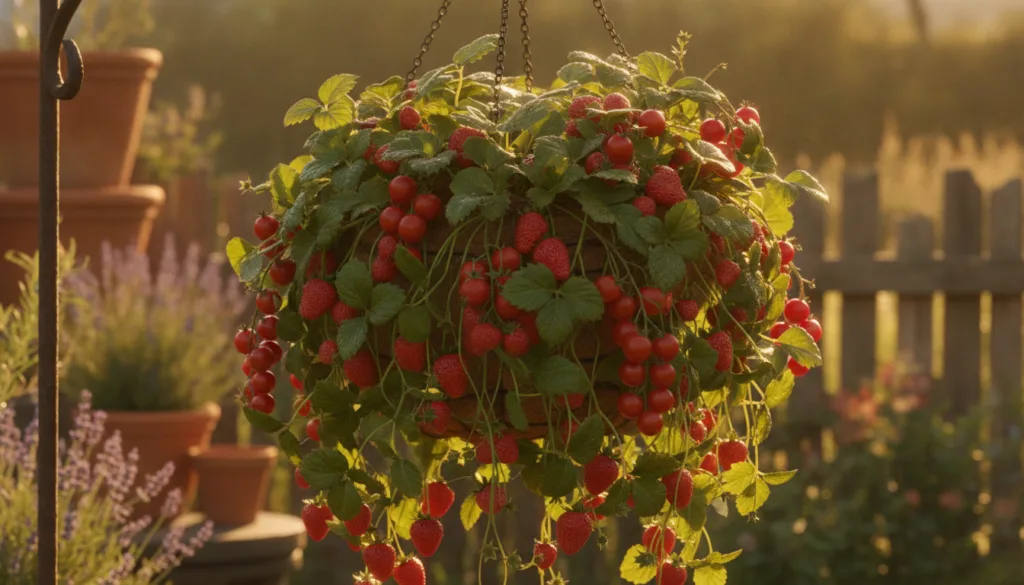
- Strawberries: Alpine varieties or ever-bearing types are perfect. Their runners will cascade beautifully over the sides, offering a sweet treat.
- Cherry Tomatoes: Look for ‘Dwarf’ or ‘Bush’ varieties specifically bred for containers. They produce abundant small, sweet fruits.
- Small Peppers: Bell peppers and chili peppers can do surprisingly well, especially compact varieties.
Vegetables & Herbs
- Lettuce & Leafy Greens: Loose-leaf varieties like ‘Black Seeded Simpson’ or ‘Buttercrunch’ are excellent. You can harvest outer leaves as needed.
- Spinach & Swiss Chard: Choose smaller varieties for continuous harvesting.
- Radishes: Quick-growing and compact, radishes can be a fun addition.
- Herbs: Basil, mint, parsley, cilantro, and thyme are all fantastic choices, providing fresh flavor for your cooking.
- Peas (Bush Varieties): Some dwarf shelling or snap pea varieties can be trained to grow upwards in a hanging basket with a small trellis.
Setting Up Your Hanging Basket Garden
1. Choose the Right Basket
- Size Matters: Larger baskets (12-18 inches in diameter) hold more soil, dry out slower, and give roots more room, which is crucial for edible plants.
- Material: Wire baskets lined with coir or moss look beautiful and provide good drainage. Plastic baskets retain moisture longer but can get heavy.
- Strong Hangers: Ensure your hanger and support system can bear the weight of a fully watered basket, which can be considerable.
2. Select Quality Potting Mix
Use a high-quality, lightweight potting mix specifically designed for containers. Do not use garden soil, as it compacts too much and lacks proper drainage. Adding some compost or a slow-release granular fertilizer can give your plants a great start.
3. Planting Your Edibles
- Line Your Basket: If using a wire basket, ensure the liner is secure.
- Add Soil: Fill the basket about two-thirds full with potting mix.
- Plant Carefully: Gently place your chosen plants, ensuring their root balls are level with the soil surface. Consider planting multiple compatible plants together (e.g., cherry tomatoes in the center with trailing herbs around the edge).
- Top Up Soil: Fill with more potting mix, leaving about an inch or two from the rim for watering.
- Water Thoroughly: Water until it drains from the bottom.
Care and Maintenance for Bountiful Harvests
Watering
Hanging baskets dry out much faster than ground beds or larger pots. Check your baskets daily, especially during hot, windy weather. Water when the top inch of soil feels dry to the touch. It’s often best to water deeply until water drains from the bottom.
Sunlight
Most fruits and vegetables require at least 6-8 hours of direct sunlight per day. Position your baskets in the sunniest spot available. If you have partial shade, opt for leafy greens and some herbs.
Fertilizing
Container plants quickly deplete nutrients from the soil. Use a balanced liquid fertilizer every 2-4 weeks, or incorporate a slow-release fertilizer into your potting mix at planting time.
Pest and Disease Management
Regularly inspect your plants for signs of pests or diseases. Catching issues early makes them easier to manage. Hand-pick larger pests, or use organic insecticidal soaps for smaller infestations. Good air circulation and proper watering help prevent fungal problems.
Pruning and Harvesting
Pinch back herbs to encourage bushier growth. For fruiting plants like tomatoes and peppers, remove any yellowing leaves or suckers (small shoots growing between the main stem and a branch) to redirect energy to fruit production. Harvest regularly to encourage more yields.
Ready to Grow?
Hanging basket gardening is an incredibly rewarding way to cultivate fresh produce, even with limited space. It’s a fun project that adds beauty and deliciousness to your home. So, pick your favorite fruits and veggies, gather your supplies, and start hanging your way to a homegrown harvest!
What are your favorite edibles to grow in hanging baskets? Share your tips and success stories in the comments below – we’d love to hear from you!