Dreaming of a bountiful harvest but working with limited garden space? You’re not alone! Many home gardeners face the challenge of growing more delicious vegetables, herbs, and flowers without a sprawling yard. The good news is, you don’t need a bigger plot; you just need to garden smarter. By understanding how certain plants can work together, you can create a more productive, pest-resistant, and vibrant garden, even in the smallest of spaces.
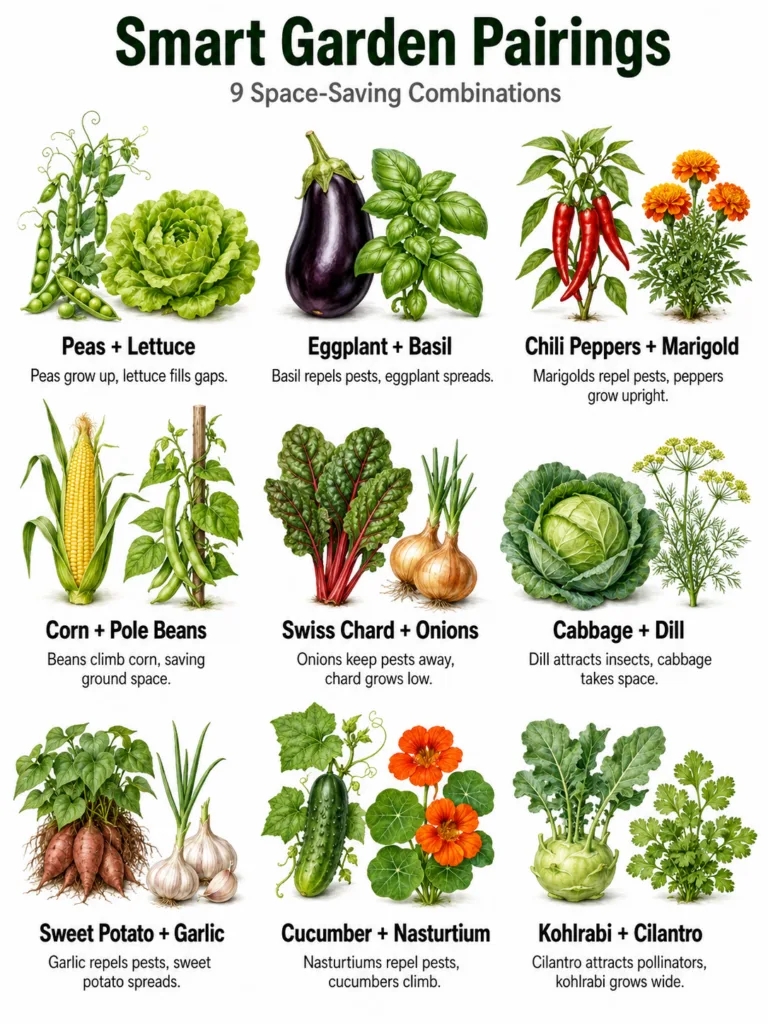
This guide will introduce you to the art of companion planting, focusing on nine brilliant pairings that not only save precious space but also enhance plant health and yield. Get ready to transform your garden into a thriving ecosystem where every inch is put to good use!
The Power of Companion Planting for Small Spaces
Companion planting is an age-old gardening technique that involves growing different plants together for mutual benefit. In a small garden, this strategy becomes even more crucial. It’s not just about fitting more plants into a tight spot; it’s about creating a harmonious mini-ecosystem where plants support each other in various ways:
- Pest Deterrence: Some plants release aromas or chemicals that confuse or repel common garden pests, protecting their neighbors.
- Attracting Beneficial Insects: Flowers and herbs can draw in pollinators and predatory insects that prey on harmful pests.
- Soil Health Improvement: Certain plants can fix nitrogen in the soil or provide ground cover, reducing weeds and retaining moisture.
- Optimizing Space: By pairing plants with different growth habits (e.g., tall and sprawling, fast and slow growing), you can utilize vertical, horizontal, and sequential space more efficiently.
- Flavor Enhancement: While often anecdotal, many gardeners believe certain pairings can improve the flavor or growth of their neighboring crops.
By thoughtfully choosing your plant companions, you can reduce the need for synthetic pesticides, encourage natural processes, and enjoy a more productive and resilient garden.