Struggling with colitis symptoms can make mealtime feel unpredictable. While there’s no single diet that works for everyone, many people find they feel better when they reduce common triggers and focus on foods that are easier to digest.
Medical note: This article is for general education and isn’t medical advice. If you have severe pain, dehydration, fever, significant rectal bleeding, or rapid weight loss, seek medical care promptly.
Managing Colitis Through Diet: A Guide to Digestive Health-Friendly Eating
Colitis is an inflammatory condition of the colon. When inflammation is active, the digestive tract can become more sensitive, and certain textures or ingredients may worsen cramping, urgency, gas, or diarrhea.
A practical approach is simple:
- During flares, prioritize gentle foods that are easier to digest.
- When symptoms calm down, expand variety slowly and track what works for you.
Foods to Avoid: Identifying Common Triggers
High-fiber and hard-to-digest foods can be problematic for some people, particularly during periods of inflammation. Items like raw vegetables, whole nuts, seeds, popcorn, legumes, and other rough textures may irritate the digestive tract and worsen bloating or cramping.
Dairy is another common issue. Many people report that milk, ice cream, and soft cheeses increase discomfort, especially if lactose is poorly tolerated. Fatty and fried foods can feel heavier on digestion and may worsen diarrhea. Spicy or highly seasoned foods can also be irritating when the gut is sensitive.
Tip: If you’re not sure what your triggers are, simplify your meals for 7–14 days, then reintroduce one category at a time while tracking symptoms.
Colitis-Friendly Foods: Making Supportive Choices
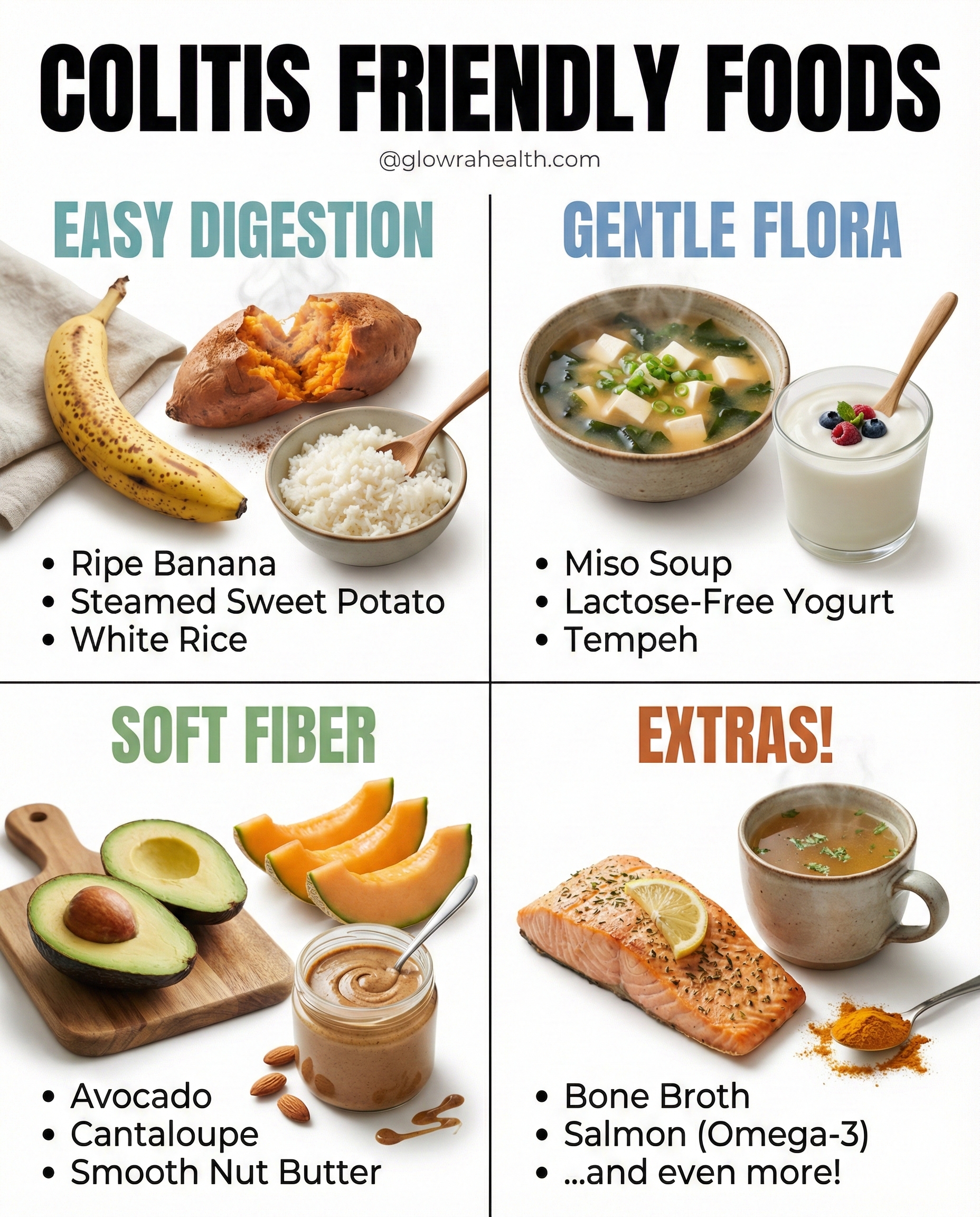
Avoiding triggers matters, but it’s just as important to focus on foods that nourish your body while being gentle on digestion.
Many people tolerate well-cooked vegetables better than raw vegetables. Cooking methods like steaming, roasting, or simmering can soften fiber and reduce irritation.
Lean proteins can support energy and recovery without excess fat:
- Skinless poultry
- Cooked eggs
- Baked fish
- Tofu
Lower-fiber fruits like bananas, melons, and applesauce are often easier to digest than fruits with thick skins, seeds, or high insoluble fiber.
Some people also try probiotic foods to support digestive balance. If you’re sensitive, start with small amounts and choose options that are easier to tolerate (for example, lactose-free yogurt with live cultures).
Dietary Strategies for Long-Term Maintenance
Managing colitis is not one-size-fits-all. Foods that feel safe for one person can trigger symptoms for another. A simple food journal can help you connect patterns over time, especially when you’re testing reintroductions.
Strategies that often help:
- Keep meals simple during flares: softer textures and fewer ingredients.
- Eat on a steady schedule: large gaps can make symptoms feel worse for some.
- Stay hydrated: diarrhea can quickly deplete fluids and electrolytes.
- Expand variety gradually: add one new food every few days.
If you’re newly diagnosed, losing weight, or limiting many food groups, working with a registered dietitian can help protect nutrition while you identify your personal triggers.
Conclusion: Supporting Digestive Wellness with Informed Choices
Dietary management of colitis often comes down to two moves: avoid the most irritating triggers during flare-like periods and prioritize easy-to-digest, nourishing foods when your gut needs calm.
As you refine your routine, it’s common to look beyond food and start researching supplements and nutrients. You’ll see a lot of marketing language online—everything from “Best Gut Health Supplements” to “Natural Anti-inflammatory Supplements.” Rather than chasing a “Best Supplement for Healthy Gut” headline, focus on what your body tolerates and what your clinician recommends. When comparing “Best Gut Health Products” or “Best Supplements for Gut Health,” read labels carefully (lactose, sugar alcohols, unnecessary additives) and make one change at a time. And if you’re curious about “Anti-inflammatory Vitamins and Minerals,” let lab results and medical guidance lead the decision.
With thoughtful planning and mindful adjustments, many people with colitis can improve comfort and quality of life over time.