Breakfast bowls work best when they combine protein, fiber, and healthy fats to keep energy steady and blood sugar stable throughout the morning.
Many people blame morning fatigue on “bad breakfasts.”
In reality, most energy crashes happen because breakfast lacks structure, not because it lacks “healthy foods.”
Unbuffered carbohydrates — eaten without protein, fat, or fiber — digest too quickly. Blood sugar rises fast, drops fast, and energy disappears within hours.
The solution isn’t cutting carbs.
It’s building breakfast bowls that pair carbs with stabilizers.
This guide expands the original 9 bowls into 15 balanced breakfast bowls designed to support steady energy, appetite control, and calmer mornings — without tracking macros or following rigid meal plans.
Why Breakfast Bowls Help Keep Energy Steady
Breakfast influences how your body handles energy for the next 4–6 hours.
A balanced breakfast bowl typically includes:
-
Protein (eggs, yogurt, cottage cheese, tofu)
-
Carbohydrates (oats, rice, fruit, bread)
-
Fat or fiber (nuts, seeds, olive oil, chia)
This combination:
-
Slows digestion
-
Reduces sharp glucose spikes
-
Improves satiety signals
-
Prevents mid-morning hunger and brain fog
Same foods. Different structure. Very different outcome.
How to Build Breakfast Bowls for Steady Energy
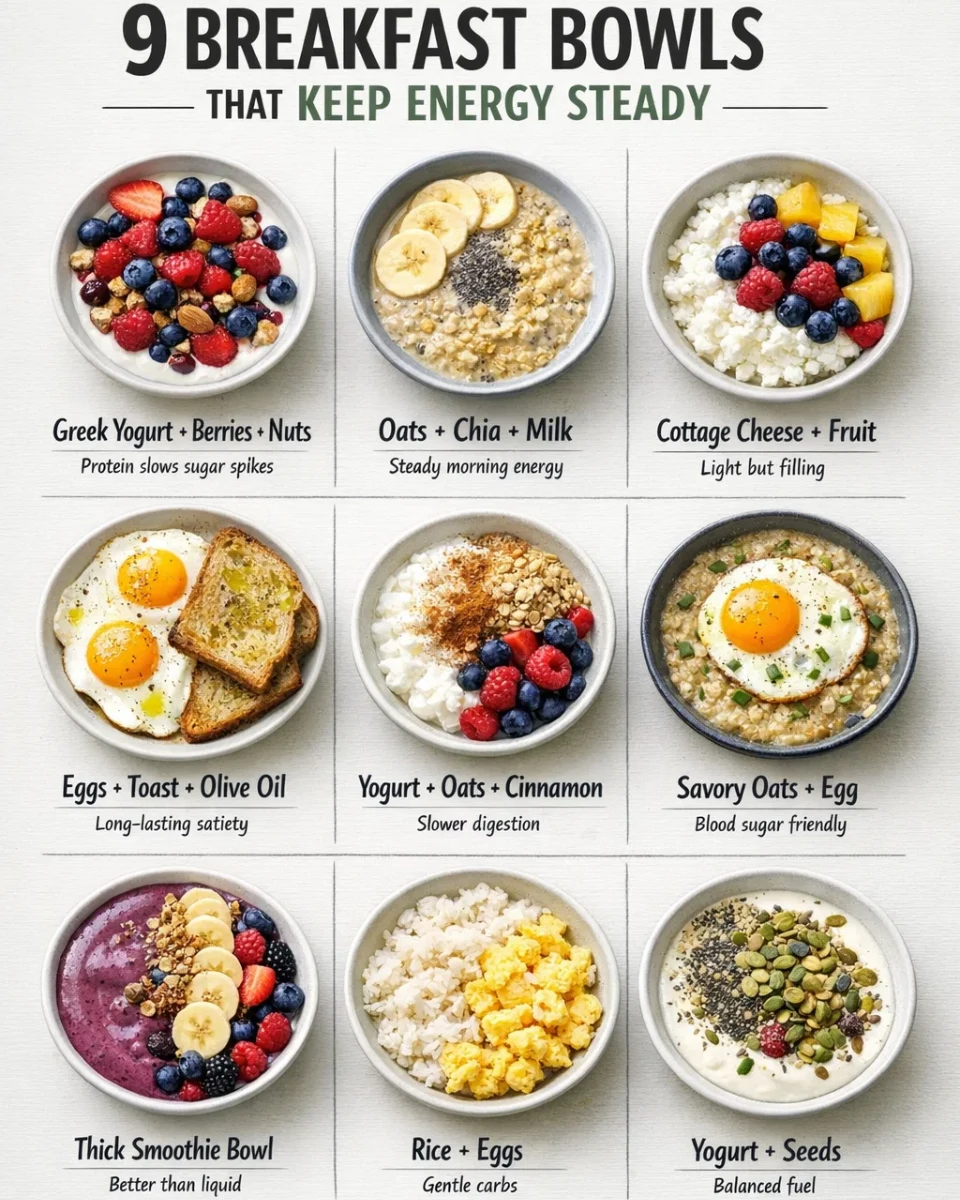
1. Greek Yogurt + Berries + Nuts
Why it works:
Protein slows sugar absorption from fruit; fats increase fullness.
How to build it:
-
¾ cup plain Greek yogurt
-
½ cup mixed berries
-
1–2 tbsp walnuts or almonds

2. Oats + Chia + Milk
Why it works:
Fiber and fat slow carbohydrate digestion.
How to build it:
-
½ cup rolled oats
-
1 tbsp chia seeds
-
Milk or plant milk
-
Optional: cinnamon
3. Cottage Cheese + Fruit
Why it works:
High protein, light digestion, steady energy.
How to build it:
-
¾ cup cottage cheese
-
Sliced mango, berries, or peaches

4. Eggs + Toast + Olive Oil
Why it works:
Protein and fat anchor carbohydrates.
How to build it:
-
2 eggs (fried or boiled)
-
1 slice whole-grain toast
-
Drizzle olive oil
5. Yogurt + Oats + Cinnamon
Why it works:
Protein + slow carbs = longer fullness.
How to build it:
-
Greek yogurt
-
¼ cup oats (dry or soaked)
-
Cinnamon
6. Savory Oats + Egg
Why it works:
A savory alternative with strong blood sugar control.
How to build it:
-
Cooked oats
-
Fried or soft-boiled egg
-
Olive oil, salt, herbs
7. Thick Smoothie Bowl
Why it works:
Texture slows consumption and digestion.
How to build it:
-
Frozen berries
-
Yogurt or protein milk
-
Nut butter
-
Eat with a spoon, not a straw
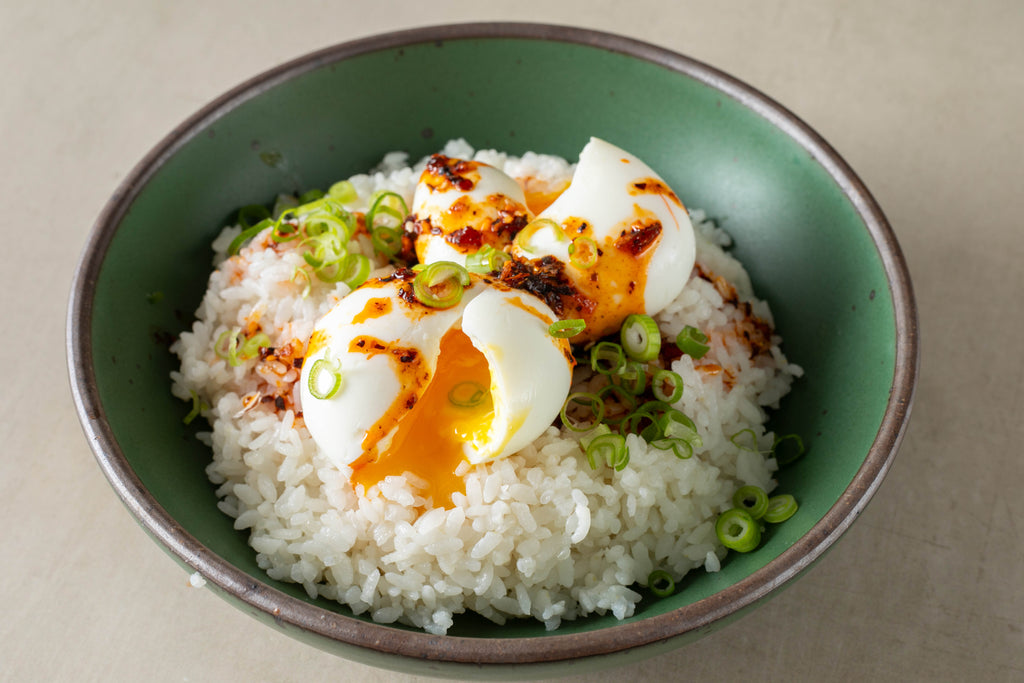
8. Rice + Eggs
Why it works:
Simple carb + protein = gentle energy release.
How to build it:
-
Cooked rice
-
Scrambled or soft-boiled eggs
-
Optional soy sauce or olive oil
9. Yogurt + Seeds
Why it works:
Seeds provide fat and fiber for stability.
How to build it:
-
Yogurt
-
Pumpkin, sunflower, or flax seeds
10. Oats + Peanut Butter + Banana
Carbs buffered by fat and protein
Servings: 1 bowl
Prep time: 7–10 minutes
Ingredients
-
Rolled oats: ½ cup
-
Milk (dairy hoặc unsweetened plant milk): ¾–1 cup
-
Banana: ½–1 medium, sliced
-
Natural peanut butter: 1–2 tbsp
-
Chia seeds (optional): 1 tsp
-
Cinnamon + pinch of salt
How to prepare
-
Cook oats with milk and a small pinch of salt until soft and creamy.
-
Stir in peanut butter while oats are warm so it melts evenly.
-
Top with banana slices, chia seeds, and cinnamon.
Why this bowl works
-
Fat and protein from peanut butter slow carbohydrate digestion.
-
Reduces rapid glucose spikes compared to oats alone.
-
A reliable option for steady morning energy.
11. Ricotta + Honey + Nuts
Slow digestion, satisfying texture
Servings: 1 bowl
Prep time: 3–5 minutes (no-cook)
Ingredients
-
Ricotta cheese (whole or part-skim): ¾ cup
-
Honey or maple syrup: 1–2 tsp
-
Mixed nuts (walnuts, almonds, pistachios): 2 tbsp, chopped
-
Fresh berries or sliced pear/apple (optional): ½ cup
-
Pinch of salt
How to prepare
-
Place ricotta in a bowl and mix in a small pinch of salt to balance flavor.
-
Drizzle with honey.
-
Add nuts and optional fruit on top.
Why this bowl works
-
Ricotta provides slow-digesting protein and fat.
-
Nuts increase satiety and reduce early hunger.
-
Texture-rich and calming rather than overly sweet.
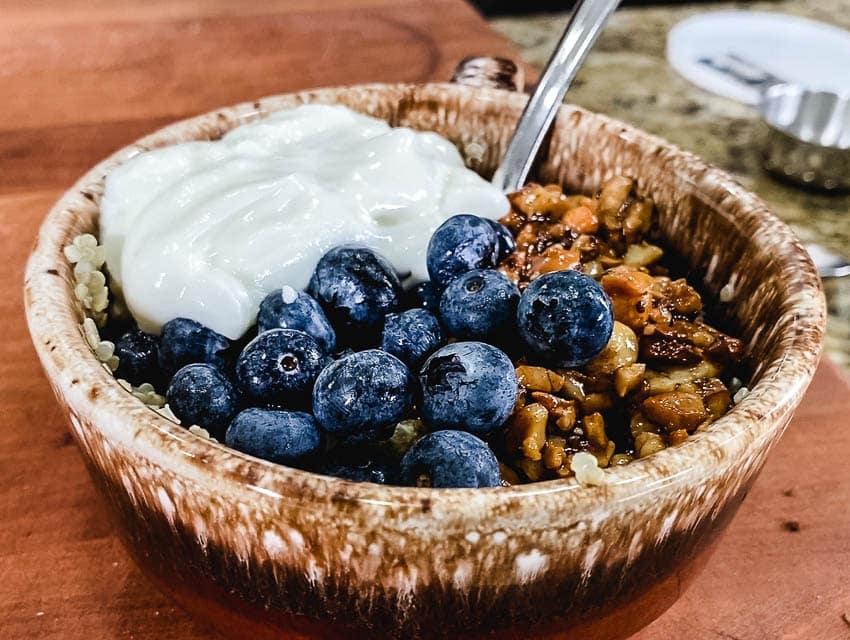
12. Quinoa Breakfast Bowl + Yogurt
Higher-protein grain with fermentation support
Servings: 1 bowl
Prep time: 5–10 minutes (using pre-cooked quinoa)
Ingredients
-
Cooked quinoa: ¾ cup
-
Plain Greek yogurt: ½–¾ cup
-
Berries: ½ cup
-
Chia or flax seeds: 1 tsp
-
Cinnamon + pinch of salt
-
Optional: 1 tbsp nut butter or 1 tsp honey
How to prepare
-
Warm quinoa slightly and season with cinnamon and a pinch of salt.
-
Add yogurt to the bowl, then layer quinoa on top.
-
Finish with berries, seeds, and optional nut butter.
Why this bowl works
-
Quinoa offers more protein than most breakfast grains.
-
Yogurt adds fermentation support and improves satiety signals.
-
Balanced macronutrients help prevent mid-morning crashes.
13. Tofu Scramble + Rice
Plant-based protein anchor
Servings: 1 bowl
Prep time: 10–12 minutes
Ingredients
-
Firm tofu: 150–200 g
-
Cooked rice (white or brown): ¾ cup
-
Olive oil: 1 tsp
-
Turmeric: ¼ tsp
-
Garlic or onion powder: ¼ tsp
-
Soy sauce or tamari: 1–2 tsp
-
Mixed vegetables (spinach, peppers, mushrooms): 1 cup
How to prepare
-
Crumble tofu with hands to a scrambled texture.
-
Sauté vegetables in olive oil for 2–3 minutes.
-
Add tofu, turmeric, and seasonings; cook until lightly golden.
-
Serve over warm rice.
Why this bowl works
-
Tofu provides steady plant-based protein.
-
Rice supplies gentle carbohydrates when paired with protein and fat.
-
A grounding, savory breakfast option.
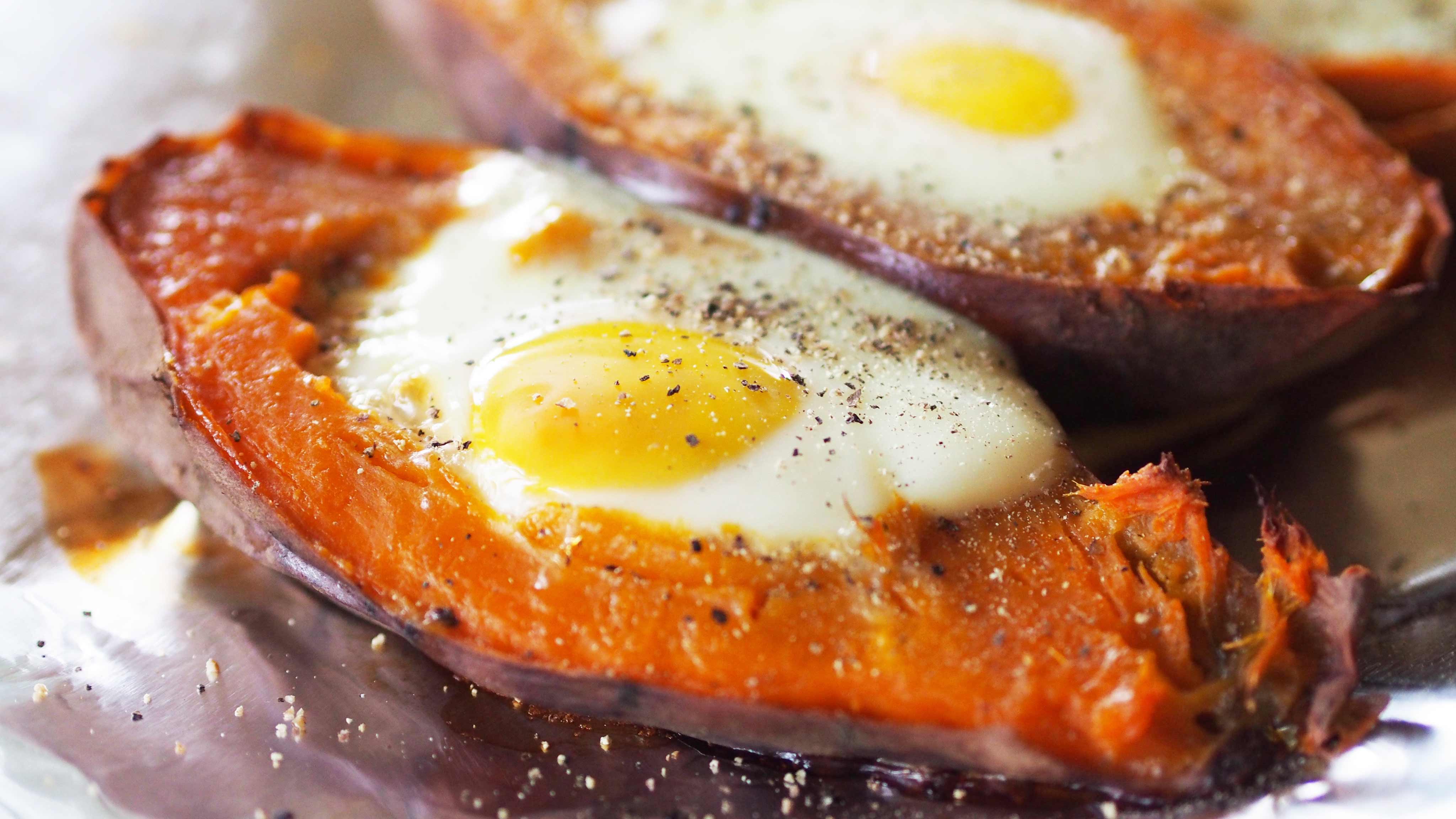
14. Eggs + Sweet Potatoes
Gentle starch + protein = long-lasting energy
Servings: 1 bowl
Prep time: 15–20 minutes
Ingredients
-
Eggs: 2
-
Sweet potato: 1 small, diced or sliced
-
Olive oil: 1 tsp
-
Salt and pepper
-
Leafy greens (spinach or arugula): 1–2 cups
-
Optional: feta cheese or avocado
How to prepare
-
Roast sweet potatoes with olive oil and salt until tender.
-
Cook eggs (fried, poached, or soft-boiled).
-
Assemble bowl with greens, sweet potatoes, and eggs on top.
Why this bowl works
-
Sweet potatoes provide slow-releasing carbohydrates.
-
Eggs support satiety and overnight recovery.
-
Helps maintain stable energy without heaviness.
 15. Cottage Cheese + Oats + Seeds
High-protein, low-crash breakfast option
Servings: 1 bowl
Prep time: 5–7 minutes
Ingredients
-
Cottage cheese: ¾ cup
-
Rolled oats (raw or lightly toasted): ⅓ cup
-
Mixed seeds (chia, pumpkin, flax): 1–2 tbsp
-
Berries or sliced apple: ½ cup
-
Cinnamon + pinch of salt
-
Optional: 1 tsp honey or 1 tbsp nut butter
How to prepare
-
Mix cottage cheese with cinnamon and a small pinch of salt.
-
Add oats and seeds.
-
Top with fruit and optional honey or nut butter.
Why this bowl works
-
High protein content supports longer fullness.
-
Seeds add fat and fiber to buffer carbohydrates.
-
Especially helpful for preventing late-morning hunger rebounds.
Why These Bowls Prevent Energy Crashes
All 15 bowls share the same principle:
Carbohydrates are never eaten alone.
This structure:
-
Reduces insulin spikes
-
Slows gastric emptying
-
Keeps energy release smoother
-
Prevents reactive hunger
Same calories. Completely different experience.
How to Build Your Own Breakfast Bowl (Framework)
You don’t need exact recipes.
Use this template:
-
Choose one carb base
-
Add one protein
-
Include fat or fiber
-
Keep portions familiar and repeatable
Consistency matters more than novelty.
Final Takeaway
Energy crashes aren’t caused by “bad breakfasts.”
They’re caused by unbuffered carbs and inconsistent structure.
Breakfast bowls work because they:
-
Reduce decision fatigue
-
Support blood sugar stability
-
Improve appetite regulation
-
Are easy to repeat daily
Eating well in the morning isn’t about perfection.
It’s about building meals your body recognizes as complete.
If you enjoy structured breakfasts, the same balance principles also apply to simple dinner bowls designed to support steady energy later in the day.