Chia seeds are one of those “tiny but mighty” foods. They can support digestion, fullness, and steady energy. But they can also backfire if you jump in too fast or eat them the wrong way.
The image gets it right: daily use can help… and daily use can hurt. The difference is how much, how you prepare them, and whether your gut actually likes the extra fiber.
Most people never realize this works because chia is not a “more is better” food. It is a “small and consistent” food.
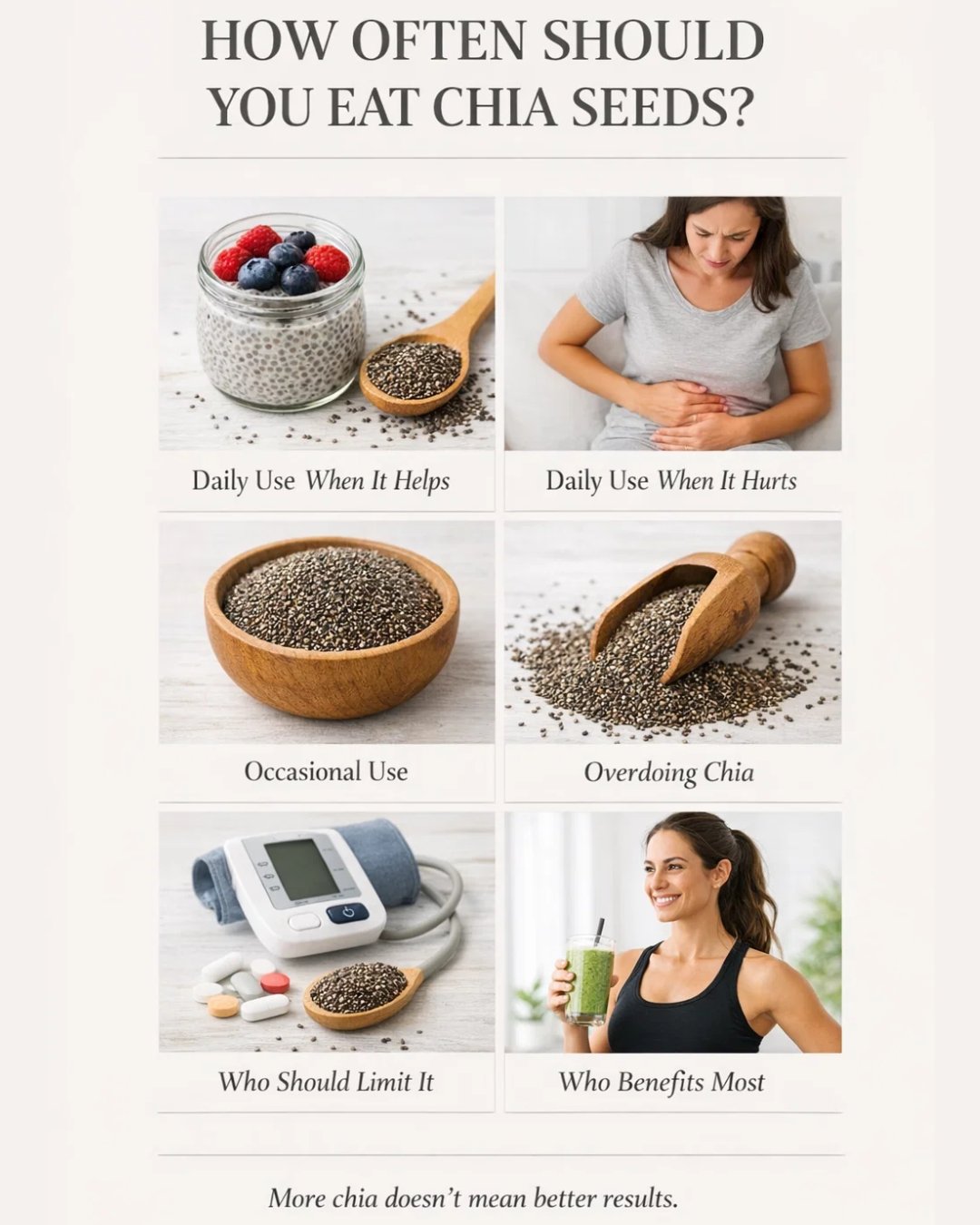
Daily Use When It Helps
Chia seeds often work best as a daily habit when your body responds well to fiber and you prepare them properly.
Why daily chia can feel good:
- They are very high in fiber (about 11 g per 2 tablespoons), which can support regularity and fullness.
- They form a gel when soaked, which many people find gentler on digestion and more satisfying.
Best daily amount (for most people):
Start with 1 tablespoon per day, then build to 2 tablespoons per day if you feel great.
Best ways to use daily:
- Chia pudding (soaked)
- Stirred into oatmeal after cooking
- Blended into smoothies
- Mixed into yogurt with fruit
Daily Use When It Hurts
Daily chia can feel “healthy” but still cause problems if your gut is sensitive or if you eat too much too soon.
Common signs daily chia is not helping right now:
- Bloating or tight belly
- Gas
- Constipation (especially if you are not drinking enough water)
- Loose stools (if your gut gets irritated by a sudden fiber jump)
This usually happens because chia adds a lot of fiber quickly. Sudden fiber increases can trigger GI discomfort, especially for IBS-prone people.
Simple fix:
Try chia every other day for 1–2 weeks, and keep servings smaller.
Occasional Use
Occasional chia is a great option if:
- You are new to high-fiber foods
- You have IBS symptoms that flare easily
- You tend to feel bloated with seeds and raw foods
Occasional plan that works well:
- 1 tablespoon, 2–3 times per week
- Always soaked (or mixed into something wet)
This gives you benefits without overwhelming digestion.
Overdoing Chia (What “Too Much” Looks Like)
“Overdoing” chia usually means:
- Eating large amounts daily (especially 3–5 tablespoons)
- Eating it dry, then drinking water afterward
- Adding chia on top of an already high-fiber day (beans + cruciferous veggies + bran cereal + chia)
Possible downsides:
- More bloating/gas/constipation from excess fiber
- Choking or swallowing risk if eaten dry (chia expands dramatically in liquid)
Important safety note:
If you have a history of swallowing issues, esophageal strictures, or dysphagia, only use chia fully expanded in liquid.
Who Should Limit It
Chia is food, but it still deserves caution for some people.
You may want to limit chia (or talk with your clinician) if you:
- Have IBS and fiber triggers flares
- Have a history of swallowing problems
- Are prone to kidney stones (chia contains oxalates; sensitivity varies)
- Take blood thinners or medications for blood sugar/blood pressure (chia may affect these markers in some people)
Also, if you are pregnant or breastfeeding, food amounts are usually fine, but avoid extreme daily doses and stay well-hydrated.
Who Benefits Most
Chia tends to help most if you want:
- More fullness between meals (especially at breakfast)
- A gentle way to increase fiber intake (slowly)
- An easy routine food that pairs with yogurt, oats, and smoothies
Chia is often a “quiet helper” for people who are building:
- Better breakfast habits
- More consistent digestion
- A higher-protein, higher-fiber routine
How to Use It Safely (Simple Rule)
Soak + start small + drink water.
A very easy starter ratio:
- 1 tablespoon chia + ½ cup liquid
- Let it sit 15–30 minutes (or overnight)
When You’ll Notice Results (Realistic Timeline)
- Within 1–3 days: You may notice more fullness and steadier snacking patterns.
- Within 1–2 weeks: If chia suits you and you increased slowly, digestion may feel more regular.
- If it “hurts” quickly: That is a sign to reduce the dose or frequency, not push through.
Final Takeaway
Chia seeds can be a daily habit when they help. But if they cause bloating, constipation, or discomfort, you will get better results by using them occasionally or at a lower dose. The goal is consistency, not intensity.
Source Science
- Harvard T.H. Chan Nutrition Source: chia nutrition and fiber per serving (The Nutrition Source)
- Harvard Health: chia’s gel-forming effect and satiety (Harvard Health)
- Mayo Clinic Health System: chia as a high-fiber, omega-3 rich food (Mayo Clinic Health System)
- American College of Gastroenterology (GI.org): choking/impaction risk with dry chia in people with swallowing issues (American College of Gastroenterology)
- EatingWell + dietitian review: side effects of overconsumption, hydration, medication cautions (EatingWell)