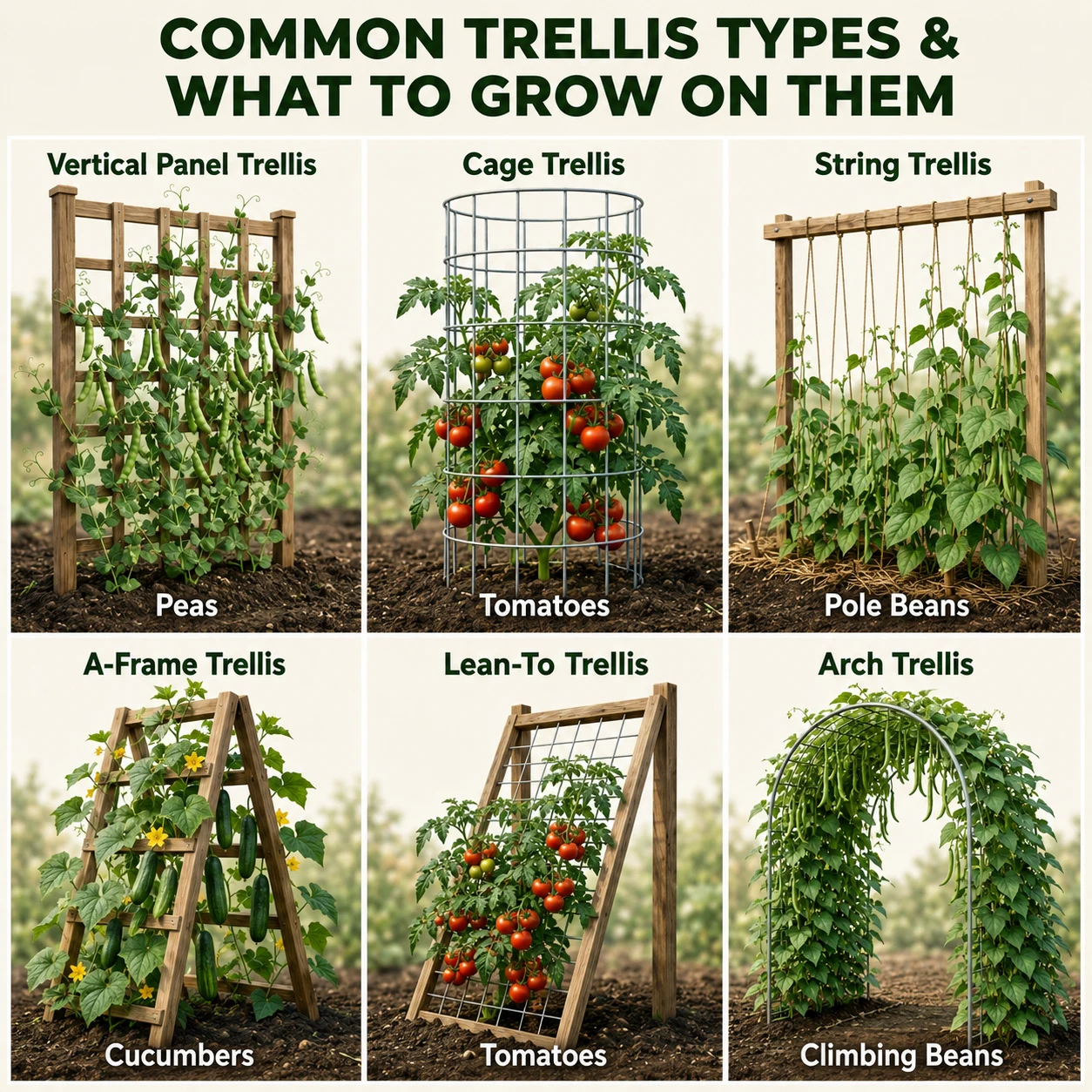
After many seasons of growing vegetables, raising chickens, and managing a small home garden, one lesson stands out clearly: using the right trellis can double your harvest while saving space. There above perfectly illustrates how different trellis structures support different climbing crops – and why understanding this matters for every gardener, from backyard beginners to small-scale farmers.
In this guide, I’ll break down common trellis types, explain why certain plants thrive on them, and walk you through step-by-step tips to build and use trellises effectively.
🌱 What Is a Garden Trellis and Why It Matters?
A trellis is a support structure that allows plants to grow vertically instead of sprawling on the ground. From years of experience, trellising offers major advantages:
- Better air circulation → fewer diseases
- Cleaner fruits and vegetables
- Easier harvesting
- Higher yields in small spaces
- Stronger, healthier plants
Most importantly, trellises work with the natural growth habits of climbing plants, not against them.
🌿 Vertical Panel Trellis – Best for Peas and Light Climbers
Plants: Peas, Sweet peas, snow peas, sugar snap peas, nasturtium
Why These Plants Thrive
Peas use thin tendrils that naturally grab onto flat or grid-like surfaces. Vertical panel trellises provide multiple horizontal and vertical contact points, making climbing effortless.
How to Use It (Step-by-Step)
- Install a wooden or metal panel firmly into the soil
- Plant peas 5–10 cm from the base
- Guide young shoots gently toward the trellis
- Water regularly and harvest often to encourage more pods
💡 Gardener’s tip: Peas fix nitrogen in the soil – great for crop rotation.

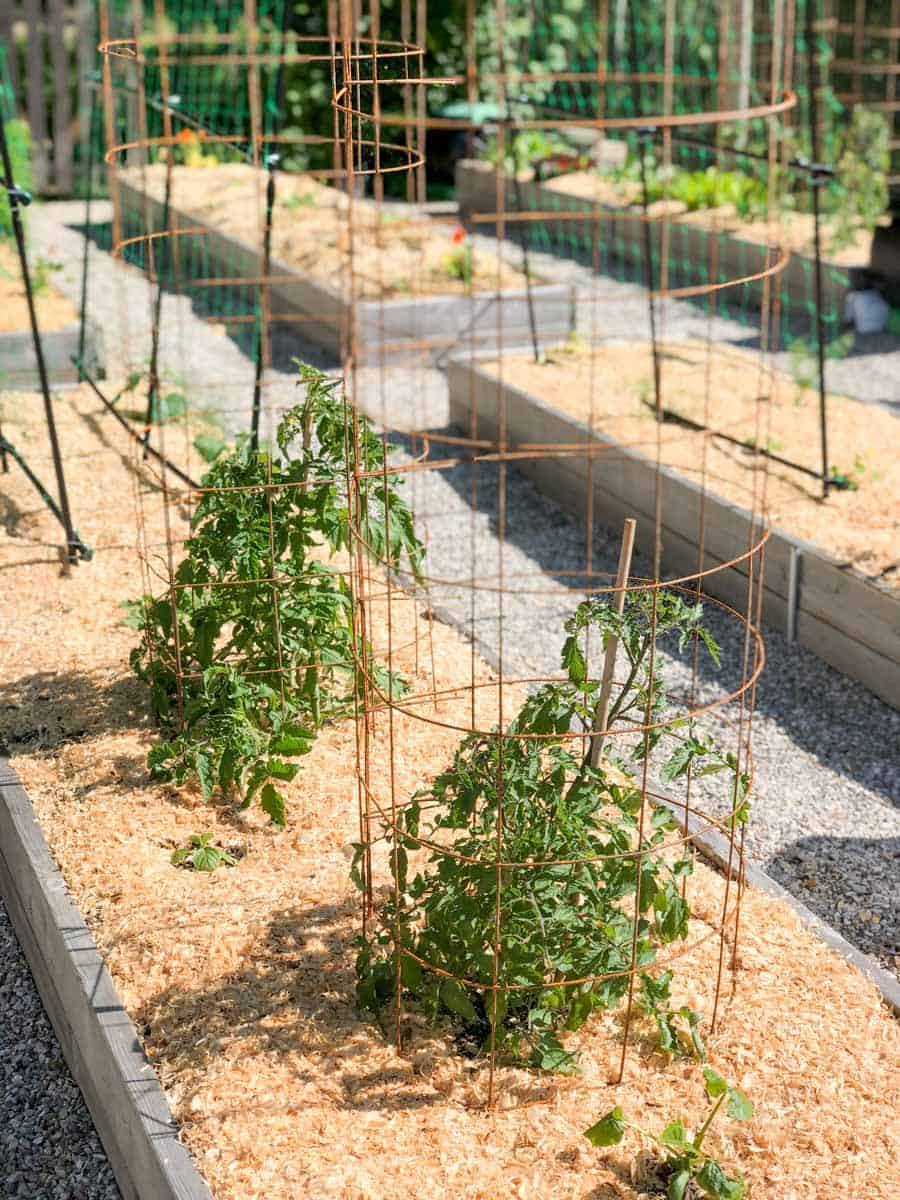
🍅 Cage Trellis – Perfect for Tomatoes and Heavy Fruiting Plants
Plants: Tomatoes, Eggplants, peppers (tall varieties), tomatillos
Why It Works
Tomatoes grow tall and heavy with fruit. Cage trellises support weight evenly and prevent stems from snapping under load.
Step-by-Step Care
- Place the cage at planting time
- Plant tomato seedlings deep
- Prune excess suckers to improve airflow
- Tie branches loosely if needed
⚠️ Avoid overcrowding – poor airflow invites disease.
🌱 String Trellis – Ideal for Pole Beans and Fast Climbers
Plants: Pole beans, Yard-long beans, hyacinth beans, climbing spinach
Why It Works
These plants grow rapidly and spiral naturally upward, making string trellises efficient and low-cost.
How to Set It Up
- Secure a horizontal wooden or metal bar
- Hang sturdy strings down to the soil
- Plant seeds at the base
- Train vines upward in the first two weeks
🌿 Bonus: Excellent system for greenhouse or balcony gardens.
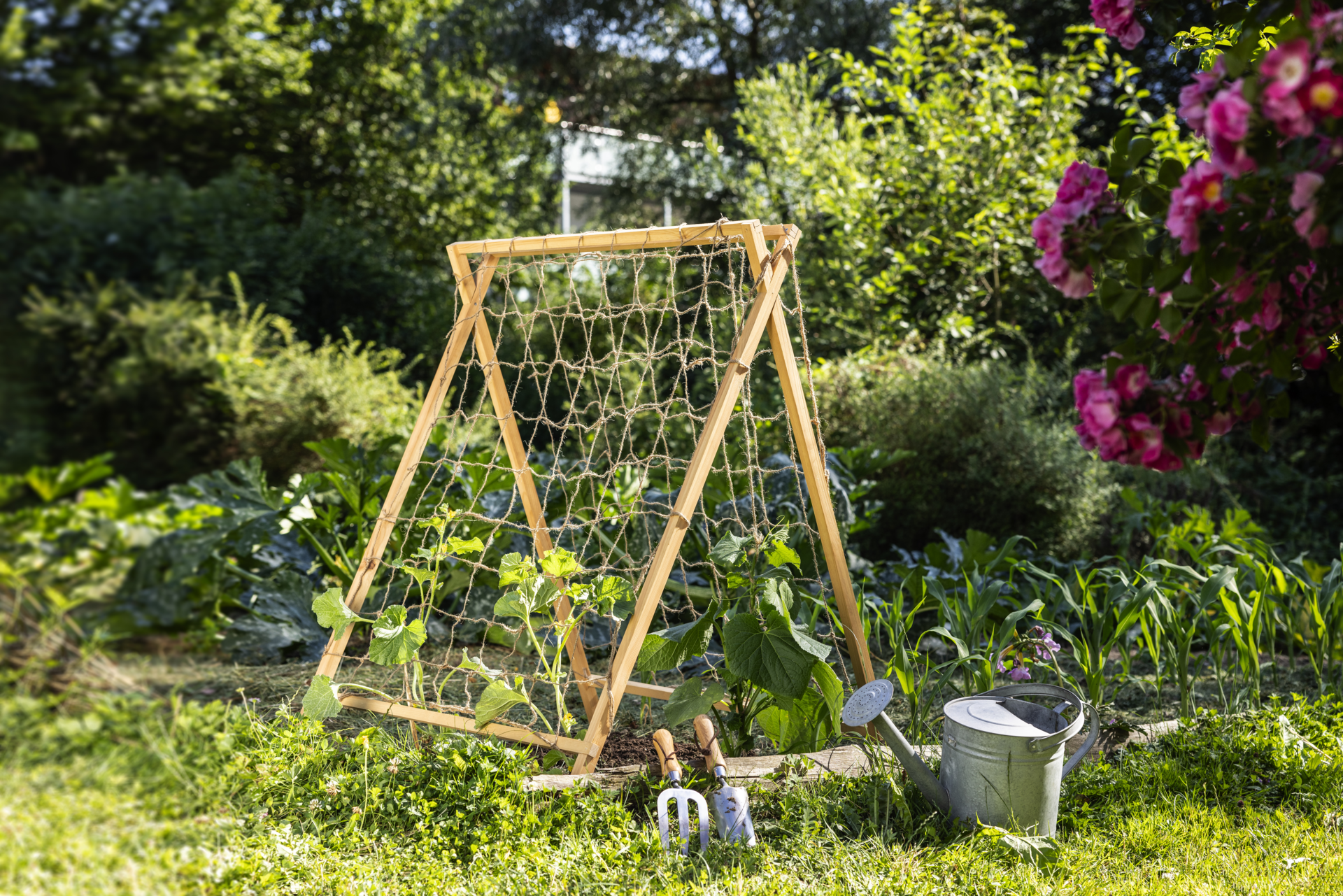
🥒 A-Frame Trellis – Strong Support for Cucumbers
Plants: Cucumbers, Zucchini (compact), gourds, small melons
Why It’s Effective
A-frame trellises provide balance and stability, supporting vines and heavy fruits while keeping them off damp soil.
Step-by-Step Tips
- Build or buy a sturdy A-frame
- Plant on both sides for maximum yield
- Prune excess leaves to expose fruits
- Harvest frequently to encourage new growth
💡 From experience: Vertical cucumbers grow straighter and taste cleaner.
🍅 Lean-To Trellis – Space-Saving for Tomatoes & Peppers
Plants: Tomatoes, Chili peppers, bush tomatoes, ground cherries
Why This Works
Lean-to trellises angle plants toward sunlight, improving photosynthesis and fruit ripening, especially in cooler climates.
Best Practices
- Anchor securely to avoid collapse
- Water at the base, not overhead
- Mulch to maintain soil moisture

🌿 Arch Trellis – Functional and Beautiful
Plants: Climbing beans, Bitter melon, snake gourd, loofah, grapes, passionfruit
Why Gardeners Love Arch Trellises
They combine productivity and aesthetics, creating shaded walkways while supporting vigorous climbers.
How to Use
- Install arches firmly into the ground
- Plant climbers on both sides
- Train vines early for even coverage
- Harvest hanging fruits easily from below
Bonus use: Chickens love resting under vine-covered arches in hot weather.
🌱 Malabar Spinach (Basella alba)
Best trellis type: String trellis, Vertical panel trellis
Growth habit: Fast-growing leafy vine
What Is It?
Malabar spinach is a heat-loving leafy green commonly grown in tropical and subtropical regions. Unlike regular spinach, it thrives in hot weather.
Why It Grows Well on Trellises
-
Produces long, flexible vines
-
Climbs naturally by wrapping stems
-
Vertical growth keeps leaves clean and tender
How to Grow It (Step-by-Step)
-
Install a vertical or string trellis before planting
-
Sow seeds or transplant seedlings at the base
-
Water consistently in warm conditions
-
Harvest young leaves regularly to promote branching
💡 Gardener’s tip: The more you harvest, the faster it grows.
🥒 Bitter Melon (Momordica charantia)
Best trellis type: Arch trellis, A-frame trellis
Growth habit: Vigorous climbing vine with hanging fruits
What Is It?
Bitter melon is a climbing vegetable valued for both culinary and medicinal uses, widely grown in Asian and tropical gardens.
Why It Needs a Trellis
-
Heavy fruits need support
-
Hanging fruits grow straighter and rot less
-
Better airflow reduces fungal disease
How to Grow It
-
Install a strong trellis early
-
Plant seeds 20–30 cm apart
-
Train vines upward as they grow
-
Harvest fruits young for best flavor
🌿 Loofah Gourd (Luffa cylindrica)
Best trellis type: Arch trellis, Heavy-duty A-frame
Growth habit: Large, aggressive climber
What Is It?
Loofah is both an edible vegetable when young and a natural sponge when mature.
Why Trellising Is Essential
-
Fruits grow long and heavy
-
Ground contact causes misshapen loofahs
-
Vertical growth improves sponge quality
Step-by-Step Growing Tips
-
Use a very sturdy trellis
-
Space plants generously
-
Hand-pollinate if needed
-
Allow fruits to mature fully for sponge use
⚠️ Without a strong trellis, loofah vines can collapse structures.

🍈 Snake Gourd (Trichosanthes cucumerina)
Best trellis type: Arch trellis, Vertical panel
Growth habit: Long, hanging fruits
What Is It?
Snake gourd is a traditional climbing vegetable known for its extremely long, curved fruits.
Why It Thrives on Trellises
-
Gravity helps fruits grow straight
-
Improved airflow prevents rot
-
Easier harvesting
How to Grow
-
Build a tall trellis or arch
-
Train vines upward early
-
Harvest young fruits regularly
-
Prune excessive foliage for airflow
🌿 Passionfruit (Passiflora edulis)
Best trellis type: Arch trellis, Fence trellis
Growth habit: Perennial woody vine
What Is It?
Passionfruit is a perennial climbing vine producing fragrant flowers and juicy fruits.
Why It Needs a Strong Trellis
-
Woody stems become heavy over time
-
Long lifespan requires durable support
-
Flowers and fruits benefit from sun exposure
Growing Steps
-
Install permanent trellis or fence
-
Plant in full sun
-
Prune annually to encourage fruiting
-
Mulch and fertilize regularly
🌸 Bonus: Passionflower attracts pollinators and beneficial insects.

🌱 Chayote Squash (Sechium edule)
Best trellis type: Arch trellis, Cage trellis
Growth habit: Extremely vigorous climber
What Is It?
Chayote is a climbing squash that produces pear-shaped fruits and edible shoots.
Why Trellising Is Critical
-
Vines grow aggressively
-
Fruits are heavy
-
Ground growth causes disease
How to Grow
-
Use a very strong trellis
-
Plant whole fruit partially buried
-
Guide vines upward early
-
Harvest fruits regularly to control growth
Final Thoughts from a Working Gardener
Trellising isn’t just about structure – it’s about understanding plant behavior. When you match the right plant to the right trellis, nature does most of the work for you.
Whether you’re growing vegetables for your family, running a small farm, or combining gardening with poultry or livestock systems, vertical growing is one of the smartest skills you can learn.
Healthy plants, cleaner harvests, and better use of space – that’s the power of trellises.