Milk choices feel simple until you stand in front of the fridge aisle and realize there are ten “milks” that all behave differently in coffee, smoothies, and your stomach.
Most people never realize this works because they pick a milk based on taste alone. If you match your milk to your goal, you can often feel a difference in fullness, energy, and digestion without changing your whole diet.
Why “the best milk” depends on your goal
Milk is not just a drink. It is a “macro decision” that can change:
- How full you feel after breakfast.
- How much protein you get without thinking about it.
- How many added sugars sneak into your day.
- How your digestion responds if you are lactose-sensitive.
Also, plant-based milks vary a lot by brand because fortification and added sugar are not consistent across products.
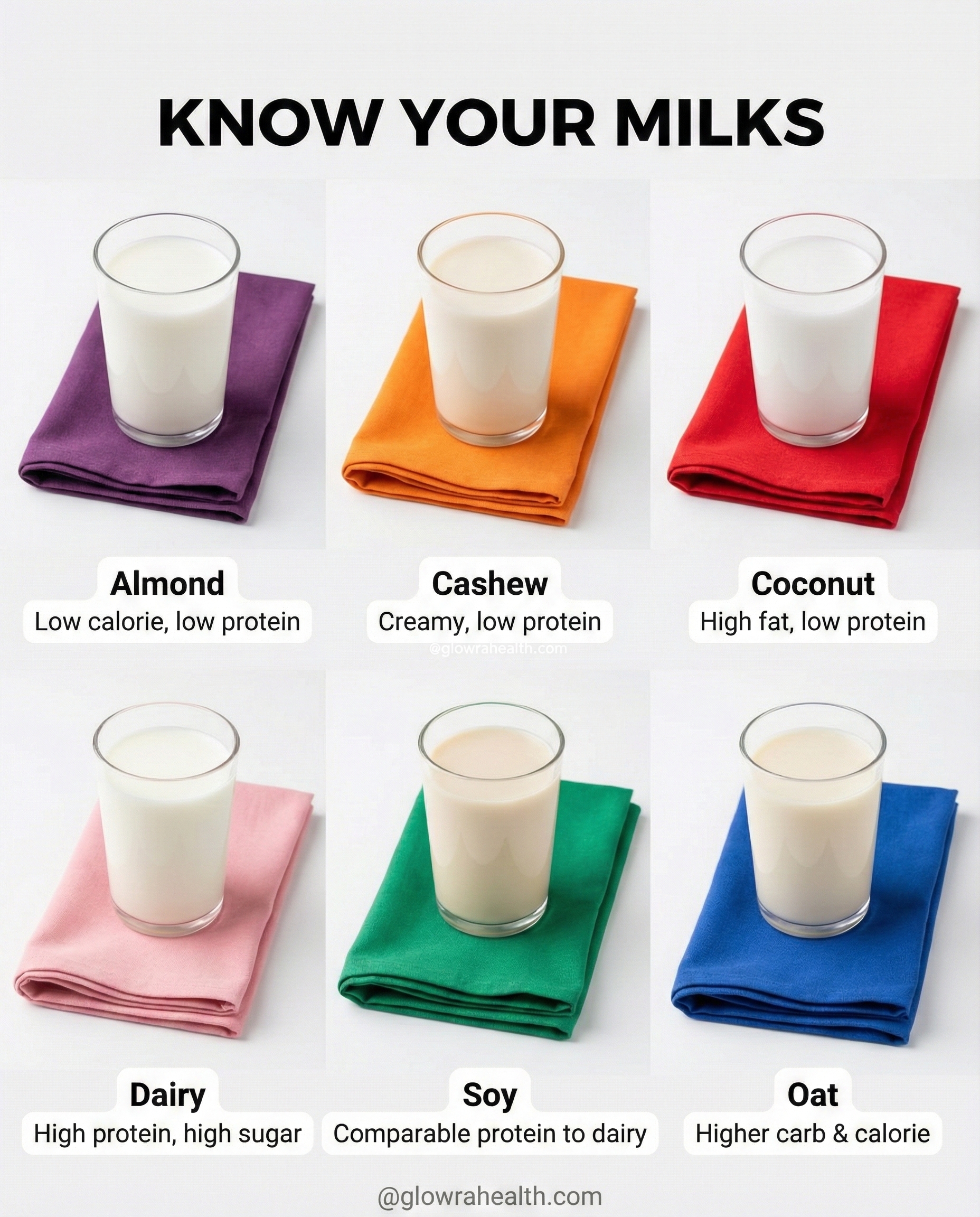
1. Almond milk (low calorie, low protein)
Almond milk is often the lightest option. Many unsweetened versions are low calorie, but they also tend to be low in protein, so they may not keep you full on their own.
Best for: coffee, smoothies where you already add protein, and lighter snacks.
Helpful tip: Choose an unsweetened, fortified version if you rely on it daily.
2. Cashew milk (creamy, low protein)
Cashew milk is popular because it is naturally creamy. Like many nut milks, it usually provides less protein than dairy or soy, so it works best when you pair it with a protein source.
Best for: creamy lattes, soups, and sauces where texture matters.
Helpful tip: If you use it as your “main milk,” check the label for calcium and vitamin D fortification.
3. Coconut milk beverage (high fat, low protein)
Coconut milk beverages can be higher in saturated fat than other plant milks, and they are usually low in protein. Coconut drinks also vary a lot depending on whether it is a beverage carton or a canned cooking product.
Best for: occasional variety, smoothies, and recipes where you want a coconut flavor.
Helpful tip: If heart health is a priority, keep coconut milk as an “often sometimes,” not your only milk choice.
4. Dairy milk (high protein, “high sugar” nuance)
Cow’s milk is naturally higher in protein than most nut milks. The “sugar” in plain dairy milk is mainly lactose, which is a naturally occurring milk sugar, not the same as added sugar.
Best for: protein support, kids and teens (when tolerated), and people who want a simple, filling option.
Helpful tip: Flavored milks can contain added sugar, so the label matters.
5. Soy milk (comparable protein to dairy)
Soy milk is often the closest plant-based option to dairy in protein, and many fortified soy milks also match key nutrients more closely than other plant milks. Some dietary guidance highlights fortified soy as a strong dairy alternative.
Best for: anyone who wants plant-based milk with real satiety and higher protein.
Helpful tip: Choose unsweetened fortified soy milk if you want a daily staple.
6. Oat milk (higher carb and calorie)
Oat milk is usually higher in carbohydrates than nut milks, which often means higher calories too. That is not “bad,” but it can matter if you drink multiple cups a day. Oat milk can also be a little lower in protein than dairy or soy.
Best for: coffee drinks, creamy texture, and people who need more energy.
Helpful tip: Many oat milks are sweetened, so look for “unsweetened” if you are managing blood sugar.
How to choose your milk in 10 seconds
- If you want more fullness and protein, choose dairy or soy.
- If you want lowest calories, choose unsweetened almond.
- If you want creamy texture, choose oat or cashew.
- If you want coconut flavor, choose coconut milk beverage but keep it moderate.
When you’ll notice changes
Milk swaps are one of the fastest “small changes” because you repeat them daily.
- Within 1–3 days: Some people notice less bloating if they switch from dairy to a lactose-free option when lactose is the trigger.
- Within 1–2 weeks: You may notice better fullness if you switch from almond or oat to soy or dairy for higher protein.
- Over 4+ weeks: Your routine becomes easier because you are not fighting hunger or energy dips as much.
Quick safety notes
- If you are relying on plant milks long-term, choose fortified options to support calcium and vitamin D intake.
- If you have nut allergies, avoid almond and cashew milk.
- If you are watching heart health, be mindful with coconut-based beverages due to saturated fat.
- If you are managing added sugar, check labels because “total sugar” can include natural sugars, while added sugar is listed separately.
Final takeaway
The best milk is the one that fits your goal and your body. If you want a simple default, unsweetened fortified soy is often the most balanced plant option, while dairy can be a great choice if you tolerate it. Nut milks can be useful too, especially when you treat them as a flavor and texture choice, not a protein source.
Related source science
- Stanford Lifestyle Medicine: Dairy vs soy vs almond vs oat overview.
- Harvard T.H. Chan School of Public Health: Plant-based milks and fat profile notes (including coconut and nut milks). (Harvard Chan School)
- Frontiers in Nutrition: Nutrient comparison between plant-based drinks and milk, including protein quality and fortification issues. (Frontiers)
- Springer review: Fortification trends and common differences (protein, micronutrients, added sugar). (Springer Nature Link)
- FDA: Added sugars vs total sugars on Nutrition Facts labels (important for flavored milks). (U.S. Food and Drug Administration)
- ScienceDirect study: Nutrient content comparison across plant milks (soy, almond, oat) vs dairy. (ScienceDirect)