Potatoes are one of the most misunderstood foods in modern diets.
They are often labeled as “fattening” or “empty carbs,” yet potatoes are naturally rich in vitamins, minerals, and compounds that support energy, digestion, and satiety. What really changes their impact is the type of potato, how it is cooked, and what you eat it with.
Each potato variety has a different starch structure, nutrient profile, and cooking behavior. Choosing the right one makes meals taste better and feel better afterward.
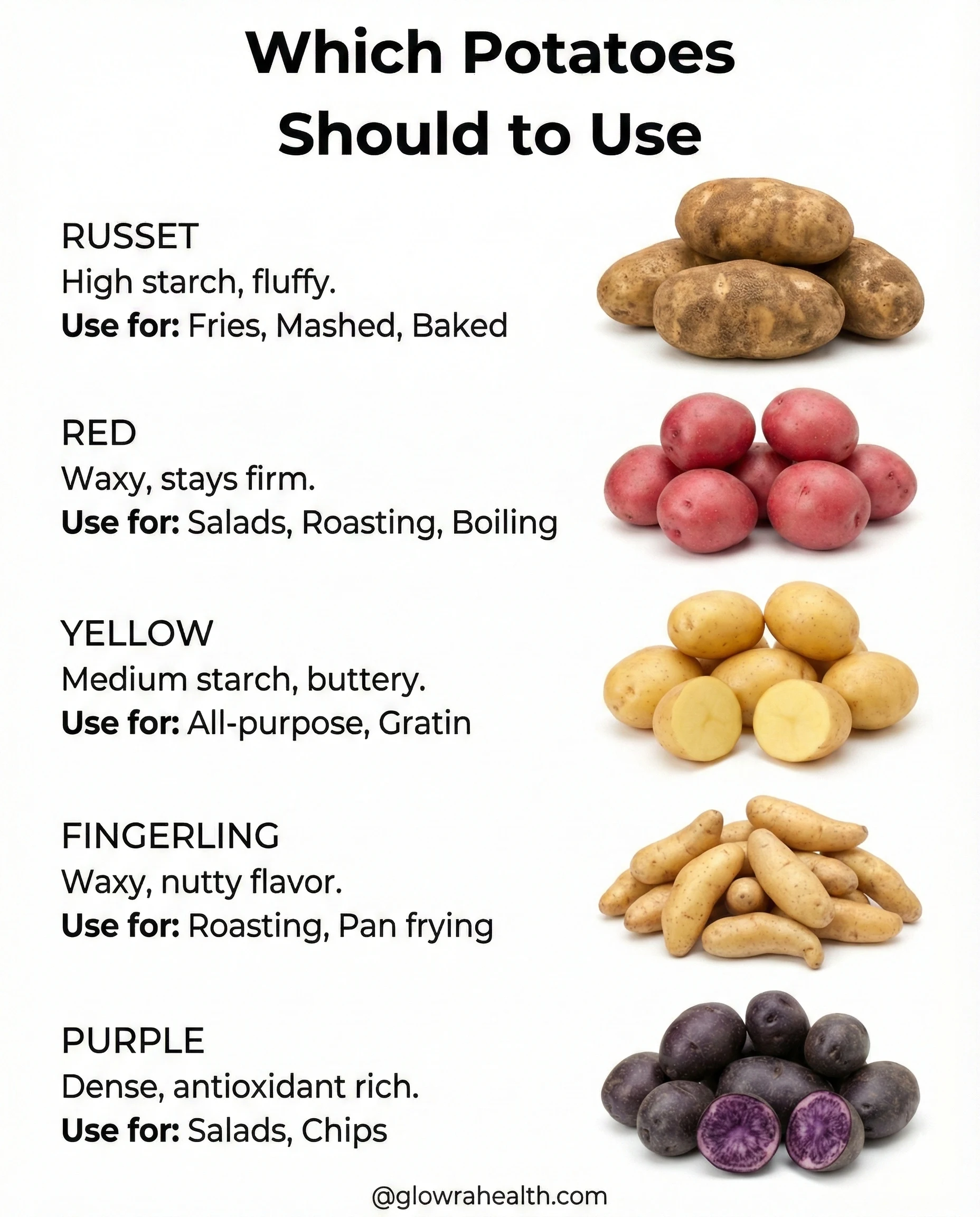
1. Russet Potatoes
High starch, fluffy interior
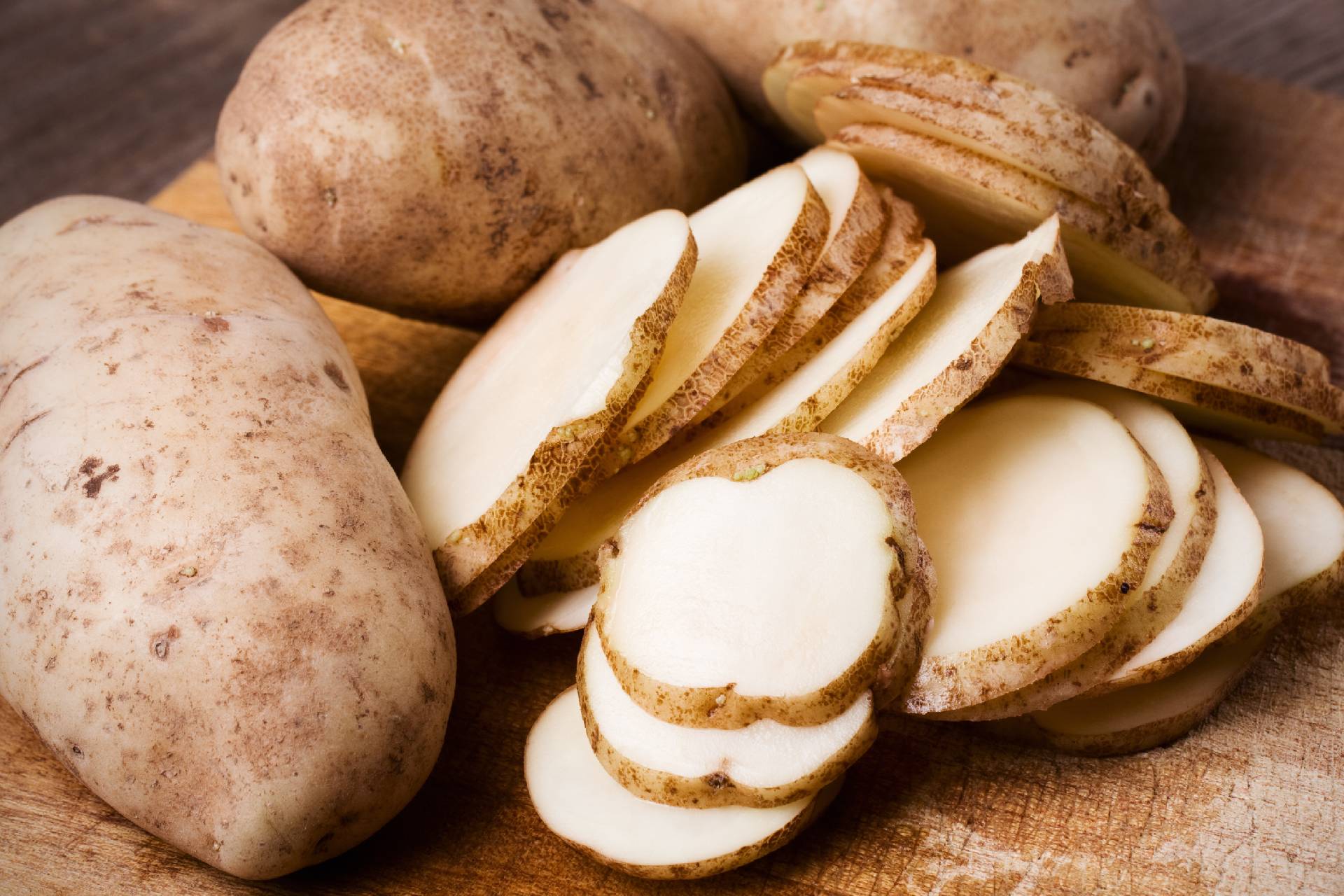
Russet potatoes are the classic large brown potatoes most people picture. They are high in starch and low in moisture, which is why they become soft and airy when cooked.
Best uses
- Fries
- Mashed potatoes
- Baked potatoes
Why russets behave this way
The high starch content causes the potato cells to separate easily when heated. This creates a fluffy texture rather than a creamy or firm one.
Nutrition highlights
- High in potassium, which supports blood pressure balance
- Provides vitamin B6, important for energy metabolism
- Naturally low in fat and sodium
- Good source of carbohydrates for quick energy
Russets digest faster than waxy potatoes, which is helpful for active people but may cause quicker hunger if eaten alone.
Health tip
Pair russet potatoes with protein and fiber, such as chicken and vegetables, to slow digestion and improve satiety.
2. Red Potatoes
Waxy, holds shape well
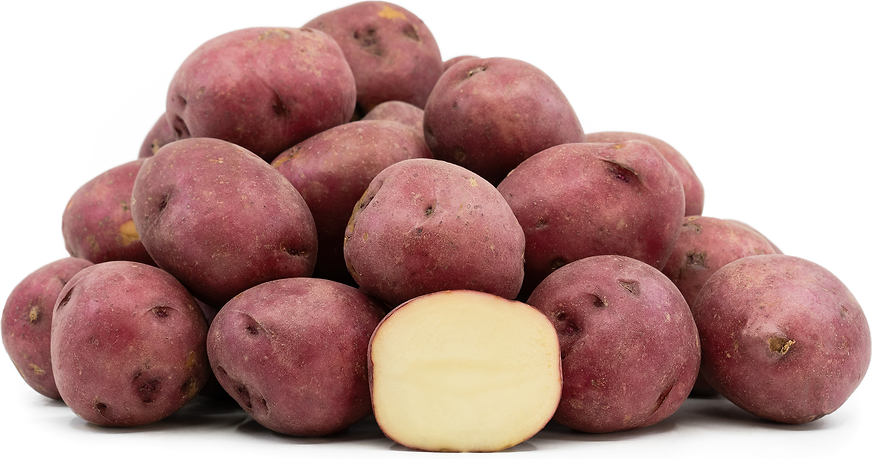
Red potatoes have a thin skin and higher moisture content. They are lower in starch than russets and stay firm when cooked.
Best uses
- Potato salads
- Boiling
- Roasting
Why red potatoes stay firm
Their waxy structure means the cells stay intact instead of breaking apart. This prevents them from becoming mushy.
Nutrition highlights
- Contains vitamin C, which supports immune health
- Provides potassium for muscle and nerve function
- The skin contains antioxidants and fiber
- Lower glycemic impact compared to high-starch potatoes
Health tip
Leave the skin on when possible. The skin adds fiber, which helps digestion and supports more stable blood sugar.
3. Yellow Potatoes
Medium starch, naturally buttery
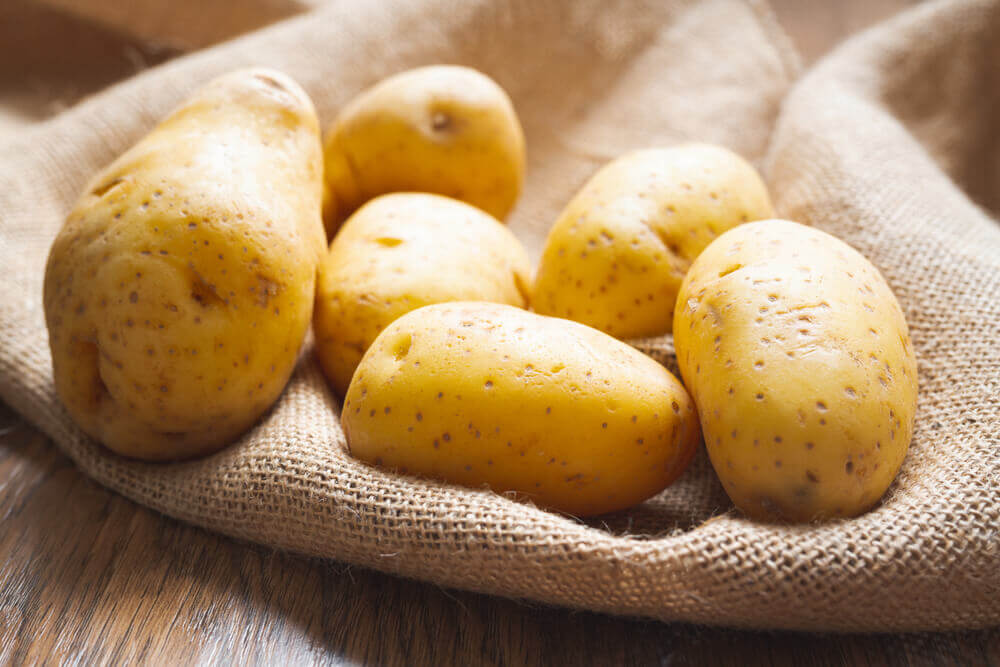
Yellow potatoes fall between russets and red potatoes. They are creamy without being dry and soft without falling apart.
Best uses
- All-purpose cooking
- Gratin dishes
- Roasting
- Light mashing
Why yellow potatoes are versatile
Their balanced starch and moisture create a smooth texture that works across many recipes without needing heavy cream or butter.
Nutrition highlights
- Rich in vitamin C and vitamin B6
- Provides iron, which supports oxygen transport in the blood
- Contains carotenoids, which contribute to their yellow color and antioxidant activity
- Naturally satisfying due to moderate starch
Health tip
Because they already taste buttery, you can often use less added fat when cooking yellow potatoes.
4. Fingerling Potatoes
Waxy, nutty flavor
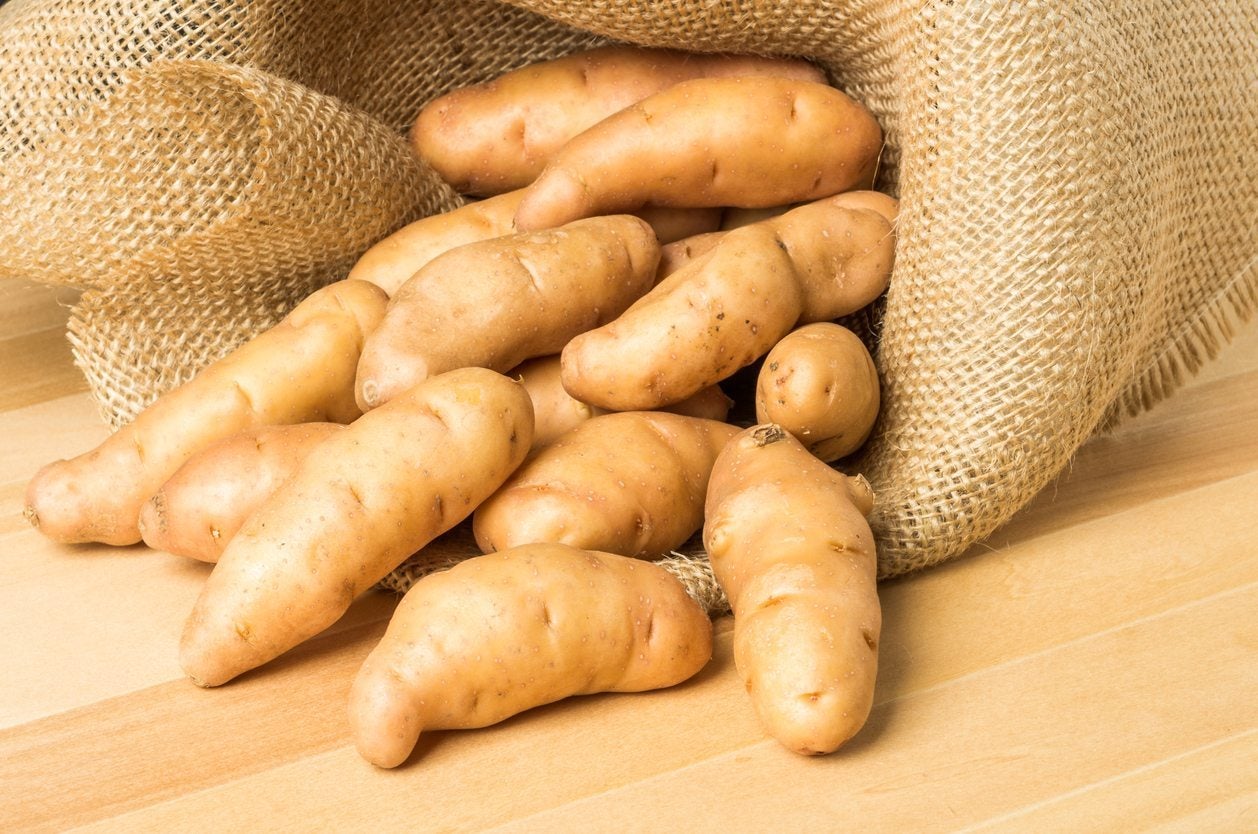
Fingerling potatoes are small, narrow potatoes with a firm texture and concentrated flavor.
Best uses
- Roasting
- Pan frying
- Sheet-pan meals
Why fingerlings taste richer
Their dense flesh and higher skin-to-flesh ratio give them a deeper, slightly nutty flavor compared to larger potatoes.
Nutrition highlights
- Good source of fiber, especially with skin on
- Provides potassium and magnesium, supporting muscle function
- Lower starch content than russets
- Naturally portion-friendly due to size
Health tip
Fingerlings are great for mindful eating. Their size encourages slower eating and better portion awareness.
5. Purple Potatoes
Dense, antioxidant-rich
Purple potatoes stand out because of their deep purple color, which comes from anthocyanins, the same antioxidant compounds found in blueberries.
Best uses
- Salads
- Chips
- Roasting
Why purple potatoes are unique
They are denser and slightly firmer than yellow or red potatoes, which helps them hold shape and color during cooking.
Nutrition highlights
- Rich in anthocyanins, linked to antioxidant and anti-inflammatory effects
- Provides vitamin C and potassium
- May have a lower glycemic response than white potatoes in some people
- Supports vascular and cellular health due to antioxidant content
Health tip
Avoid overcooking purple potatoes. Excess heat can dull the color and reduce antioxidant content.

How Potato Type Affects Blood Sugar
Not all potatoes affect the body the same way.
- High-starch potatoes (russet) digest faster
- Waxy potatoes (red, fingerling) digest slower
- Cooling cooked potatoes increases resistant starch, which may support gut health and steadier blood sugar
Eating potatoes with protein, fat, and fiber always helps reduce blood sugar spikes.
Healthiest Ways to Cook Potatoes
Cooking method matters just as much as potato type.
Better options include:
- Boiling
- Baking
- Roasting
- Air frying
Less supportive options:
- Deep frying
- Heavy cream-based sauces
- Large portions without protein or vegetables
When You’ll Notice a Difference
Switching potato types is a practical upgrade.
- Immediately: better texture and flavor in recipes
- Within 1–2 weeks: less heaviness after meals when paired properly
- Over time: improved satisfaction and fewer cravings from balanced meals
Quick Safety Notes
- Avoid green or sprouted potatoes, as they contain higher levels of solanine
- People with diabetes should monitor portion size and cooking method
- Sodium-heavy toppings can quickly outweigh the potato’s natural benefits
Final Takeaway
Potatoes are not one-size-fits-all.
- Russet for fluffy and high energy meals
- Red for firm, fresh dishes
- Yellow for creamy, all-purpose cooking
- Fingerling for rich flavor and roasting
- Purple for antioxidant support and visual appeal
Choosing the right potato improves taste, nutrition, and how your body responds after eating.