If you are trying to build muscle, it is tempting to focus only on protein.
But the truth is, muscle gain works best when protein and fiber work together.
Protein gives your body the building blocks for muscle.
Fiber helps you digest better, control appetite, and keep energy steadier so you can train consistently.
Most people never realize this because they “hit protein” but feel bloated, tired, or snacky all day. When fiber is missing, meals can feel heavy or unbalanced.
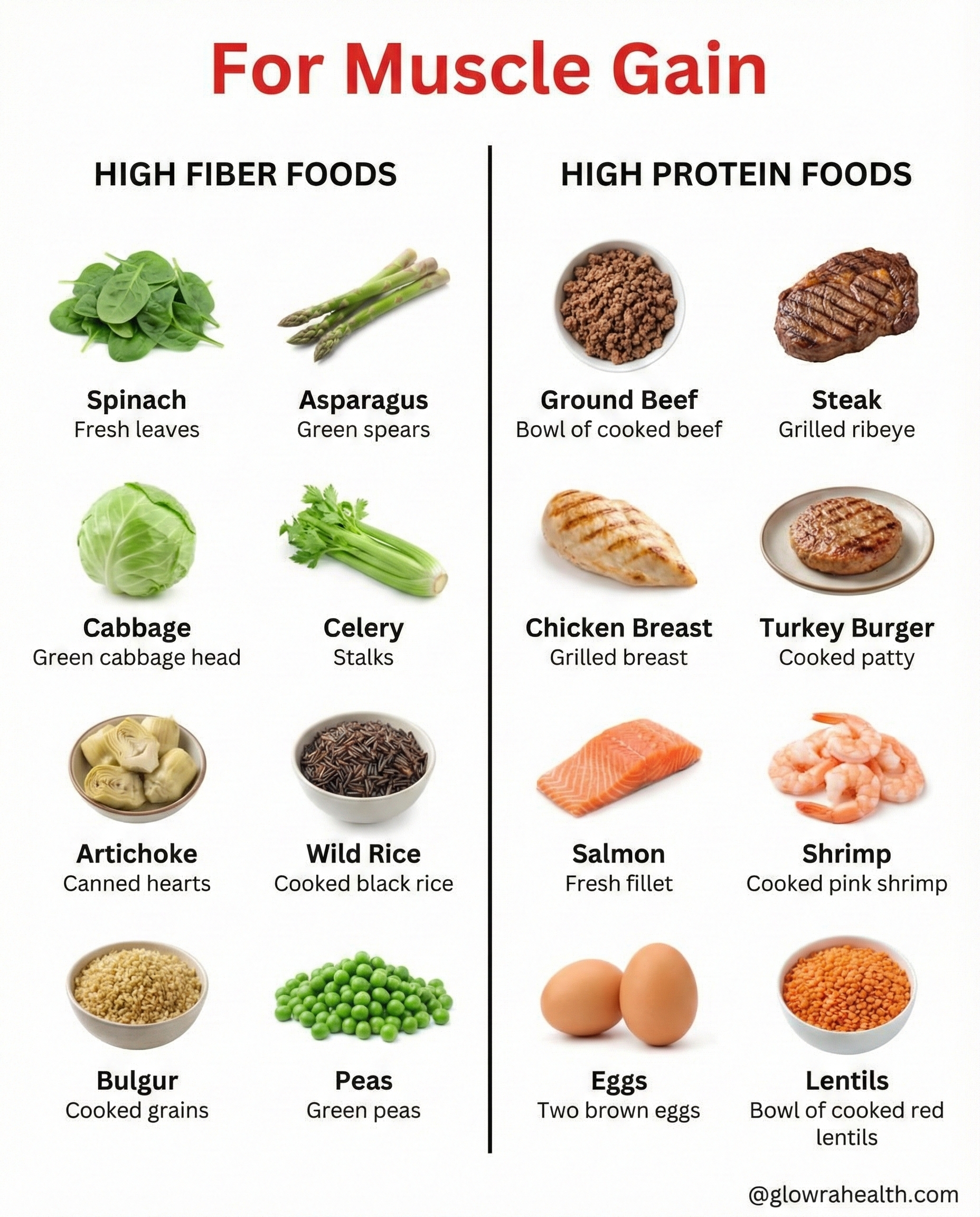
High-Fiber Foods for Muscle Gain
1. Spinach
Spinach is a low-calorie leafy green that provides important micronutrients for muscle function.
One cup of raw spinach delivers small amounts of protein and fiber, along with magnesium, iron, potassium, and vitamin K. Magnesium plays a key role in muscle contraction and energy production.
Spinach also contains antioxidants that support recovery after intense training. Because it is low in calories but high in volume, it helps balance higher-calorie muscle-gain meals.
Easy ways to eat it
-
Toss into omelets with eggs
-
Blend into smoothies
-
Sauté with garlic as a side
2. Asparagus
Asparagus is a fiber-rich vegetable that supports digestion and fluid balance.
One cup of cooked asparagus provides dietary fiber, folate, potassium, and vitamin C. Folate supports cell growth and repair, which is essential during muscle recovery.
Asparagus is also naturally low in calories, making it useful for adding nutrients without crowding out protein intake.
Easy ways to eat it
-
Roast with olive oil and salt
-
Add to stir-fries
-
Serve beside steak or salmon
3. Cabbage
Cabbage is a budget-friendly vegetable that adds fiber and vitamin C to muscle-building diets.
One cup of cooked green cabbage provides fiber, vitamin C, vitamin K, and small amounts of potassium. Vitamin C supports collagen formation, which is important for joints and connective tissue.
Cabbage helps increase meal volume and supports gut health, which can improve nutrient absorption over time.
Easy ways to eat it
-
Add shredded cabbage to bowls and wraps
-
Make quick sautéed cabbage with ground beef
-
Use in soups for volume
4. Celery
Celery is mostly water but still contributes useful micronutrients.
One cup of chopped celery provides fiber, potassium, and antioxidants, while being very low in calories. Potassium supports muscle contractions and helps regulate fluid balance.
Celery is helpful for hydration and digestion when calorie intake is high during muscle-gain phases.
Easy ways to eat it
-
Snack with yogurt-based dip
-
Chop into tuna or chicken salad
-
Add to soups and stews
5. Artichoke
Artichokes are one of the highest-fiber vegetables available.
One medium artichoke provides over 9 grams of fiber, along with magnesium, potassium, and antioxidants. The fiber helps support gut bacteria, which may improve digestion and nutrient absorption.
Good digestion is critical when protein intake increases, making artichokes a valuable support food for muscle gain.
Easy ways to eat it
-
Add to salads
-
Toss into pasta with chicken breast
-
Mix into grain bowls
6. Wild Rice
Wild rice is a whole grain that provides complex carbohydrates and fiber.
One cup of cooked wild rice contains protein, fiber, magnesium, phosphorus, and B vitamins. These nutrients support energy metabolism and muscle recovery.
Wild rice digests more slowly than refined grains, helping provide sustained energy for training sessions.
Easy ways to eat it
-
Serve under salmon or shrimp
-
Add to veggie bowls with peas
-
Mix with lentils for a hearty base
7. Bulgur
Bulgur is a whole grain made from cracked wheat and is rich in fiber.
One cup of cooked bulgur provides fiber, plant protein, iron, and magnesium. Fiber helps stabilize blood sugar, which can support consistent energy levels during workouts.
Bulgur is also easy to digest and quick to prepare, making it useful for meal prep.
Easy ways to eat it
-
Use as a base for turkey burger bowls
-
Mix with chopped spinach and olive oil
-
Add to soups for thickness
8. Peas
Green peas provide both fiber and plant-based protein.
One cup of cooked peas contains protein, fiber, vitamin C, vitamin K, and iron. This combination supports muscle repair while also aiding digestion.
Peas are especially useful for balancing meals that rely heavily on animal protein.
Easy ways to eat it
-
Add to wild rice
-
Toss into stir-fries
-
Mix into soups or stews
High-Protein Foods for Muscle Growth
1. Ground Beef
Ground beef is a dense source of high-quality protein.
A 3-ounce serving of cooked ground beef provides about 22 grams of protein, along with iron, zinc, and vitamin B12. These nutrients support oxygen delivery, testosterone production, and energy metabolism.
Beef is particularly useful during muscle-gain phases where calorie intake needs to be higher.
Easy ways to eat it
-
Add to cabbage stir-fry
-
Build protein bowls with bulgur or wild rice
-
Use in meal-prep lettuce wraps
2. Steak
Steak is one of the most nutrient-dense protein sources available.
A 3-ounce grilled steak delivers high-quality protein, iron, zinc, creatine, and B vitamins. Creatine supports strength and power output, which directly benefits muscle growth.
Steak is calorie-dense, making it helpful for individuals who struggle to eat enough to gain muscle.
Easy ways to eat it
-
Pair with asparagus and wild rice
-
Slice into salads with spinach
-
Use smaller portions more often if needed
3. Chicken Breast
Chicken breast is a lean and efficient protein source.
A 3-ounce cooked chicken breast provides about 26 grams of protein, with minimal fat. It also supplies niacin and vitamin B6, which support energy production.
Chicken breast is ideal for consistent daily protein intake without excessive calories.
Easy ways to eat it
-
Meal prep with bulgur and peas
-
Slice into salads or wraps
-
Add to soups with celery and cabbage
4. Turkey Burger
Turkey burgers offer high protein with slightly less fat than beef.
A cooked turkey patty provides lean protein, zinc, selenium, and B vitamins. Selenium supports antioxidant defense and immune function, which can aid recovery.
Turkey is a good option for variety when rotating protein sources.
Easy ways to eat it
-
Serve with sautéed cabbage and wild rice
-
Crumble into bowls with spinach
-
Add a side of peas for fiber
5. Salmon
Salmon provides protein plus healthy fats.
A 3-ounce serving of salmon delivers about 22 grams of protein and significant amounts of omega-3 fatty acids. Omega-3s may help reduce inflammation and support muscle recovery.
Salmon also provides vitamin D, which plays a role in muscle strength and hormone balance.
Easy ways to eat it
-
Pair with asparagus and wild rice
-
Add to salads with artichoke hearts
-
Use in bowls with peas and spinach
6. Shrimp
Shrimp is a low-calorie, high-protein seafood option.
A 3-ounce serving of cooked shrimp provides about 20 grams of protein, along with iodine, selenium, and vitamin B12. These nutrients support metabolism and nerve function.
Shrimp is useful for increasing protein intake without adding many calories.
Easy ways to eat it
-
Stir-fry with cabbage and peas
-
Serve over bulgur
-
Toss into salads with spinach
7. Eggs
Eggs are one of the most complete protein foods.
Two large eggs provide about 12 grams of protein, healthy fats, and essential nutrients like choline, vitamin D, and B vitamins. Egg protein contains all essential amino acids needed for muscle protein synthesis.
Eggs are easy to digest and can be eaten at any meal.
Easy ways to eat them
-
Omelet with spinach and peas
-
Boiled eggs with a grain bowl
-
Scrambled eggs with sautéed cabbage
8. Lentils
Lentils provide both protein and fiber in one food.
One cup of cooked lentils delivers about 18 grams of protein and 15 grams of fiber, along with iron, folate, and magnesium. This makes lentils especially useful for muscle gain with digestive support.
Lentils help stabilize appetite and blood sugar while contributing to daily protein goals.
Easy ways to eat them
-
Mix into wild rice
-
Add to soups with celery
-
Pair with eggs for a balanced meal
How to Build a Daily Muscle Gain Plate Using These Foods
A simple muscle-building plate looks like this:
-
1 protein anchor (chicken breast, eggs, salmon, shrimp, ground beef, steak, turkey burger, lentils)
-
1 fiber base (spinach, cabbage, asparagus, peas, artichokes)
-
1 training-friendly carb (wild rice or bulgur)
-
Add a small amount of healthy fat if your calories are too low
When You’ll Notice Changes
Muscle gain is slow, but you will feel signs early.
-
Week 1–2: steadier energy and better workout recovery if protein becomes consistent
-
Week 3–6: strength increases become more noticeable
-
Week 8–12: visible muscle changes happen when training + food + sleep stay consistent
Quick Safety Notes
-
Increase fiber gradually if you are not used to it. Too much too fast can cause bloating.
-
If you have kidney disease or other medical conditions, ask a clinician before increasing protein significantly.
-
Aim for variety across the week to cover more micronutrients, not just the same two foods daily.
Final Takeaway
For muscle gain, protein matters – but fiber keeps the whole plan sustainable.
Use these foods as building blocks: choose one high-protein option, add one high-fiber option, and include a smart carb like wild rice or bulgur to fuel training.