Container gardening has become one of the most practical and rewarding ways to grow food, herbs, and vegetables whether you live on a small homestead, manage a backyard farm, or simply have a sunny balcony. When done correctly, container gardening allows growers to control soil quality, moisture, and nutrient levels while maximizing productivity in limited space.
However, one of the most common mistakes gardeners make is planting crops in containers that are too small. Each plant has unique root needs, and choosing the correct pot size is essential for healthy growth, strong yields, and efficient organic gardening and sustainable farming practices.
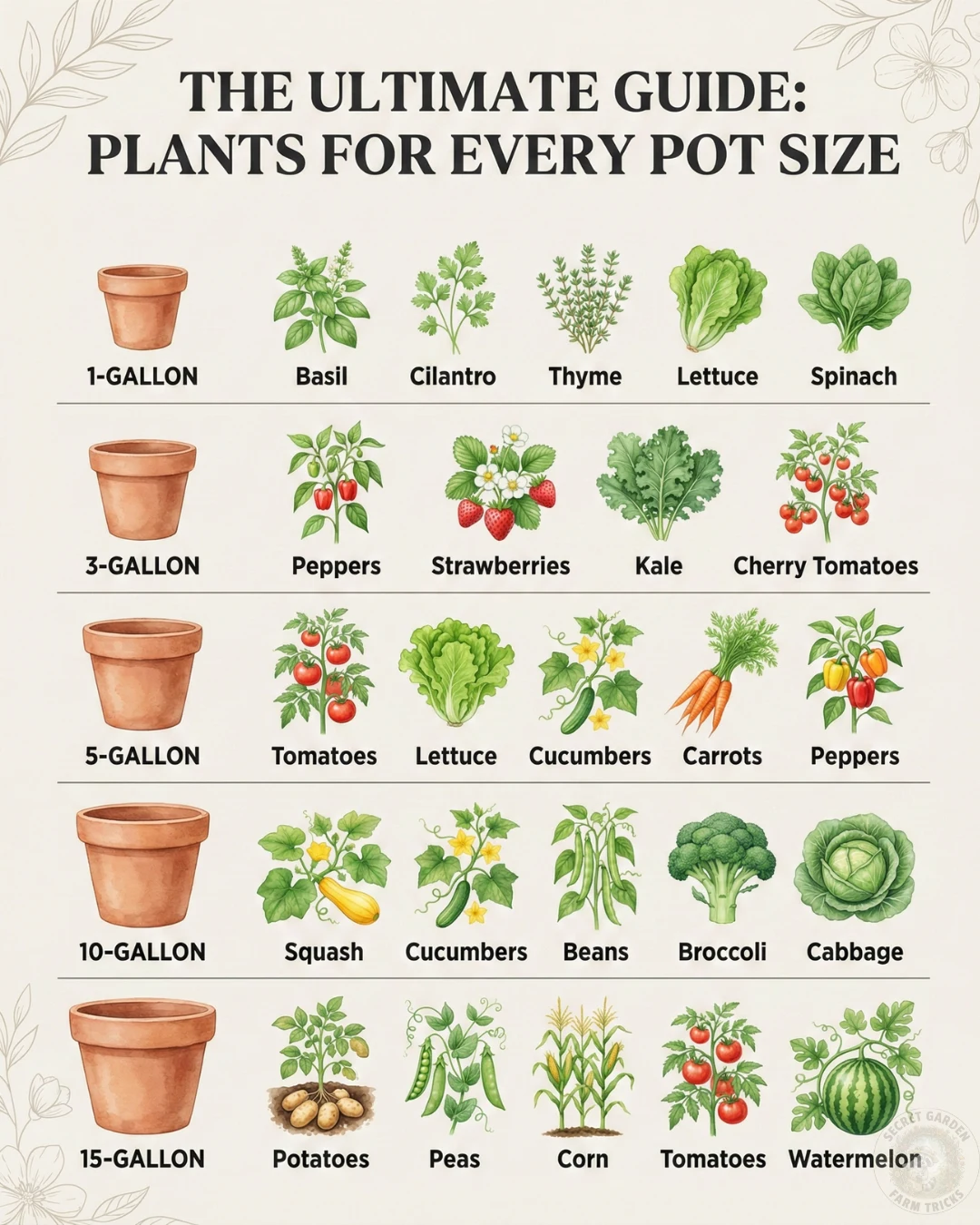
The guide shows how different crops thrive in containers ranging from 1-gallon pots to 15-gallon containers. Understanding this simple principle can dramatically improve your success in container gardening.
Let’s explore how to match plants with the right container size.
1-Gallon Pots: Perfect for Herbs and Small Greens
Small containers are ideal for shallow-rooted plants that grow quickly and don’t require large root systems.
Best Plants for 1-Gallon Containers
- Basil
- Cilantro
- Thyme
- Lettuce
- Spinach
These crops are excellent choices for beginners and urban gardeners.
Why These Plants Thrive in Small Pots
Herbs and leafy greens develop relatively shallow roots and mature quickly. This means they can grow comfortably in smaller containers while still producing a steady harvest.
Gardening Tip:
Harvest leaves frequently to encourage continuous growth. Herbs like basil and cilantro become bushier when trimmed regularly.
Small pots also warm up faster in spring, allowing earlier planting in cooler climates.
3-Gallon Pots: Great for Compact Fruit Producers
When plants begin producing fruits or require slightly deeper roots, a larger container becomes necessary.
Best Plants for 3-Gallon Containers
- Peppers
- Strawberries
- Kale
- Cherry Tomatoes
These plants strike a good balance between manageable size and productive yields.
Why Container Size Matters Here
Peppers and cherry tomatoes develop deeper roots and need additional soil volume to support fruit production. A 3-gallon pot provides enough room for roots to expand while maintaining proper drainage.
Organic Gardening Tip:
Mix compost into container soil to provide steady nutrients throughout the growing season.
Strawberries also perform especially well in containers because elevated pots reduce slug damage and improve airflow around the fruit.
5-Gallon Pots: Ideal for Medium-Sized Vegetables
Five-gallon containers are considered one of the most versatile pot sizes in container gardening.
Best Plants for 5-Gallon Containers
- Tomatoes
- Lettuce
- Cucumbers
- Carrots
- Peppers
Many home gardeners rely on 5-gallon buckets or large pots to grow a wide variety of crops successfully.
Why This Size Works
Tomatoes and cucumbers develop larger root systems and require consistent moisture and nutrients. A 5-gallon container provides enough soil volume to support strong plant growth.
Gardening Tip:
Use cages or trellises for tomatoes and cucumbers to support vertical growth and increase airflow, which helps prevent disease.
Carrots also benefit from deeper containers that allow roots to grow straight and uniform.
10-Gallon Pots: For Larger Vegetables and Heavy Feeders
Some vegetables require significant space to develop large leaves or fruits. These crops perform best in larger containers.
Best Plants for 10-Gallon Containers
- Squash
- Cucumbers
- Beans
- Broccoli
- Cabbage
Why These Plants Need More Space
Plants like squash and cabbage have large leaves and extensive root systems. If planted in containers that are too small, they may become stunted or produce poor yields.
Sustainable Farming Tip:
Larger containers hold moisture longer, which reduces watering frequency and improves plant stability during hot weather.
Beans are also valuable because they help fix nitrogen in the soil, enriching the container for future crops.
15-Gallon Containers: Best for Large Crops
Large containers allow gardeners to grow crops normally reserved for traditional garden beds.
Best Plants for 15-Gallon Containers
- Potatoes
- Peas
- Corn
- Tomatoes
- Watermelon
Why Large Pots Are Necessary
These plants require extensive root systems and significant nutrients. A 15-gallon container provides the soil volume needed to support healthy development.
Potatoes, for example, grow underground tubers that require plenty of loose soil. A deep container allows gardeners to “hill” soil around the stems as plants grow, increasing potato production.
Farm Care Tip:
Large containers also make it easier to manage soil quality, which is especially useful for growers practicing organic gardening or urban farming.
Building Healthy Soil for Container Gardens
Regardless of pot size, soil quality determines plant health.
A good container mix should include:
- High-quality compost
- Well-draining potting soil
- Organic matter such as coconut coir or peat moss
- Perlite or vermiculite for aeration
Healthy soil promotes strong roots, which leads to higher productivity and fewer pest problems.
Integrating Container Gardening with Small Farm Systems
Container gardening isn’t just for patios or balconies. Many small farms incorporate containers into their sustainable farming systems.
Containers can be used for:
- Growing herbs near outdoor kitchens
- Raising seedlings before transplanting
- Producing vegetables in areas with poor soil
- Protecting delicate crops from pests
In integrated farms, containers may even be placed near chicken coops or duck runs, where animal manure can be composted and reused as fertilizer.
This cycle helps create a balanced farm care system where plants and livestock support each other naturally.
Final Thoughts: Growing More with the Right Container
Container gardening proves that you don’t need acres of land to grow fresh food. With the right pot size, healthy soil, and thoughtful plant selection, even small spaces can become productive gardens.
Choosing the correct container size ensures:
- Strong root development
- Better moisture control
- Improved nutrient availability
- Higher yields
Whether you’re growing herbs on a balcony, vegetables in a backyard, or managing a small homestead garden, matching plants to the right container is one of the simplest and most effective gardening tips for long-term success.
And sometimes, the smallest garden spaces produce the most satisfying harvests.