Your gut microbiome is not fed by trends. It is fed by repetition.
That is why the best microbiome supportive foods are usually not exotic. They are the foods you can eat often enough to matter: fiber-rich plants, resistant starches, and a few everyday ingredients that help beneficial gut bacteria do their job.
These prebiotic fibers help nourish beneficial gut bacteria. Scientifically, prebiotics are substances that are selectively used by microorganisms in the body and provide a health benefit. In practical terms, they are “food” for parts of your microbiome.
Below is a cleaner, more professional nutrition-blog version of that idea, with realistic explanations of why each food helps, what it contributes, and how to use it in daily meals.
What It Means to “Feed Your Microbiome”
A healthy microbiome does not come from one supplement or one “gut reset.” It is shaped by your usual diet, especially by how much fiber and fermentable carbohydrate reaches the large intestine.
Research and expert guidance consistently point to the same pattern: diets richer in fiber and less dominated by highly processed foods tend to support a healthier gut environment. Harvard notes that many fruits, vegetables, beans, and whole grains provide prebiotic fibers, while NIDDK highlights that a higher-fiber “microbiome enhancer diet” can change gut-related outcomes in measurable ways. (The Nutrition Source)
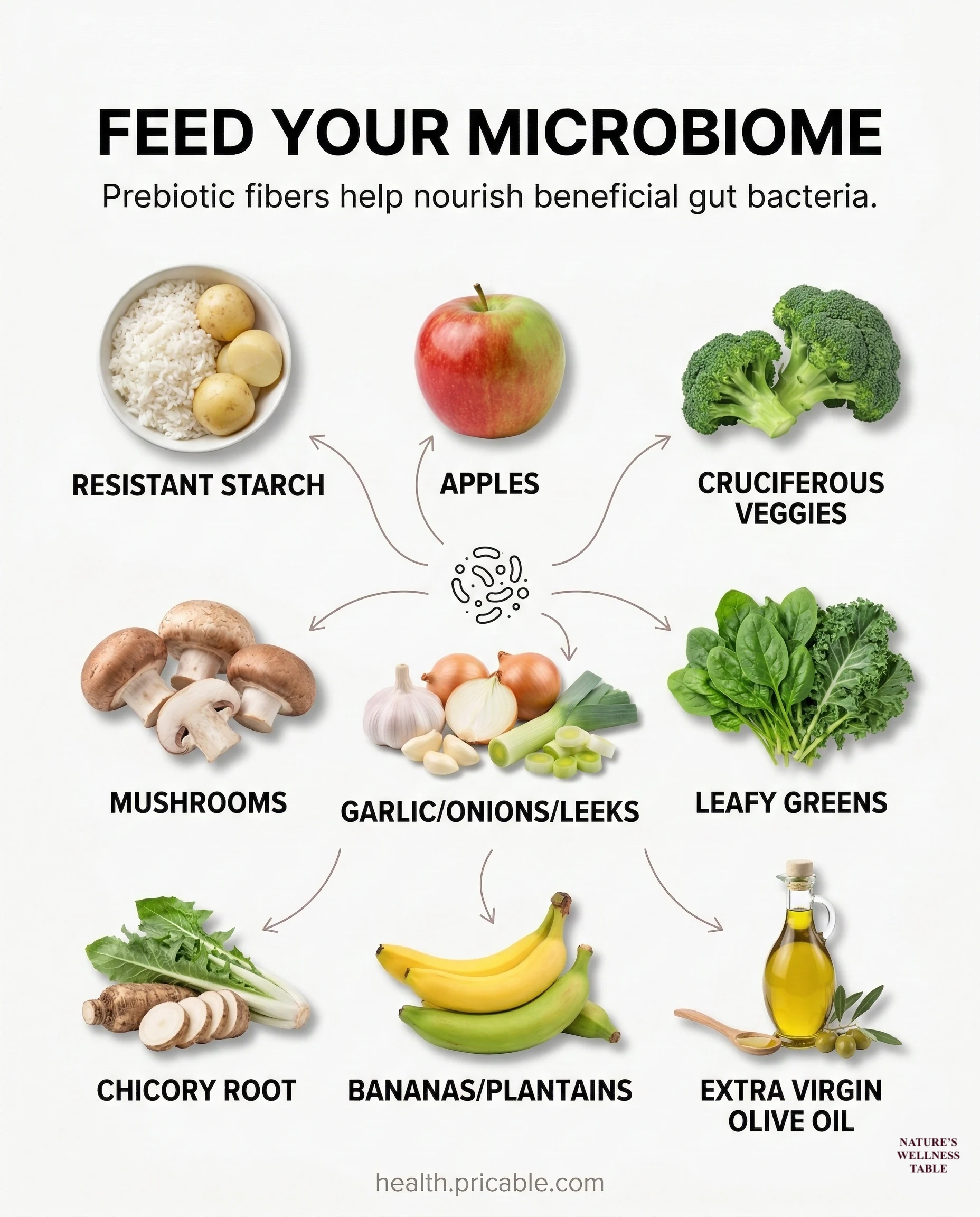
That does not mean every food in the image is a strict “prebiotic” in the technical sense. Some are true prebiotic sources, while others fit better into a microbiome supportive eating pattern because they bring fiber, polyphenols, or healthy fats.
1. Resistant Starch
Resistant starch is one of the most useful foods-for-the-microbiome concepts because it behaves differently from ordinary starch. Instead of being fully broken down in the small intestine, some of it reaches the colon, where it can act like a fermentable fiber and help feed beneficial bacteria. Harvard specifically lists resistant starch from legumes, unripe bananas, and cooked-and-cooled potatoes or pasta as a prebiotic-type fiber. (
That makes foods like cooked and cooled rice or potatoes especially interesting. They are not “magic gut foods,” but once cooked and cooled, part of their starch becomes more resistant and more microbiome-friendly.
Why it helps
Resistant starch can support microbial fermentation and may help with fullness and a gentler blood sugar response.
Easy ways to use it
Use cooled potatoes in potato salad, chilled rice in grain bowls, or reheat leftover rice and potatoes for later meals.

2. Apples
Apples are one of the easiest microbiome foods to eat regularly because they are affordable, portable, and naturally rich in fiber. They are not the highest prebiotic food on the list, but they still support gut health through fermentable fiber and polyphenols.
Why they help
Apples contribute fiber that helps nourish the gut environment, and they are easy to repeat often enough to matter. Harvard broadly groups fruits among the foods that supply prebiotic fibers.
Easy ways to use them
Eat apples whole with the skin, slice them into oatmeal, or pair them with nuts or yogurt for a more balanced snack.
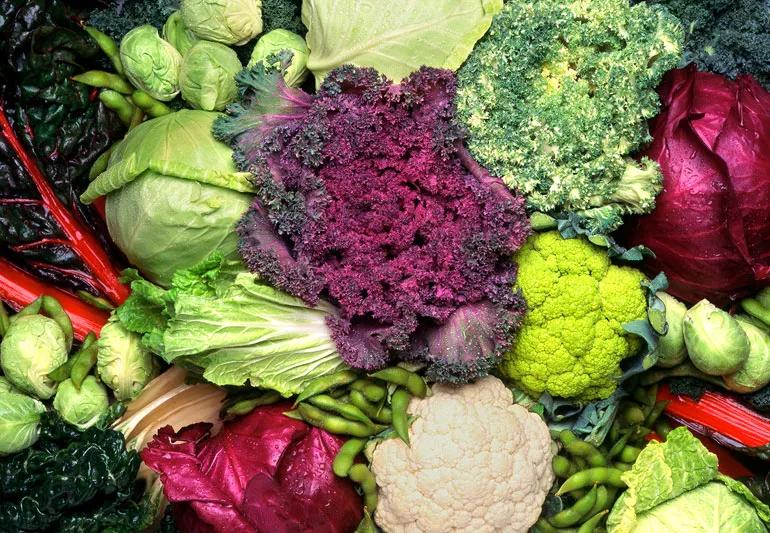
3. Cruciferous Vegetables
This group includes vegetables like broccoli, Brussels sprouts, and cabbage-family plants. They are often discussed for liver support and plant compounds, but they are also helpful for the gut because they add fiber and bulk to meals.
Why they help
Cruciferous vegetables support a higher-fiber dietary pattern, which is one of the most consistent ways to support the microbiome over time. Harvard emphasizes that vegetables in general are useful sources of prebiotic fibers.
Easy ways to use them
Roast broccoli, sauté Brussels sprouts, or add cruciferous vegetables to soups, stir-fries, and grain bowls.
4. Mushrooms
Mushrooms are often overlooked in gut-health conversations, but they contain fiber-like compounds that can support the gut environment.
Why they help
They add variety, texture, and useful non-digestible compounds to the diet, helping diversify plant intake, which is generally helpful for the microbiome.
Easy ways to use them
Sauté mushrooms with garlic, add them to omelets, soups, pasta dishes, or roast them on sheet pans with other vegetables.
5. Garlic, Onions, and Leeks
This is one of the strongest categories in the image. Harvard specifically notes that some of the highest natural amounts of prebiotic fibers are found in garlic, onions, and leeks, especially in raw forms. Harvard also highlights oligofructose-type compounds in onions, garlic, leeks, bananas, and chicory root.
Why they help
These vegetables contain fermentable carbohydrates that beneficial gut microbes can use. In simple terms, they are among the most classic food-based ways to feed the microbiome.
Easy ways to use them
Use onions and garlic as the flavor base for soups and stews, roast leeks, or add chopped raw onion in small amounts if tolerated.
Important note
Some people with IBS or FODMAP sensitivity do not tolerate these foods well. A microbiome-supportive diet still has to be a diet your gut can handle.
6. Leafy Greens
Leafy greens such as spinach and kale are not usually the first foods named when people think of prebiotics, but they still matter in a microbiome-friendly eating pattern because they add fiber, minerals, and plant compounds.
Why they help
They increase overall plant diversity, which is one of the simplest ways to improve the quality of the diet that feeds your gut microbes.
Easy ways to use them
Blend greens into smoothies, sauté them with olive oil and garlic, or use them as the base of salads and bowls.
7. Chicory Root
Chicory root is one of the most classic prebiotic foods because it naturally contains inulin, a fermentable fiber widely used in both foods and supplements. Harvard specifically lists chicory root among rich prebiotic sources, and ISAPP also cites chicory root as a food commonly associated with prebiotics.
Why it helps
It is one of the clearest examples of a food that truly functions as prebiotic fuel for beneficial microbes.
Easy ways to use it
Chicory root is less common in everyday home cooking, but it appears in some coffee substitutes, fibers, and specialty produce markets.

8. Bananas and Plantains
Bananas, especially less-ripe bananas, are useful because they contain resistant starch, which Harvard notes functions similarly to dietary fiber. Harvard also names bananas among foods that contain prebiotic fibers.
Why they help
Less-ripe bananas and plantains can feed beneficial bacteria through resistant starch and fermentable fibers, making them one of the most practical gut-supportive foods.
Easy ways to use them
Slice banana into oats, use slightly green bananas in smoothies, or cook plantains as part of savory meals.
9. Extra Virgin Olive Oil
Extra virgin olive oil is the one item in the image that needs a little nuance. It is not a classic prebiotic fiber source the way garlic, chicory root, or resistant starch are. But it still fits into a microbiome-supportive diet because it contributes healthy fats and polyphenols that are associated with broader dietary quality.
Why it helps
Its biggest role is indirect: it helps you build more satisfying, minimally processed meals based on vegetables, legumes, and whole foods.
Easy ways to use it
Drizzle over salads, use it on cooked vegetables, or add it to grain and bean bowls.
How to Build a Microbiome-Friendly Plate
You do not need all of these foods every day. A better goal is to combine two or three of them often.
A practical plate might look like this:
- cooled potatoes or rice for resistant starch
- sautéed mushrooms, onions, and greens
- roasted broccoli or Brussels sprouts
- olive oil as the finishing fat
Or at breakfast:
- oats topped with apple, banana, and ground seeds
- plus a side of greens in an omelet or savory bowl
The real win is not perfection. It is frequency.
When You May Notice a Difference
Microbiome support is usually not dramatic at first. The earliest changes people tend to notice are:
- better fullness after meals
- more regular digestion
- less dependence on highly processed snack foods
The bigger changes come from consistency over weeks, not one “gut cleanse” weekend.
A Quick Caution About Fiber
If your current diet is low in fiber, do not jump from almost none to a very high-fiber routine overnight. Increase gradually and drink enough water. Going too fast can leave you feeling bloated instead of better.
Final Takeaway
If you want to feed your microbiome, focus less on hype and more on repeatable foods.
The strongest foods in this image from a true prebiotic perspective are garlic, onions, leeks, chicory root, bananas, and resistant starches. The others help by building a broader, more plant-rich eating pattern that supports gut health over time.
A healthier microbiome usually does not come from doing something extreme.
It comes from eating more fiber-rich whole foods often enough for your gut bacteria to notice.
Breakdown more informations about healthy gut foods