Many people don’t realize that gut health is not just about digestion. The gut microbiome—a community of bacteria living in your digestive system—plays a role in how your body processes nutrients, regulates energy, and maintains overall balance.
What you eat directly shapes this system.
But here’s the part most people miss: it’s not about adding one “superfood.” A stronger gut microbiome comes from consistently combining the right types of foods—especially those that introduce beneficial bacteria and those that feed them.
This is where probiotic and prebiotic foods work together.
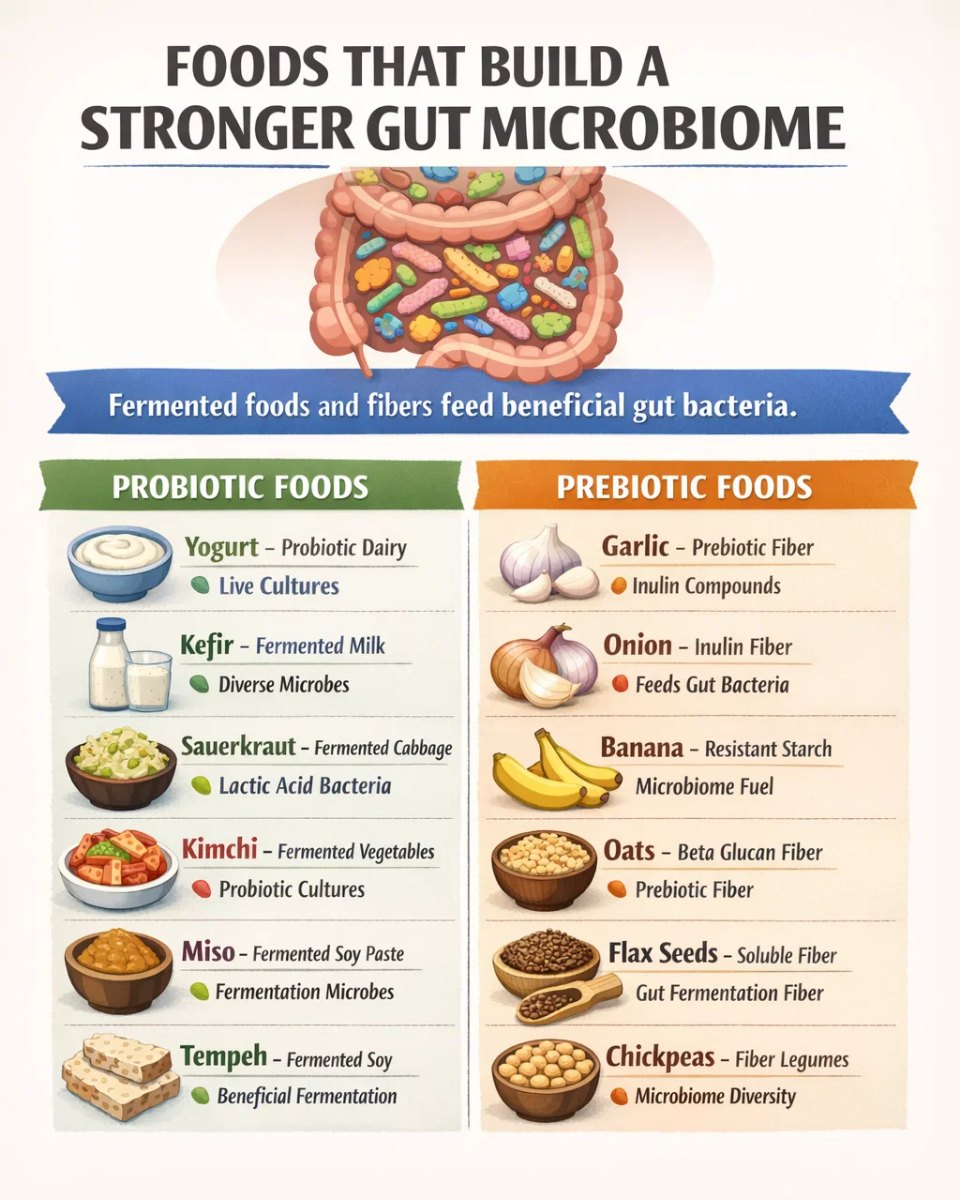
What Actually Builds a Healthy Gut Microbiome
To support your gut microbiome effectively, you need two things:
- Probiotics → foods that contain live beneficial bacteria
- Prebiotics → fibers that feed those bacteria
Think of it like this: probiotics are the “seeds,” and prebiotics are the “fertilizer.” Without both, the system doesn’t thrive.
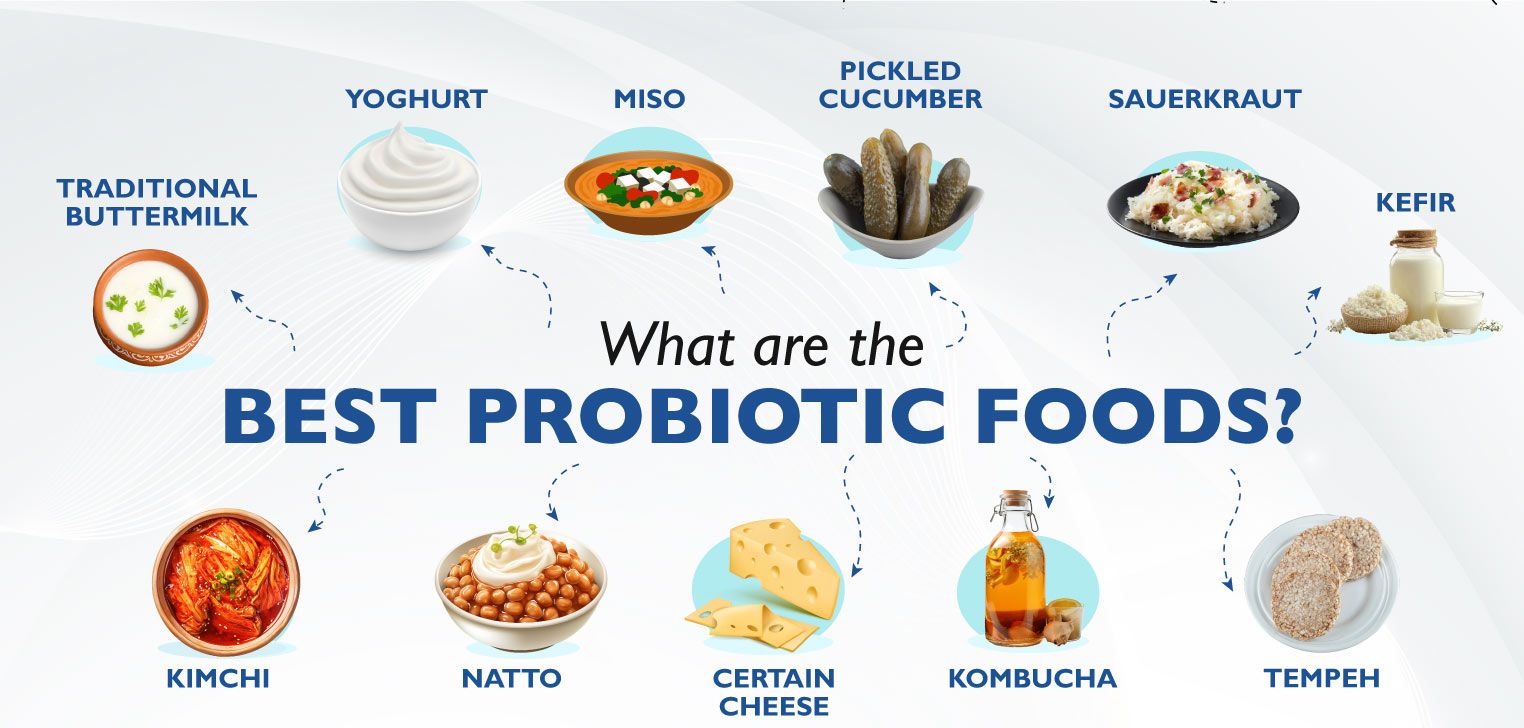
Probiotic Foods – Adding Beneficial Bacteria
These foods introduce live cultures that may help support microbial balance when consumed regularly.
Yogurt – A Simple Daily Base
Yogurt with live cultures is one of the easiest ways to include probiotics.
It contains bacteria such as Lactobacillus, which are commonly associated with gut health.
How to use it effectively:
- Pair with banana and flax seeds for a balanced breakfast
- Avoid high-sugar flavored versions when possible
Kefir – A More Diverse Fermented Drink
Kefir is similar to yogurt but typically contains a wider range of microbial strains.
Why it stands out:
- More diverse bacteria profile
- Easy to drink or blend
How to use:
- Add to smoothies
- Drink on its own in small amounts
Sauerkraut – Fermented Cabbage with Active Cultures
Sauerkraut provides lactic acid bacteria formed during fermentation.
How to use:
- Add a small serving alongside meals
- Pair with protein-rich dishes
Kimchi – Fermented Vegetables with Added Flavor
Kimchi offers both probiotics and strong flavor, making it easy to incorporate into savory meals.
How to use:
- Add to rice or grain bowls
- Use as a topping rather than a main portion
Miso – A Gentle Fermented Option
Miso is a fermented soybean paste often used in soups.
Important tip:
Avoid boiling miso at high temperatures, as this may reduce live cultures.
How to use:
- Stir into warm soups
- Use in dressings
Tempeh – Fermented Plant Protein
Tempeh is unique because it combines fermentation with a solid protein source.
How to use:
- Pan-cook and add to bowls
- Use as a protein alternative in meals
Prebiotic Foods – Feeding Gut Bacteria
Prebiotic foods provide the fibers that beneficial bacteria rely on to grow and function.
Garlic – A Concentrated Prebiotic Source
Garlic contains inulin, a type of fiber that supports gut bacteria.
How to use:
- Add to cooked meals
- Use in sauces or dressings
Onion – Everyday Prebiotic Fiber
Onions provide similar compounds to garlic but in a milder form.
How to use:
- Include in cooking regularly
- Add raw in small amounts to salads
Bananas – Resistant Starch Fuel
Slightly unripe bananas contain resistant starch, which acts as fuel for gut bacteria.
How to use:
- Add to breakfast bowls
- Blend into smoothies
Oats – A Reliable Fiber Base
Oats contain beta-glucan, a fiber linked to gut support.
How to use:
- Prepare as oatmeal
- Add to yogurt or smoothies
Flax Seeds – Soluble Fiber Support
Flax seeds provide soluble fiber that supports fermentation in the gut.
How to use:
- Sprinkle on yogurt or oats
- Add to smoothies
Chickpeas – Fiber + Diversity
Chickpeas provide both fiber and plant-based nutrients that may support microbial diversity.
How to use:
- Add to salads or bowls
- Use as hummus
How to Combine These Foods for Maximum Benefit
The biggest mistake people make is using only one category.
Instead, combine probiotic and prebiotic foods in the same meal.
Example 1: Balanced Gut Breakfast
- Yogurt (probiotic)
- Banana (prebiotic)
- Flax seeds (prebiotic)
→ Supports both bacteria and their fuel
Example 2: Simple Lunch Bowl
- Chickpeas
- Spinach
- Tempeh
- Garlic dressing
→ Combines fiber, protein, and fermentation
Example 3: Savory Gut Plate
- Rice or grains
- Kimchi
- Cooked vegetables
- Miso-based dressing
→ Easy way to include fermented foods daily
Featured Recipe: Gut-Friendly Microbiome Bowl
Description:
A simple, balanced bowl designed to combine probiotic and prebiotic foods in one meal.
Ingredients:
- 1 cup cooked chickpeas
- 1 handful spinach
- ½ cup cooked grains (rice or quinoa)
- ½ avocado
- 2 tablespoons sauerkraut or kimchi
- 1 tablespoon pumpkin seeds
- Olive oil and garlic dressing
Instructions:
- Add grains as the base
- Top with chickpeas and spinach
- Add avocado and fermented vegetables
- Sprinkle seeds on top
- Drizzle with dressing and serve
Why this works:
This bowl combines live bacteria with the fibers they need, along with healthy fats and plant nutrients.
Practical Tips for Supporting Gut Health Daily
- Rotate different fiber sources instead of repeating the same foods
- Start with small portions of fermented foods
- Combine probiotics and prebiotics in the same meal
- Focus on consistency over time
Gut microbiome changes happen gradually, not instantly.
Final Thoughts
Building a stronger gut microbiome is less about restriction and more about adding variety.
Simple foods like yogurt, oats, garlic, and chickpeas can work together to support a balanced internal environment when used consistently.
Instead of looking for quick results, focus on patterns—what you eat daily matters more than what you eat occasionally.
Over time, these small, repeatable choices can make a meaningful difference in how your body functions and feels.


2 Comments on “12 Foods That Help Build a Stronger Gut Microbiome (And How to Use Them Daily)”