Iron is one of those nutrients people usually think about only when they feel exhausted.
Low iron intake can show up as fatigue, shortness of breath with exercise, weaker concentration, pale skin, or feeling cold more often than usual. But here’s the important part: not every “blood support” food is equally rich in iron, and the body does not absorb all iron the same way. Heme iron from animal foods is generally absorbed better than non-heme iron from plant foods. Vitamin C can improve non-heme iron absorption, while tea and coffee with meals can reduce it. (National Institutes of Health (NIH))
Some these foods in it are strong iron sources, some are helpful supporting foods, and a few are better understood as general nourishment rather than major iron foods. Below is the clearer version.
The strongest iron foods
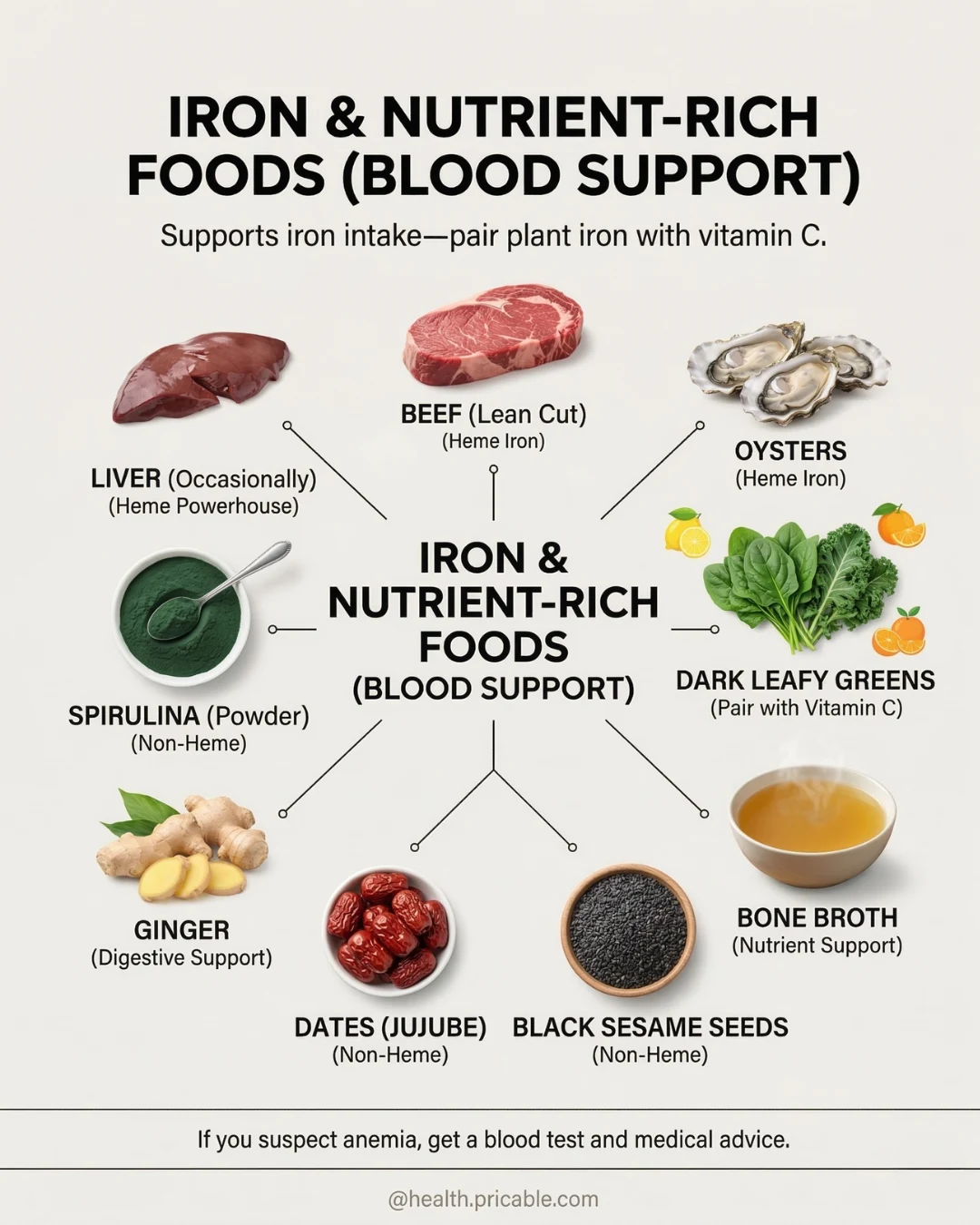
If your goal is to improve iron intake through food, the most meaningful foods in this graphic are liver, beef, oysters, dark leafy greens, black sesame seeds, and spirulina, with important differences in absorption and practicality.
Liver
Liver is one of the most concentrated food sources of heme iron, the form your body absorbs most efficiently. It also provides vitamin B12 and vitamin A, which is why it is often described as a “powerhouse.” That said, it is a food to use occasionally, not necessarily daily. People who are pregnant should be cautious with liver because of its very high vitamin A content. (National Institutes of Health (NIH))
Beef
Lean beef is a reliable source of heme iron and is easier for many people to eat regularly than liver. It also brings protein, zinc, and B12, which makes it a practical “blood support” food when included as part of balanced meals. Heme iron from meat is generally absorbed better than non-heme iron from plant foods. (National Institutes of Health (NIH)
Oysters
Oysters are another strong heme iron food and can make a real contribution to iron intake. They also supply zinc and vitamin B12, which are useful for immune and blood health. (Cơ Quan Bổ Sung Dinh Dưỡng)
Plant based iron foods that work better with vitamin C
Plant foods can absolutely help, but the body absorbs non-heme iron less efficiently. Pairing them with vitamin C-rich foods such as citrus, strawberries, tomatoes, broccoli, or bell peppers improves absorption. Meat, fish, or poultry eaten in the same meal can also help.
Dark leafy greens
Spinach, kale, and similar greens do contain non-heme iron, and they also bring folate and vitamin C. They are most helpful when paired with lemon, oranges, strawberries, or bell peppers, exactly as the image suggests. (NHLBI, NIH)
Black sesame seeds
Black sesame seeds provide some non-heme iron and add useful minerals to the diet. They are not as concentrated or absorbable as heme sources, but they can support intake when used regularly in bowls, porridge, or smoothies.
Spirulina powder
Spirulina can contain iron, but amounts vary by product and it is not a first-line iron food in standard medical guidance. It is better viewed as an optional add-on rather than a main strategy for iron deficiency.
Foods that support the bigger
Ginger
Ginger is not an important iron source, but it may support digestion and nausea for some people. That can matter if poor appetite is making it harder to eat well.
Bone broth
Bone broth is also not a major iron food. Its value is more about hydration, warmth, and making nourishing meals easier to tolerate when appetite is low.
Dates / jujube
Dates and jujube are better thought of as energy-supportive foods rather than iron-rich staples. They contain small amounts of minerals, but they are not among the most effective foods for improving iron intake.
How to make iron rich meals work better
This is the part that makes the biggest real life difference.
If you eat plant iron foods, pair them with vitamin C. A spinach bowl with lemon, lentils with tomatoes, or sesame with citrus fruit will work better than those foods eaten alone. Vitamin C helps your body absorb more non-heme iron.
Also, try not to drink tea, coffee, or cocoa with iron-rich meals, because tannins and similar compounds can reduce absorption. Several NHS and dietetic sources recommend having tea and coffee away from meals for this reason. (NHS Kingston and Richmond)
A simple blood support meal pattern
A more effective approach than chasing one “superfood” is to build meals like this:
- A heme iron source such as beef, liver, or oysters when appropriate
- Or a plant iron source such as leafy greens and seeds
- A vitamin C food like orange, lemon, berries, tomatoes, or peppers
- Enough total calories and protein to support recovery
That could look like lean beef with broccoli and bell peppers, or sautéed greens with sesame seeds and a side of citrus.
When food is not enough
This matters: if you suspect anemia, food alone may not be enough to diagnose or fix the problem. The NHLBI notes that iron deficiency anemia is diagnosed with blood testing, and treatment depends on the cause. Food helps, but persistent fatigue, dizziness, or heavy hair shedding deserve proper evaluation. (NHLBI, NIH)
Final takeaway
The best “blood support” foods are liver, beef, oysters, and dark leafy greens paired with vitamin C. Black sesame seeds and spirulina can help a little. Ginger, dates, and bone broth are more supportive than iron-dense.
That is the most useful way to read the graphic: not all foods here do the same job, but together they point toward a smarter strategy eat real iron foods, improve absorption, and do not ignore symptoms that need testing.