Blood sugar spikes are not just about sugar.
Many people still experience rapid glucose spikes even when eating “healthy” foods like fruit, rice, or oats. The problem is often not the food itself — but how it is combined.
When carbohydrates are eaten alone, they digest quickly and enter the bloodstream fast. This can lead to sharp glucose spikes, followed by energy crashes and increased hunger.
However, when you combine carbohydrates with the right nutrients, the effect changes significantly. Balanced food combinations can help:
- slow glucose absorption
- stabilize insulin response
- reduce cravings
- support long-term metabolic health
Understanding how to build meals this way is one of the simplest strategies for better blood sugar control.
Why Food Combinations Matter for Blood Sugar Control
Your body processes nutrients at different speeds, and this directly affects how your blood sugar responds after eating.
- Carbohydrates digest quickly and raise blood glucose levels
- Protein slows digestion and supports a steadier glucose response
- Fat delays how quickly food leaves the stomach
- Fiber forms a gel-like structure that slows sugar absorption
When carbs are eaten alone, they move quickly through digestion. But when combined with protein, fat, or fiber, the process slows down.
This is why balanced meals are often more effective than simply choosing “healthy foods.”
The Core Rule: Never Eat Carbs Alone
One simple rule can make a noticeable difference:
👉 Always pair carbohydrates with protein, fat, or fiber
This small adjustment can turn a rapid spike into a slower, more stable glucose curve. It also helps you feel fuller and more energized for longer periods.
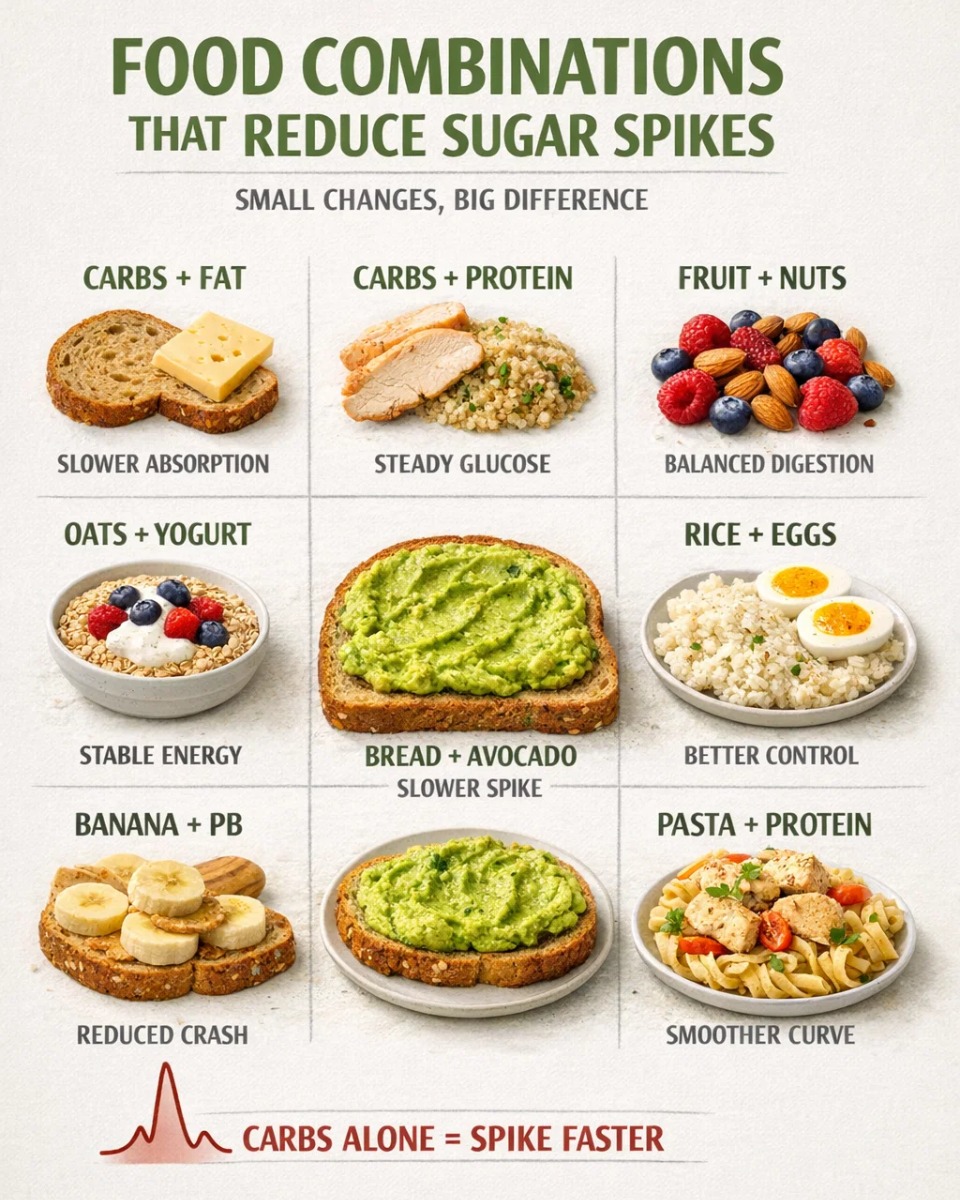
7 Food Combinations That Help Reduce Blood Sugar Spikes
1. Carbs + Fat – Slower Absorption
Examples: bread + cheese, toast + avocado
Adding fat to carbohydrates slows how quickly food is digested.
Why it works:
- delays digestion
- smooths glucose spikes
- supports longer-lasting fullness
2. Carbs + Protein – Steady Glucose Levels
Examples: rice + chicken, pasta + lean protein
Protein helps regulate how quickly carbohydrates are absorbed.
Why it works:
- reduces post-meal blood sugar spikes
- improves satiety
- supports muscle metabolism
👉 This is one of the most effective strategies for blood sugar control and weight management.
3. Fruit + Nuts – Balanced Digestion
Examples: apple + peanut butter, berries + almonds
Fruit contains natural sugars that digest quickly, but nuts help slow that process.
Why it works:
- combines fiber and healthy fats
- slows sugar release
- reduces cravings between meals
4. Oats + Yogurt – Stable Energy Breakfast
Example: oatmeal + Greek yogurt
Oats provide beta-glucan fiber, while yogurt adds protein.
Why it works:
- slows digestion
- stabilizes energy levels
- helps reduce mid-morning hunger
👉 A strong option for those looking for low glycemic breakfast ideas.
5. Rice + Eggs – Better Blood Sugar Control
Example: white rice + boiled eggs
Rice alone can raise blood sugar quickly, but adding eggs changes the response.
Why it works:
- protein slows carbohydrate absorption
- supports a steadier insulin response
- increases fullness after meals
6. Banana + Peanut Butter – Reduced Energy Crash
Example: banana + peanut butter
Bananas digest quickly, but pairing them with fat and protein helps balance the effect.
Why it works:
- reduces rapid glucose spikes
- provides more sustained energy
- prevents post-snack crashes
7. Pasta + Protein – Smoother Glucose Curve
Examples: pasta + chicken, pasta + fish
Refined carbohydrates can spike blood sugar, but protein helps moderate the response.
Why it works:
- slows digestion
- improves blood sugar stability
- helps reduce overeating later
What Happens When You Eat Carbs Alone
Eating carbohydrates on their own often leads to a predictable cycle:
- rapid blood sugar spike
- insulin surge
- sudden energy drop
- increased hunger
Over time, this pattern can contribute to:
- frequent cravings
- overeating
- unstable energy throughout the day
This is why learning how to reduce blood sugar spikes after meals is important for both short-term energy and long-term health.
How to Build Low Glycemic Meals Easily
You do not need complex meal plans to improve blood sugar control.
Use this simple formula:
👉 Carbs + Protein or Fat (or both)
Practical examples
Breakfast
- oats + yogurt + nuts
- toast + eggs + avocado
Lunch
- rice + chicken + vegetables
- pasta + fish + olive oil
Snacks
- apple + peanut butter
- fruit + almonds
These combinations help create low glycemic meal patterns that support stable energy.
Why This Matters for Weight Loss and Metabolic Health
Stable blood sugar plays a key role in how your body manages hunger and energy.
Balanced meals are associated with:
- better appetite control
- reduced fat storage
- improved insulin sensitivity
👉 This is why focusing on food combinations for blood sugar control can often be more effective than calorie restriction alone.
Common Questions About Blood Sugar Control
How can you reduce blood sugar spikes after meals?
Pairing carbohydrates with protein, fat, or fiber slows digestion and reduces how quickly glucose enters the bloodstream.
What are the best foods for blood sugar control?
Foods rich in fiber, protein, and healthy fats — such as oats, yogurt, nuts, seeds, and lean proteins — can help stabilize glucose levels.
What are low glycemic meal combinations?
Meals that combine slow-digesting carbohydrates with protein or fat, such as oats with yogurt or rice with eggs.
How can you stabilize blood sugar naturally?
Focus on balanced meals, avoid eating carbs alone, and include fiber-rich foods regularly.
Which foods help prevent insulin spikes?
Foods that digest more slowly, including whole grains, legumes, nuts, seeds, and protein-rich foods.
Final Takeaway
Blood sugar control is not just about avoiding sugar.
It is about how you combine foods on your plate.
By pairing carbohydrates with protein, fat, or fiber, you can:
- reduce glucose spikes
- maintain stable energy
- stay full longer
- support long-term metabolic health
👉 Small changes in how you build your meals can make a meaningful difference over time.