Most gardeners see grass clippings in one of two ways: waste to bag up, or something to leave scattered on the lawn. But when used properly, grass clippings can become one of the most practical free resources in the garden. They help hold moisture, soften temperature swings, suppress weeds, protect fruit from soil splash, and slowly contribute nutrients as they break down.
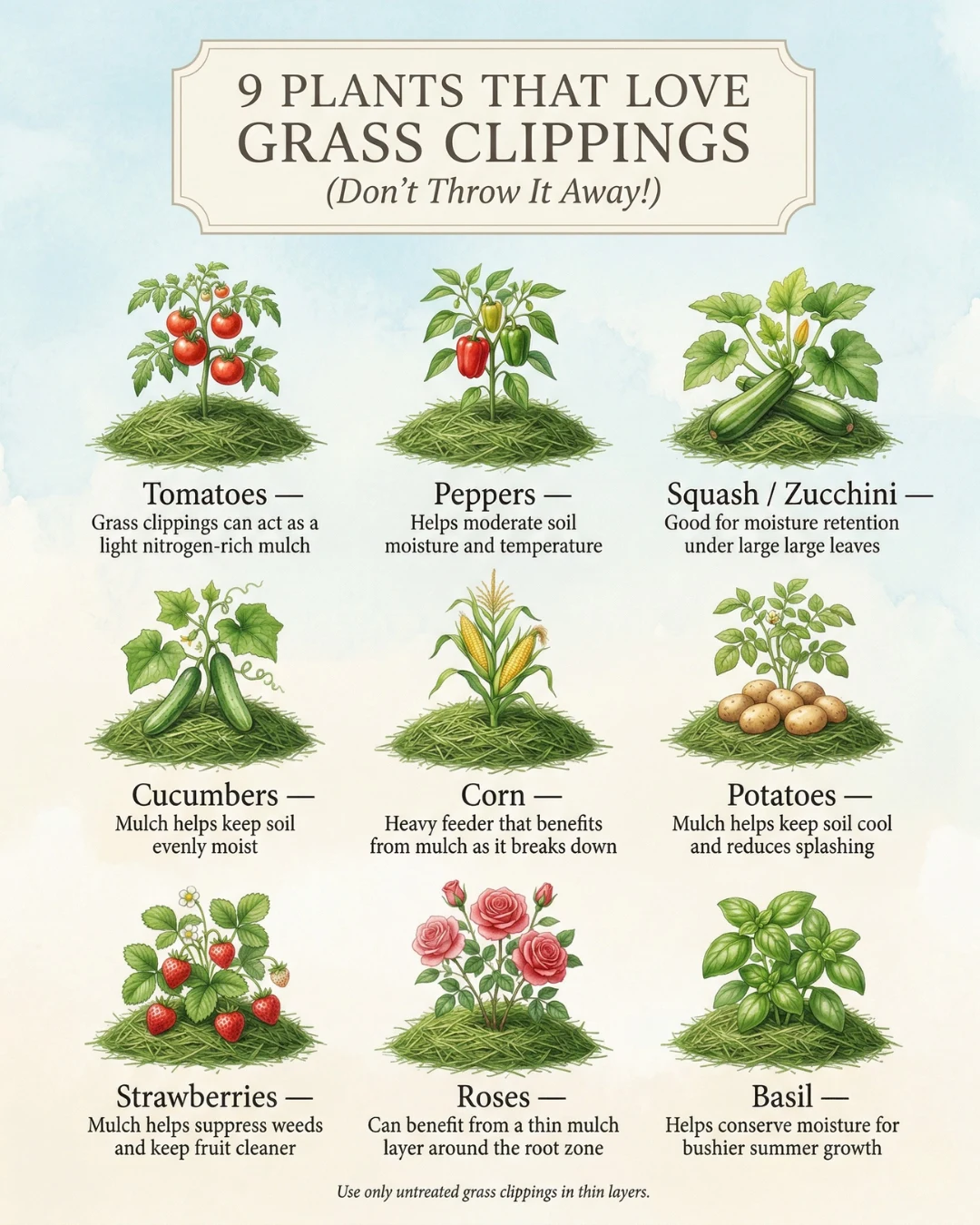
That does not mean every handful of fresh clippings should be dumped around every plant. Grass clippings work best when they are used thoughtfully, in thin layers, around crops and ornamentals that benefit from cooler soil, steadier moisture, and a light feeding effect over time. Some of the best plants for this kind of mulch are tomatoes, peppers, squash, zucchini, cucumbers, corn, potatoes, strawberries, roses, and basil.
Used well, grass clippings can make summer gardening easier. Beds dry out less quickly. Weeds lose ground. Watering becomes more efficient. Plants experience less stress during heat. And the gardener begins to see “yard waste” not as rubbish, but as part of a living cycle that keeps the whole space more productive.
Why grass clippings are so useful in the garden
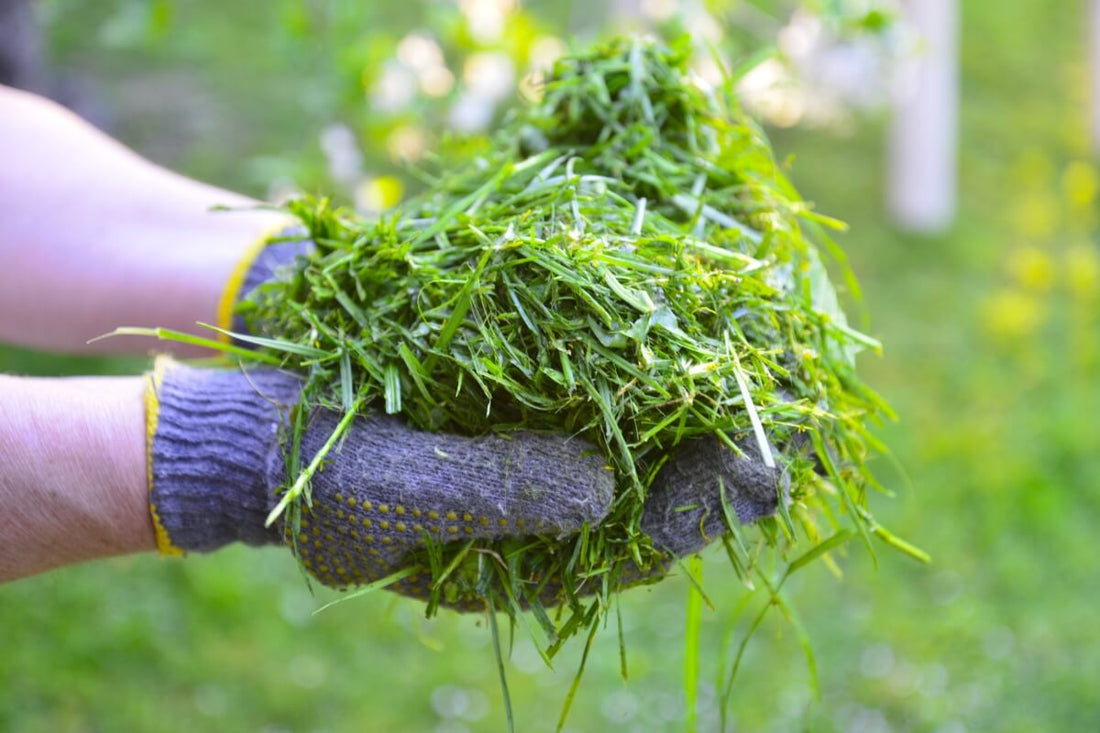
Fresh green clippings are rich in moisture and contain nitrogen, which is why they break down relatively quickly compared with woodier mulches. That makes them especially helpful as a light seasonal mulch rather than a permanent deep layer.
Their main benefits include:
- reducing evaporation from the soil
- buffering soil temperature during hot weather
- limiting weeds around shallow-rooted crops
- reducing muddy splash on fruits and leaves
- slowly feeding soil life as they decompose
For busy gardeners, this matters because mulch changes the rhythm of care. A mulched bed usually needs less emergency watering, less constant weeding, and less cleanup after rain.
The one rule that matters most: use untreated grass clippings in thin layers
Before using grass clippings anywhere near vegetables, herbs, or flowers, make sure they come from a lawn that has not been treated with herbicides, weed-and-feed products, or questionable chemical sprays. If you are not certain, do not use them around edible or sensitive plants.
The second rule is just as important: never pile them on thickly while fresh.
A heavy mat of wet clippings can:
- trap too much heat
- turn slimy
- block airflow to the soil surface
- smell unpleasant
- create a dense layer that sheds water instead of absorbing it
A thin layer works. A thick wet blanket does not.
Tomatoes: excellent candidates for a light nitrogen-rich mulch
Tomatoes are one of the best crops for careful grass-clipping mulch because they benefit from even moisture and cleaner soil conditions around the base.
Why tomatoes respond well
Tomatoes dislike sudden swings between very dry and very wet soil. Mulch helps reduce those swings. It also keeps lower leaves and fruits cleaner by reducing splash during watering or rain.
Best way to use clippings around tomatoes
Wait until the soil has warmed and the plants are established. Then spread a thin layer around the root zone, leaving some space directly around the stem so the base stays dry and airy.
Practical tip
Refresh lightly rather than adding one thick layer. Thin repeat applications work far better than one heavy dump.
Peppers: useful for moderating soil moisture and temperature
Pepper plants often look sturdy, but they are more sensitive to root stress than many people realize. They perform best when soil moisture stays relatively steady and the root zone does not overheat.
Why peppers benefit
Grass clippings help reduce drying and can buffer summer heat around the roots. That matters especially in containers, raised beds, or hot open plots.
Best way to use clippings around peppers
Apply a light ring around the plant once the soil is warm and the plant is actively growing. Keep the mulch low and airy.
Practical tip
If your pepper bed tends to dry fast in afternoon sun, mulch can noticeably improve plant steadiness and reduce blossom drop caused by stress.
Squash and zucchini: strong candidates for moisture-holding mulch
Squash and zucchini produce large leaves and fast top growth, but they still depend on consistent moisture below ground. Mulch helps keep that moisture available.
Why they benefit
These plants grow quickly and use a lot of water in warm weather. A thin layer of grass clippings helps the soil hold moisture longer and supports more even growth under broad leaf canopies.
Best way to use clippings around squash and zucchini
Mulch around, not against, the crown of the plant. The center of squash-family plants needs airflow. Crowding wet mulch directly against the base can encourage rot.
Practical tip
Grass clippings are especially useful once the plants start spreading and watering becomes harder to direct neatly at the soil.
Cucumbers: ideal when you want evenly moist soil
Cucumbers are productive but demanding. They want warmth, feeding, and above all, consistency. Uneven moisture is one of the fastest ways to invite bitterness or poor fruit development.
Why cucumbers benefit
Mulch helps maintain steady soil moisture while also keeping lower growth cleaner. This is useful whether cucumbers are grown on the ground or on a trellis.
Best way to use clippings around cucumbers
Lay a thin mulch layer beneath the vines or around the root area once plants are established. If the plants are trellised, mulch the base well since that is where most of the watering matters most.
Practical tip
Cucumbers love moisture, but their roots still need oxygen. Keep the mulch thin enough that the soil can breathe.
Corn: a heavy feeder that appreciates mulch as it breaks down
Corn is one of the hungriest crops in the vegetable garden. It benefits not only from moisture retention, but also from the gradual breakdown of organic material around it.
Why corn responds well
Corn likes fertile soil and steady growth. Mulch helps reduce weed competition and conserves moisture, both of which support stronger stalks and better ear development.
Best way to use clippings around corn
Apply around the base of the plants once they are established and tall enough to stand above the mulch layer. Keep it thin and even across the bed.
Practical tip
Because corn is a heavy feeder, it is one of the crops that can make good use of the small nutrient contribution from decomposing clippings over time.
Potatoes: helpful for cool soil and cleaner tubers
Potatoes benefit from soil that stays cooler and more evenly moist, especially as the season warms up.
Why potatoes benefit
A mulch layer helps reduce splashing, slows drying, and supports a more stable root zone. It can also help keep surface soil from baking hard.
Best way to use clippings around potatoes
Use grass clippings after hilling or around the row once plants are growing strongly. Keep the mulch light and repeat if needed.
Practical tip
Mulch complements hilling well. It is not a replacement for proper potato culture, but it helps hold the bed in better condition between waterings.
Strawberries: one of the most practical uses for grass clipping mulch
Strawberries are famous for benefiting from mulch because the fruit sits low and easily gets dirty or damaged by damp soil contact.
Why strawberries benefit
Grass clippings help suppress weeds, reduce muddy splash, and keep berries cleaner. They also help reduce rapid drying in shallow-rooted strawberry beds.
Best way to use clippings around strawberries
Apply lightly between plants and around the crowns, but do not bury the crowns themselves. They need air and should stay visible.
Practical tip
For strawberries, cleanliness matters almost as much as moisture. A thin mulch can make harvesting noticeably easier and the fruit more appealing.
Roses: useful as a light root-zone mulch
Roses are often thought of as plants that need special products and elaborate feeding routines. In reality, they often respond very well to simple improvements in soil moisture and surface protection.
Why roses benefit
A light mulch helps protect the root zone from extreme heat, reduces weed competition, and supports steadier soil conditions.
Best way to use clippings around roses
Use a thin layer around the root zone, not piled against the crown or woody stems. Roses need airflow at the base.
Practical tip
Grass clippings are not a heavy rose feed, but they can be a helpful part of a broader organic care routine when used gently and consistently.
Basil: better summer growth through moisture conservation
Basil grows fast in warm weather, but it can also wilt fast if the soil dries too quickly. Mulch helps keep it more comfortable.
Why basil benefits
Basil likes warmth, but not a baking, erratic root zone. A light mulch layer helps conserve moisture and can support fuller summer growth.
Best way to use clippings around basil
Apply a very thin ring around the plant, keeping the stems clear. Basil has soft growth and should not sit against wet mulch.
Practical tip
Because basil is often grown with tomatoes and peppers, mulching the whole bed lightly can benefit all three crops at once.
Common mistakes to avoid
Using too much at once
Fresh clippings compact quickly if layered too deeply.
Mulching right against stems
This invites rot and reduces airflow.
Using treated lawn clippings
This is the biggest mistake of all. Always know the source.
Applying mulch before the soil warms
Heavy mulch too early in the season can slow growth by keeping soil cool.
Thinking mulch replaces watering
Mulch helps water last longer, but it does not remove the need for deep, regular watering.
A simple routine that makes grass clippings work beautifully
After mowing:
- collect only untreated clippings
- let them dry slightly if they are very wet
- apply in thin layers
- leave a gap around stems and crowns
- top up lightly later instead of piling thickly once
- watch how quickly they break down in heat and moisture
This routine turns a routine yard chore into a free garden improvement.
Final thoughts
Grass clippings can be a remarkably useful mulch when handled with care. Tomatoes, peppers, squash, zucchini, cucumbers, corn, potatoes, strawberries, roses, and basil all benefit from the cooler soil, steadier moisture, weed suppression, and gentle feeding effect that thin layers of clippings can provide.
The real lesson is simple: do not waste a useful material just because it came from the lawn. In a thoughtful garden, even something as ordinary as mowed grass can become part of a smarter, more sustainable system. And that is often where better gardening begins—not with buying more, but with seeing more value in what is already around you.