Many houseplant problems look like watering problems, but they actually begin in the potting mix.
A plant may yellow, wilt, stall, rot, or dry out too quickly not because you are careless, but because its roots are sitting in the wrong environment. A cactus in a moisture-heavy mix struggles differently from an orchid in dense soil. A fern can decline in a fast-draining gritty blend that would suit a succulent beautifully. A carnivorous plant may be harmed by the same rich potting soil that helps a tropical vine grow lush and full.
This is why learning potting mixes changes everything. Once you understand what different plants want around their roots, plant care becomes calmer and far more logical. Watering gets easier. Repotting becomes more purposeful. Growth becomes more consistent. And instead of reacting to problems, you start preventing them.
A practical indoor grower should think in categories. Cactus and succulents, orchids, tropical plants, African violets, ferns, carnivorous plants, bonsai, bulb plants, and culinary herbs all need different balances of drainage, air, moisture retention, and organic matter. The right blend makes a healthy root zone. And a healthy root zone makes nearly every other part of plant care easier.
Why potting mix matters more than many people realize
Potting mix is not just something to hold the plant upright. It controls how fast water moves, how much air reaches the roots, how long moisture stays available, and how much the mix compacts over time.
Roots need two things that seem opposite but are equally important: moisture and oxygen. A good potting mix provides both. A bad one gives too much of one and not enough of the other.
When the mix is wrong, you often see:
- wet soil that stays wet too long
- roots that rot or smell sour
- plants that dry out only at the top while staying soggy below
- compacted soil that feels heavy and stale
- weak growth even when light seems fine
That is why “houseplant soil” is not one universal thing. The best mix depends on the plant’s natural growing style.
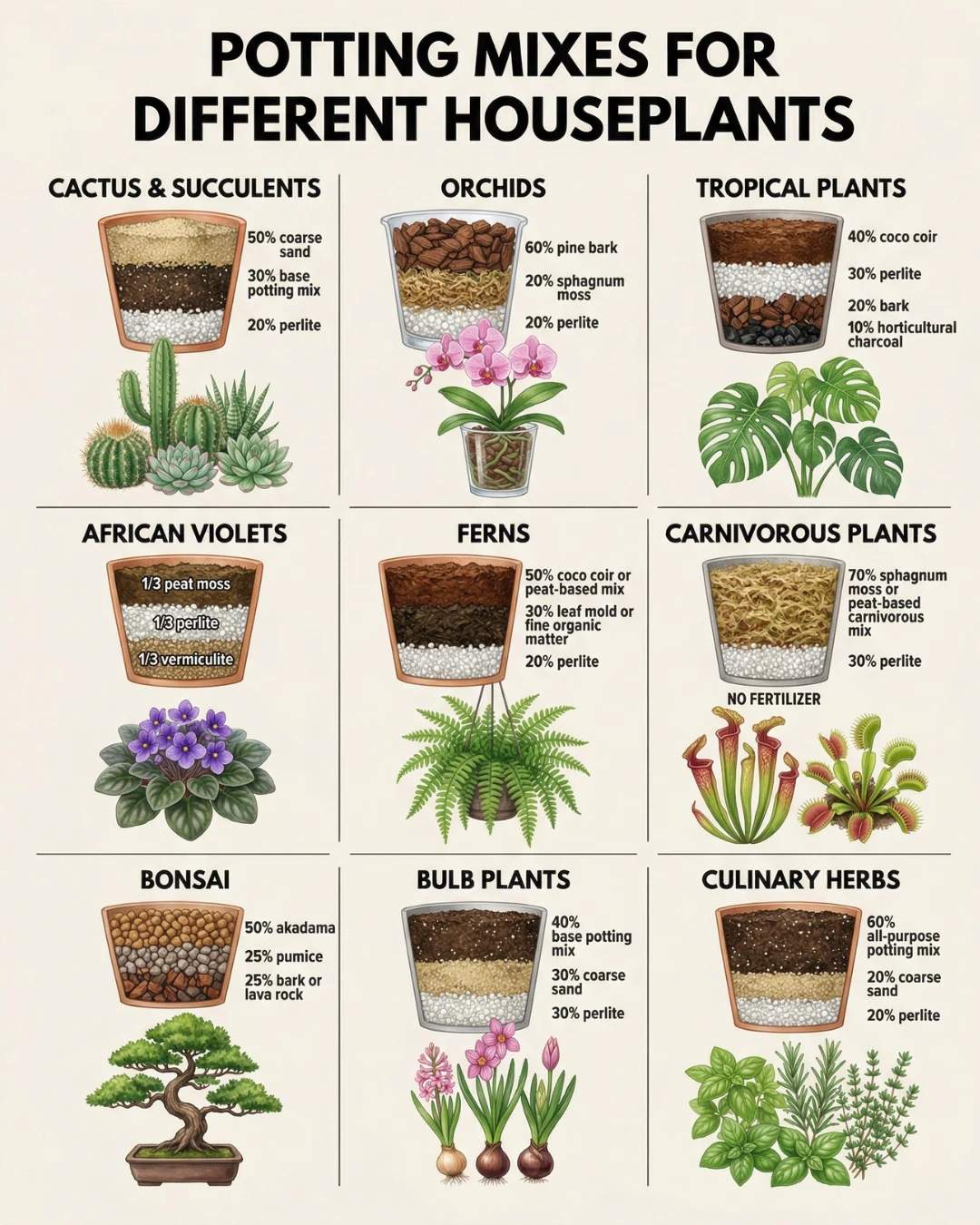
Important note: these are mix recipes, not separate layers in the pot.
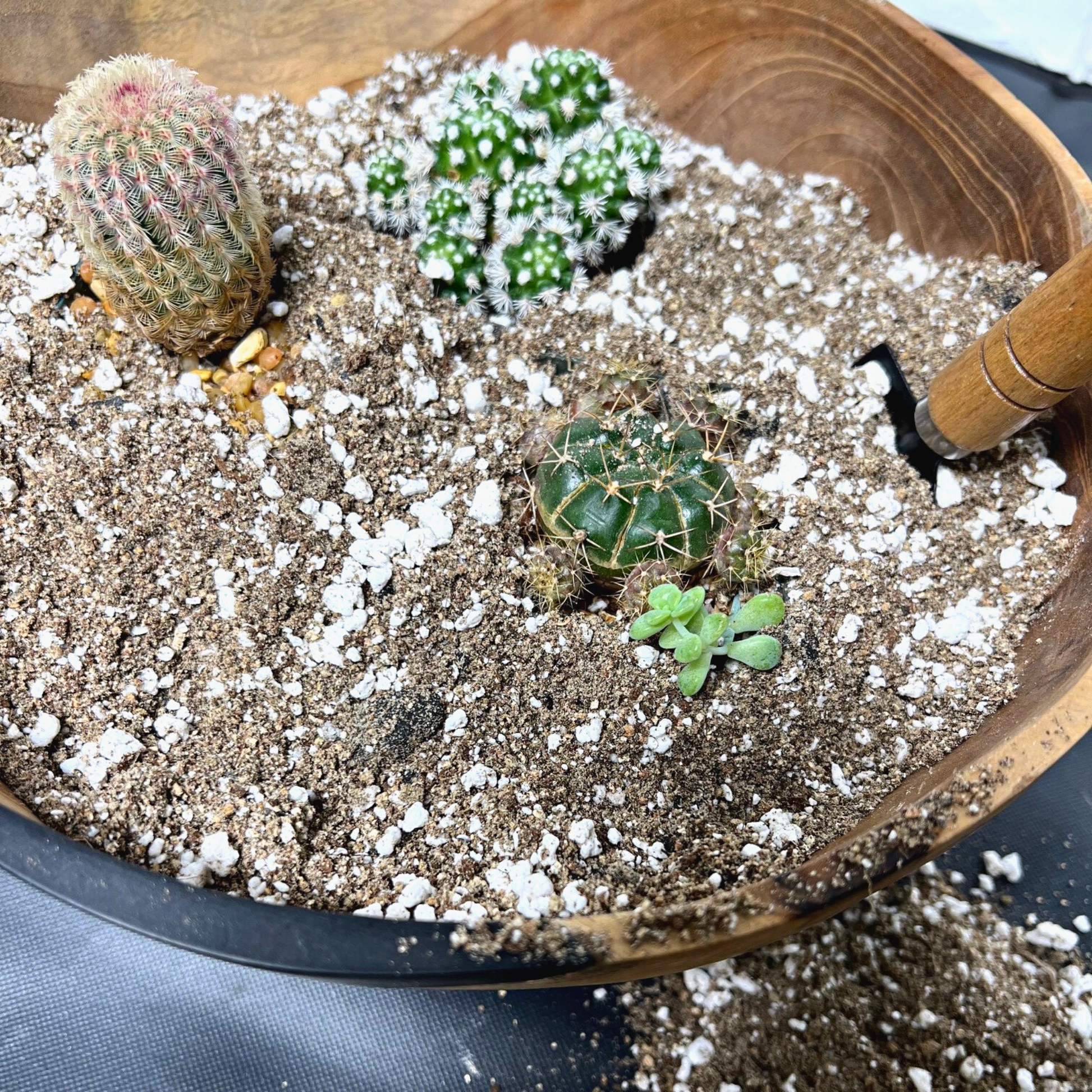
Cactus and succulents: fast drainage first
Cacti and succulents need a mix that sheds water quickly and leaves plenty of air around the roots.
A practical blend is:
- 50% coarse sand
- 30% base potting mix
- 20% perlite
Why this works
Coarse sand helps water move through the container instead of lingering. Perlite opens the mix and prevents compaction. The smaller portion of base potting mix gives enough structure without making the whole pot heavy and wet.
Best for
- cacti
- echeveria
- aloe
- jade plant
- many rosette succulents
Practical care tip
Even the right succulent mix can fail in the wrong pot. Always use drainage holes. A gritty mix in a sealed decorative container still becomes a root-rot trap.
Orchids: roots that breathe
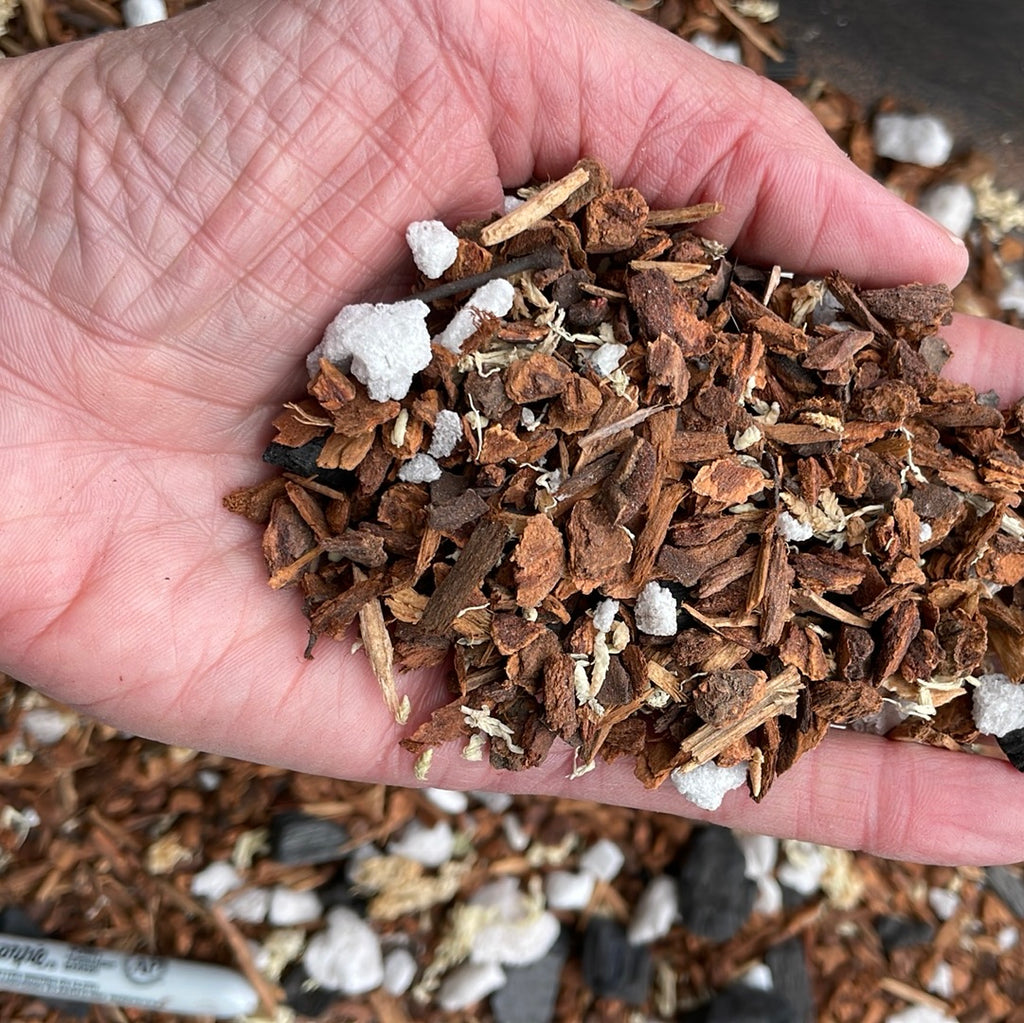
Most common indoor orchids do not want ordinary soil. Their roots naturally expect a lot more air than most potted plants.
A reliable orchid-style blend is:
- 60% pine bark
- 20% sphagnum moss
- 20% perlite
Why this works
Pine bark creates a chunky, open structure. Sphagnum moss holds enough moisture between waterings. Perlite keeps the whole mix lighter and more breathable.
Best for
- phalaenopsis orchids
- other common epiphytic orchids grown indoors
Practical care tip
If your home is dry and warm, you may need slightly more moisture retention. If your home stays cool or humid, a barkier, faster-drying mix often works better.
Tropical plants: balanced moisture with airflow
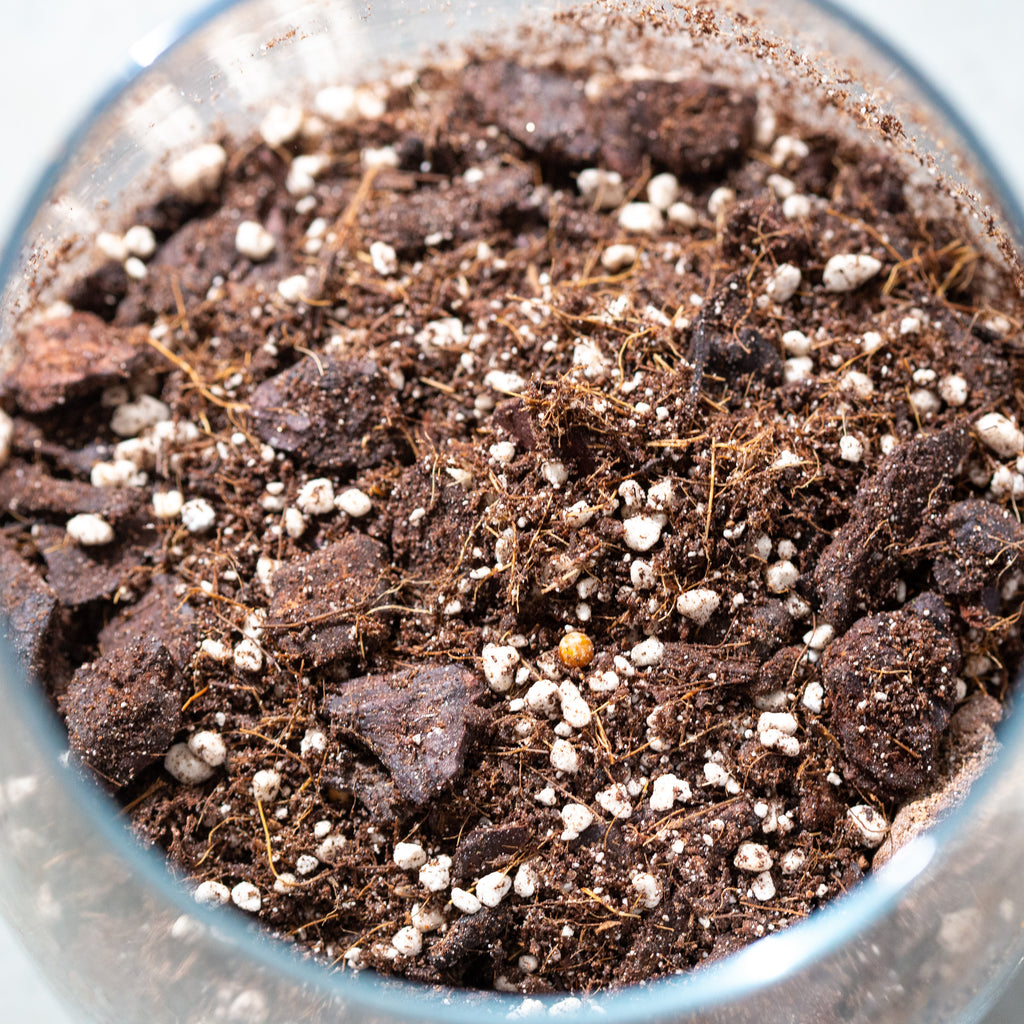
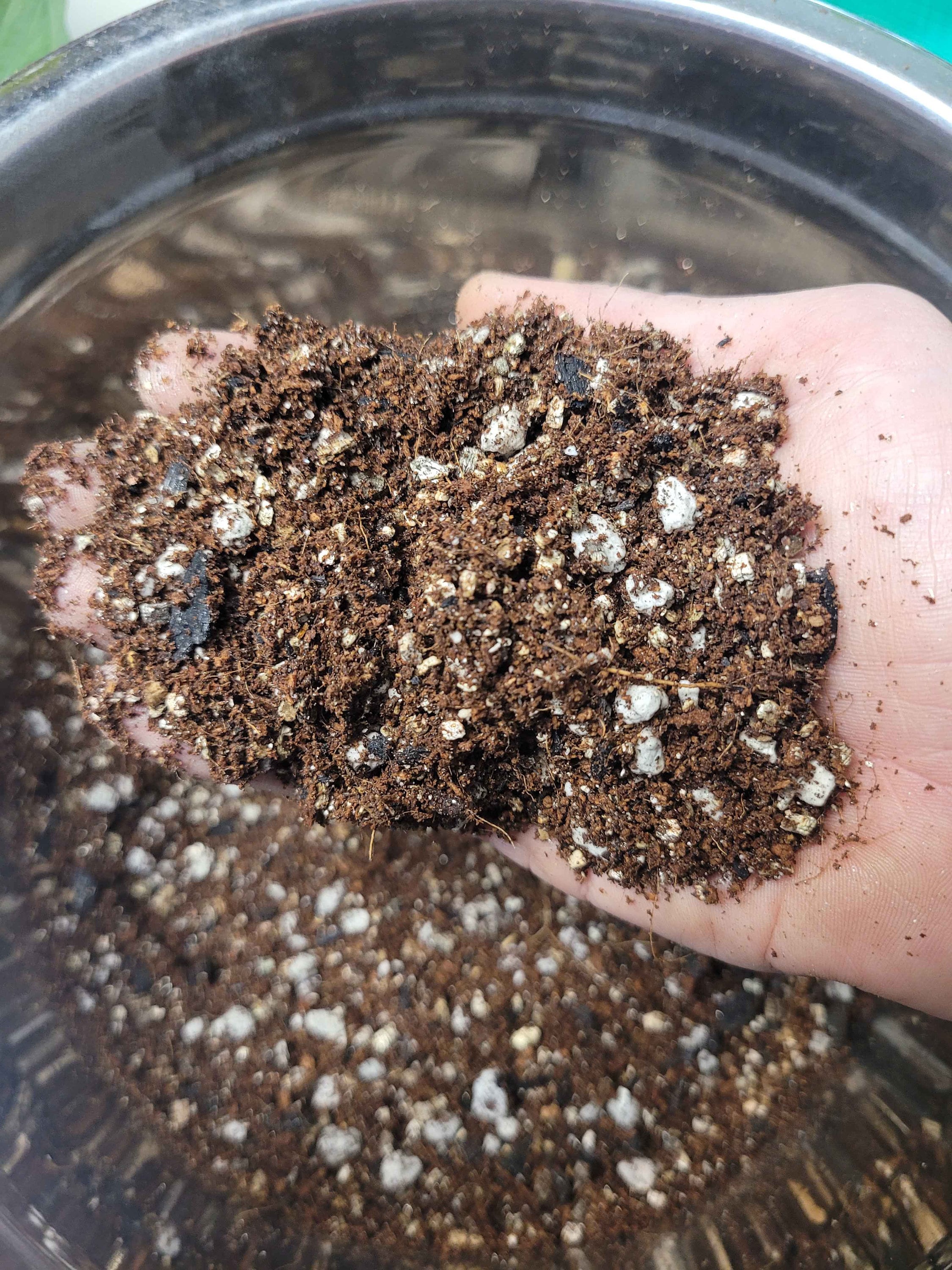
Tropical houseplants usually want a mix that stays lightly moist but never swampy. They need both retention and structure.
A balanced tropical blend is:
- 40% coco coir
- 30% perlite
- 20% bark
- 10% horticultural charcoal
Why this works
Coco coir gives even moisture retention. Perlite keeps the mix airy. Bark adds larger pores and root-zone structure. Horticultural charcoal helps keep the medium fresher and less stale over time.
Best for
- monstera
- philodendron
- pothos
- many aroids and leafy tropical plants
Practical care tip
This kind of mix is especially forgiving for growers who tend to overwater a little. The added bark and perlite protect the roots from sitting in dense soggy soil.
African violets: soft, light, and evenly moist
African violets need a finer, gentler root environment than barky tropical plants or gritty succulents.
A simple and effective blend is:
- 1/3 peat moss
- 1/3 perlite
- 1/3 vermiculite
Why this works
Peat moss holds moisture. Perlite prevents heaviness. Vermiculite helps keep the mix soft, airy, and evenly moist.
Best for
- African violets
- some small, soft-rooted flowering indoor plants
Practical care tip
African violets usually prefer being slightly snug in their pots. A perfect mix helps, but a too-large pot can still keep them overly wet for too long.
Ferns: moisture-loving, but not airless
Ferns are often described as moisture-loving, which is true, but many people misunderstand what that means. They want a cool, lightly moist root zone, not a suffocating swamp.
A fern-friendly mix looks like:
- 50% coco coir or peat-based mix
- 30% leaf mold or fine organic matter
- 20% perlite
Why this works
The coir or peat holds moisture. Leaf mold or fine organic matter creates a woodland-like softness. Perlite ensures the mix still breathes.
Best for
- Boston fern
- many decorative indoor ferns
- humidity-loving foliage plants with softer root systems
Practical care tip
Fern decline is often blamed on humidity alone, but poor root texture is just as common a problem. A moisture-retentive mix still has to stay open enough for roots to function.

Carnivorous plants: low nutrients, no fertilizer
Carnivorous plants are one of the clearest examples of why ordinary potting soil can be harmful. These plants evolved in nutrient-poor environments and do not want rich, fertilized mixes.
A suitable blend is:
- 70% sphagnum moss or peat-based carnivorous plant mix
- 30% perlite
And one rule matters greatly: no fertilizer.
Why this works
Sphagnum or peat provides the moisture retention these plants expect. Perlite improves air movement. The nutrient-poor nature of the mix matters just as much as the texture.
Best for
- Venus flytraps
- pitcher plants
- other common carnivorous plants
Practical care tip
The mix is only half the story. Many carnivorous plants also do better with low-mineral water. Rich tap water can cause issues over time.

Bonsai: structure, precision, and drainage
Bonsai growing is highly dependent on root control, so the mix must be stable, breathable, and very deliberate.
A classic bonsai blend is:
- 50% akadama
- 25% pumice
- 25% bark or lava rock
Why this works
Akadama gives structure and measured moisture retention. Pumice improves drainage and aeration. Bark or lava rock helps maintain long-term openness in a shallow container.
Best for
- bonsai grown in shallow trays and training pots
Practical care tip
Bonsai mixes are designed for control, not convenience. Because the pots are shallow, both watering and mix structure matter much more than in ordinary containers.

Bulb plants: drainage around the bulb is essential
Bulbs need a mix that prevents rot while still allowing roots to grow actively during the season.
A useful bulb blend is:
- 40% base potting mix
- 30% coarse sand
- 30% perlite
Why this works
The potting mix gives body and nutrition. Sand helps excess water move through. Perlite adds extra air space so the bulb is less likely to sit wet.
Best for
- hyacinths
- tulips in pots
- narcissus and other ornamental bulb plants
Practical care tip
Bulbs are especially vulnerable to rot when water sits around them for too long. Fast drainage is one of the simplest ways to avoid trouble.

Culinary herbs: leaner and lighter than standard potting soil
Many herbs prefer a mix that drains more freely than heavy all-purpose indoor soil.
A practical herb blend is:
- 60% all-purpose potting mix
- 20% coarse sand
- 20% perlite
Why this works
The potting mix provides enough nutrition and body. Coarse sand improves drainage. Perlite keeps the container from compacting.
Best for
- basil
- oregano
- thyme
- rosemary
- many culinary herbs
Practical care tip
Herbs differ in thirst, but most culinary herbs still grow better in a lighter mix than a dense, moisture-heavy one. A well-drained container helps flavor, root health, and long-term vigor.
How to tell your current mix is not working
A struggling plant often gives clues long before it fully declines.
Watch for:
- soil that stays wet for many days
- water pooling on top instead of soaking in
- roots that smell sour or look blackened
- mix shrinking hard from the pot edges
- growth that stays weak despite decent light
- plants drying out too fast even right after watering
These signs often point to texture problems, not just watering mistakes.
A simpler way to think about potting mixes
If you do not want to memorize every ratio, use this practical shortcut:
Plants that like to dry out need more grit, perlite, bark, or sand.
Plants that like steady moisture need more coir, peat, leaf mold, or vermiculite, but still some aeration.
Specialty plants like orchids, bonsai, and carnivorous plants need purpose-built mixes because their roots behave very differently from standard houseplants.
That one framework will already improve many repotting decisions.
Final thoughts
Healthy houseplants start below the surface. Cactus and succulents need grit and speed. Orchids need bark and air. Tropical plants want balanced moisture with structure. African violets prefer a soft, airy blend. Ferns want moisture with breathability. Carnivorous plants need nutrient-poor media with no fertilizer. Bonsai depends on precise drainage and structure. Bulb plants need a fast-draining root zone. Culinary herbs thrive in lighter, leaner mixes than many growers expect.
Once you match the potting mix to the plant, the entire care routine begins to make more sense. Watering becomes easier. Root problems become less common. Growth feels steadier. And instead of trying to rescue plants again and again, you begin building the kind of indoor garden that stays healthy from the ground up.