Taco bowls are one of the easiest meals to make healthier without making them boring. That is what makes them so popular in a real-life wellness routine. You can keep them light, make them more filling, raise the protein, add more fiber, or create a vegetarian version that still feels satisfying.
The real secret is not just choosing “healthy ingredients.” It is learning how to combine carbs, protein, fats, and vegetables in a way that gives you better energy, better fullness, and better flavor in one bowl.
A good taco bowl should do three things well. It should satisfy hunger, support steady energy, and be easy enough to repeat during a busy week. When you build it thoughtfully, it becomes much more than a trend meal. It becomes a flexible template you can use again and again.
Why Taco Bowls Work So Well for Healthy Eating
A taco bowl is naturally easy to balance because each layer plays a different nutritional role.
The base gives you structure and energy. The protein helps with fullness and muscle support. The vegetables add fiber, color, hydration, and micronutrients. The toppings bring flavor and satisfaction, which is important because healthy meals only work long term when they still feel enjoyable.
This is also why taco bowls are easier to stick with than strict meal plans. You do not need one perfect recipe. You just need a smart formula.
Step 1: Choose Your Base Carefully
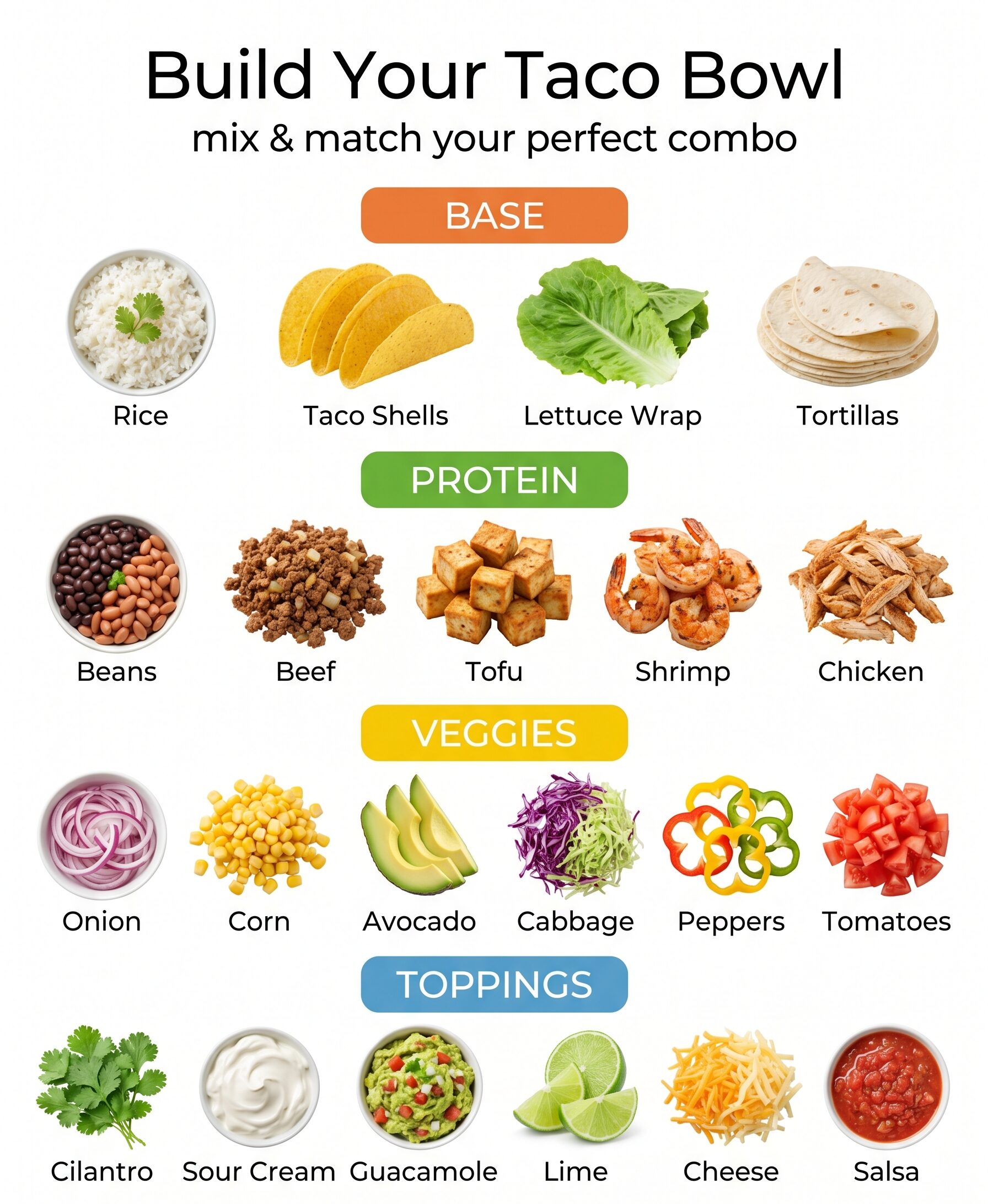
The image includes four base options: Lettuce Wrap, Flour Tortillas, Taco Shells, and Rice.
If you want a lighter and fresher bowl, Lettuce Wrap is the easiest choice. It keeps the meal crisp and lower in calories while leaving more room for protein, avocado, or toppings.
If you want something more comforting and grounding, Rice works beautifully. Rice gives quick-to-use energy and makes the bowl feel like a full meal, especially at lunch or dinner.
Flour Tortillas and Taco Shells bring more of the classic taco experience. They are not “bad” choices. They simply shift the bowl toward a more indulgent or comfort-food style. The key is portion balance, not food guilt.
Step 2: Add a Protein That Matches Your Goal
Your protein options here are Tofu, Chicken, Beans, Shrimp, and Beef.
If you want a lean, high-protein bowl, Chicken and Shrimp are both strong choices. They give the meal staying power without making it feel too heavy.
If you want a plant-forward bowl, Tofu and Beans are excellent. Tofu gives soft texture and protein, while beans bring both protein and fiber, which makes the bowl especially satisfying. Beans are also one of the best choices for making the meal more filling without relying only on meat.
Beef creates a richer and more classic taco flavor. It can absolutely fit in a healthy bowl, especially when balanced with vegetables and fresh toppings.
One of the smartest healthy combinations is mixing Chicken and Beans or Tofu and Beans. That creates a bowl with better fullness, more texture, and more balanced nutrition.
Step 3: Load the Bowl With Vegetables
This is where the taco bowl really becomes a healthy nutrition meal instead of just a heavier fast-food-style dish.
The vegetables shown are Cabbage, Tomatoes, Corn, Avocado, Onion, and Peppers.
Cabbage adds crunch and fiber. It makes the bowl feel bigger and fresher without adding heaviness.
Tomatoes bring juiciness and brightness. They help lighten richer ingredients like beef, cheese, or sour cream.
Corn adds sweetness and a soft pop of texture. It is a carbohydrate, but in a whole-food form that works well in a balanced bowl.
Avocado adds healthy fats, creaminess, and more staying power. It is one of the best ingredients here for helping the bowl feel satisfying without needing a lot of processed sauce.
Onion and Peppers bring flavor depth. They make the bowl taste more complete and less flat.
A good rule is to use at least three vegetables, and ideally combine one crunchy ingredient, one juicy ingredient, and one creamy ingredient. For example: cabbage, tomatoes, and avocado. That makes the bowl feel much more interesting to eat.
Step 4: Use Toppings to Finish, Not Overwhelm
The toppings in the image are Lime, Salsa, Sour Cream, Cilantro, Cheese, and Guacamole.
This is the part many people get wrong. Toppings are where flavor comes alive, but they can also make the bowl heavier very quickly if everything is piled on without balance.
Lime and Salsa are two of the best healthy toppings because they add brightness and moisture with very little heaviness.
Cilantro gives freshness and makes the whole bowl taste more vibrant.
Cheese, Sour Cream, and Guacamole can all fit, but they work best when used intentionally. Choose one or two creamy toppings, not all of them in large amounts. That keeps the bowl flavorful without turning it into a calorie bomb.
How to Build Better Taco Bowl Combinations
If you want a lighter bowl, try:
Lettuce Wrap + Chicken + Cabbage + Tomatoes + Peppers + Salsa + Lime + Cilantro
If you want a higher-protein bowl, try:
Rice + Chicken + Beans + Onion + Peppers + Salsa + Guacamole
If you want a plant-based healthy bowl, try:
Rice + Tofu + Beans + Cabbage + Corn + Avocado + Salsa + Lime
If you want a more satisfying dinner bowl, try:
Rice + Beef + Beans + Tomatoes + Onion + Avocado + Cheese + Salsa
These combinations work because they mix energy, protein, fiber, and flavor in a more complete way.
How to Eat Taco Bowls in a Smarter Way
The healthiest taco bowl is not always the one with the fewest calories. It is the one that keeps you full, prevents random snacking later, and gives your body a better balance of nutrients.
Try to eat slowly enough to notice texture and fullness. Taco bowls are naturally satisfying when they include protein, fiber, and healthy fats, so you often do not need oversized portions.
It also helps to prep ingredients ahead. Cook chicken or tofu in advance, chop cabbage and peppers, and keep salsa, beans, rice, or lime ready in the fridge. That turns taco bowls into an easy weekday meal instead of a complicated one.
Final Takeaway
A truly healthy taco bowl is all about smart layering. Start with a base that fits your hunger, add a protein that supports fullness, use plenty of vegetables for fiber and freshness, and finish with toppings that make the bowl feel exciting but still balanced.
With Lettuce Wrap, Flour Tortillas, Taco Shells, Rice, Tofu, Chicken, Beans, Shrimp, Beef, Cabbage, Tomatoes, Corn, Avocado, Onion, Peppers, Lime, Salsa, Sour Cream, Cilantro, Cheese, and Guacamole, you can build endless combinations that feel nourishing, flavorful, and realistic for everyday healthy eating.
Related source science: Meals that combine protein, fiber-rich vegetables, and healthy fats tend to support stronger fullness, steadier energy, and better appetite control than meals built mostly from refined carbohydrates alone.