No garden bed? No problem. April and May are still excellent months to start an herb garden in pots, especially if you want something practical, productive, and easy to manage. A few well-chosen containers can turn a balcony, porch, patio, doorstep, or sunny windowside into a working kitchen garden that gives you fresh flavor for months.
What makes potted herbs so satisfying is not only the harvest. It is the way they sharpen your gardening instincts. You begin to notice how sun changes leaf flavor, how pot size affects moisture, and how one small change in drainage or trimming can transform a plant from weak and leggy to full and generous. That kind of hands-on learning builds real growing skill.
Most culinary herbs need at least six hours of direct sun and dislike heavy, waterlogged soil, which makes containers a smart choice because you control both the potting mix and the watering rhythm. Containers also let you group herbs by their needs instead of forcing moisture-loving and drought-loving plants to share the same bed.
Why April–May is such a useful herb-planting window
This stretch of spring is ideal because it sits right between cold stress and high summer pressure. Warm-season herbs like basil can finally be planted after frost danger passes, while cool-season herbs like parsley, cilantro, and dill still have time to establish before real heat speeds up bolting. In much of the United States, this is the moment when container herbs settle in fastest and reward you soonest.
If you garden in USDA Zones 3–5, think of April–May as the season to begin hardy herbs in pots outside once nights moderate and to wait a little longer for basil if frost still threatens. In Zones 6–7, this is one of the best overall planting windows. In Zones 8–10, it is a strong time for nearly all of these herbs, but moisture and afternoon heat start mattering sooner, especially for parsley and cilantro. That zone guidance is a practical inference from each herb’s annual or perennial habit and its heat or cool-season preference.
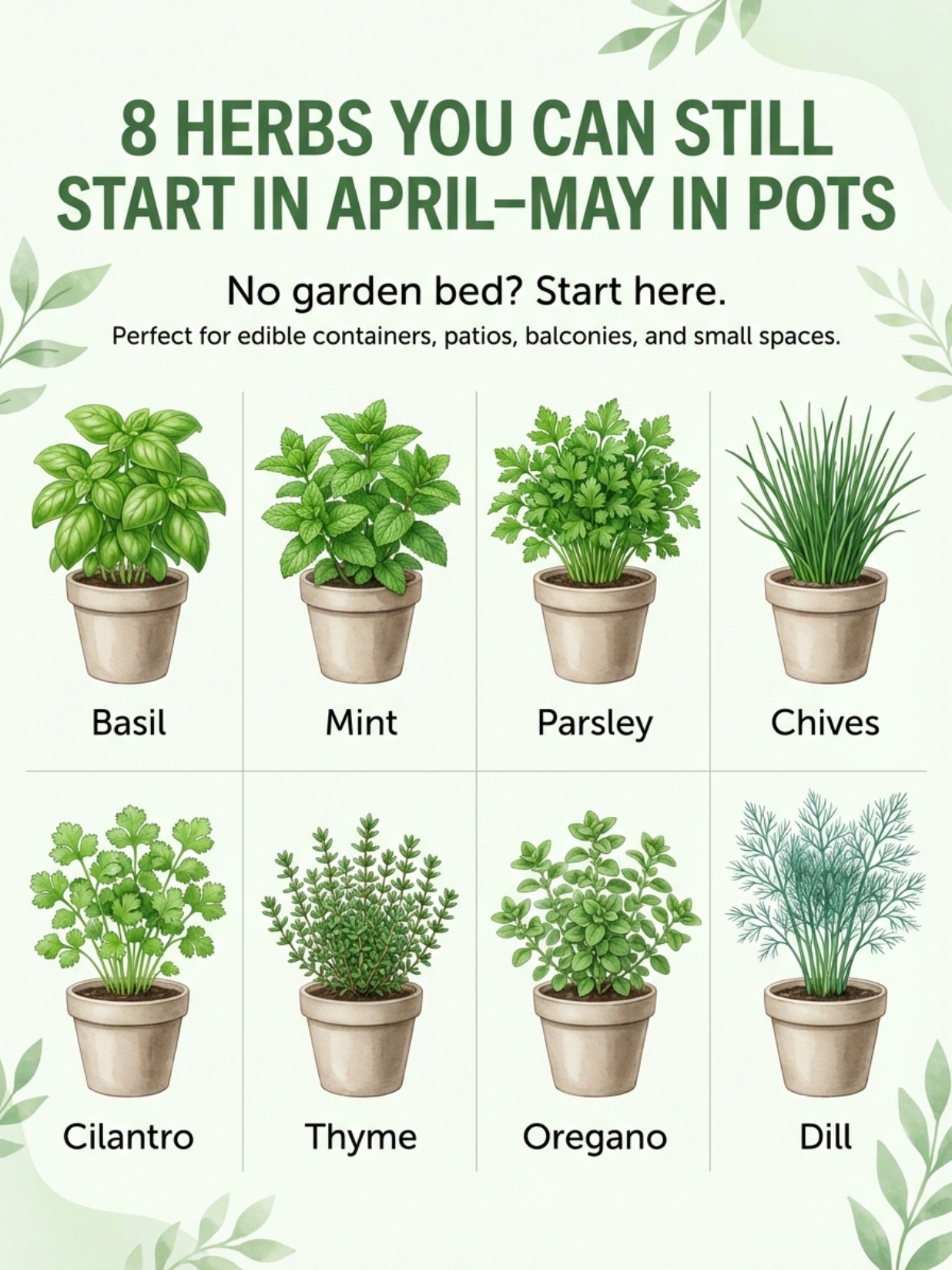
Basil: the best warm-season starter for sunny pots
Basil is one of the easiest and most rewarding herbs to start once frost is behind you. It is a tender annual, loves warmth, prefers full sun, and grows beautifully in containers with moist but well-drained soil. It is also naturally suited to pots because frequent pinching keeps it compact and productive. Both UMN Extension and North Carolina Extension emphasize full sun, good drainage, and planting after frost.
The practical trick with basil is not to wait for it to get tall before harvesting. Start pinching the tips once it has enough leaves to spare. Remove flower buds early. That redirects energy into leafy growth and gives you a bushier plant with far more usable foliage. If you let basil flower too soon, leaf production slows and flavor often becomes less lush.

Mint: perfect for containers, risky in open ground
Mint is one of the smartest herbs to grow in pots because it spreads aggressively by rhizomes in the ground. Extension guidance specifically notes that mint can be restrained by growing it in a container, and peppermint is often recommended for a pot 12–16 inches wide. Mint prefers rich, moist, well-drained soil and can tolerate some shade, though garden mint also grows well in full sun if it does not dry out.
This makes mint ideal for gardeners who want dependable harvests without giving up a whole bed to one herb. The best routine is simple: use a roomy pot, water before the soil turns bone dry, and shear the plant lightly every few weeks to keep it dense and tender. If you see stems flopping outward, that is your signal to harvest harder, not less.

Parsley: slow to start, worth the patience
Parsley is a biennial often grown as an annual, and it performs best in consistently moist, well-drained soil in full sun to light shade. It prefers cooler summer conditions and can struggle in deep Southern heat, which is why starting it in spring containers is so useful. It is easier to buy seedlings than wait through slow, uneven germination.
Parsley rewards a steady hand. Do not let the pot dry hard between waterings, and do not scalp the plant from the top. Instead, harvest outer stems from the base. That keeps the center growing and extends the harvest. In warmer zones, give parsley morning sun and some light relief from brutal late-day heat.

Chives: tidy, perennial, and beginner-friendly
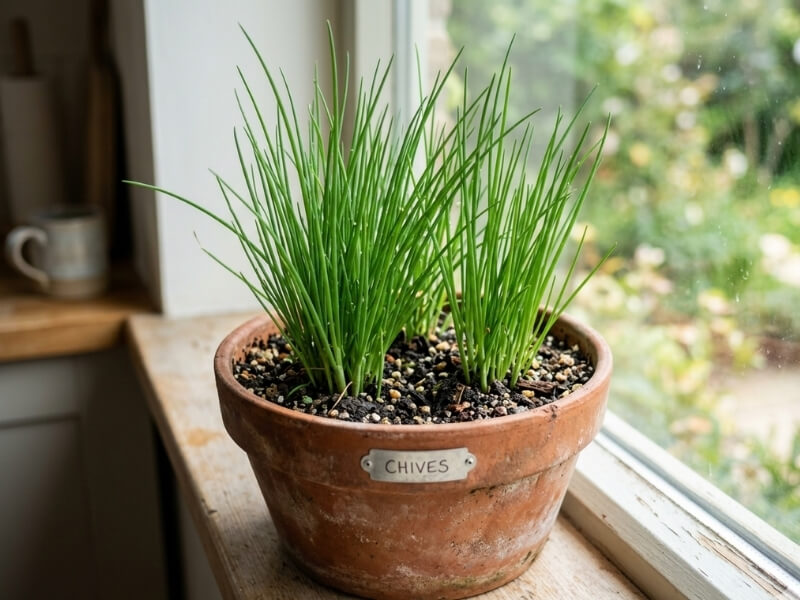
Chives are one of the easiest perennial herbs for containers. North Carolina Extension notes that they grow in average, well-drained soil in full sun to partial shade, can be started from seed, and are harvested by clipping leaves at the base once plants reach about six inches tall. They also form clumps that can be divided in spring or fall.
That clumping habit makes chives especially useful in pots. They stay neat, return reliably in many climates, and do not demand much space. If your container starts to look crowded after a season or two, divide the clump and refresh the potting mix. That one small task can reset the plant for another long run of harvests.
Cilantro: fast flavor before summer heat
Cilantro is one of the most valuable spring herbs, but it is also one of the quickest to bolt when temperatures rise. North Carolina Extension describes it as preferring medium-moist, well-drained soil in full sun to light shade and notes that it bolts easily in hotter climates. That makes April–May the right moment to sow it in many U.S. gardens before the weather turns harsh.
The practical lesson with cilantro is timing. Sow it, use it generously, and plan for succession rather than expecting one pot to stay perfect forever. A second sowing two or three weeks after the first gives you overlap. In warmer zones, a little afternoon shade can make the difference between a short harvest and a useful one.
![Growing Cilantro Indoors in Pots [Guide]: Seeds to Plants](https://www.tasteofhome.com/wp-content/uploads/2023/07/GettyImages-610970154.jpg)
Thyme: for gardeners who overwater everything else
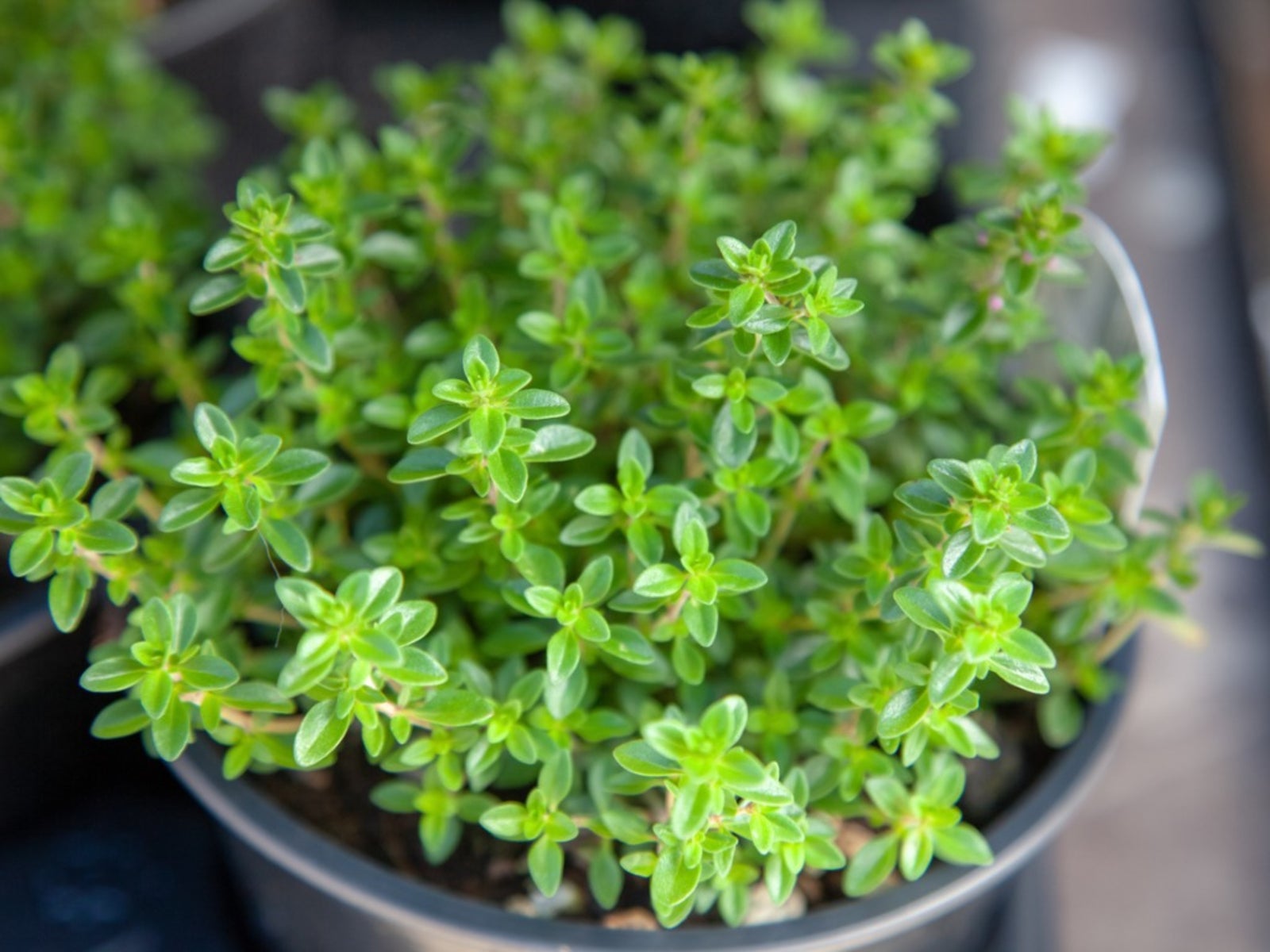
Thyme is ideal for pots if you tend to be too generous with water. Both Missouri Botanical Garden and North Carolina Extension describe common thyme as a woody-based perennial that prefers full sun, very good drainage, and dry, sandy, rocky, or alkaline-leaning soil. It is frost and drought tolerant, but wet soil is where trouble starts.
That means thyme should never be tucked into a thirsty mixed pot with mint or parsley. Give it a gritty mix, a container with strong drainage, and a lighter watering rhythm. Then trim it often. Frequent, light harvesting keeps it from becoming too woody and helps the plant stay compact and flavorful.
Oregano: hot, dry, and better in its own pot
Oregano is another herb that shines in containers when you match it to the right conditions. It prefers full sun and well-drained to dry soil and handles heat and drought well once established. North Carolina Extension adds that it dislikes poorly drained or acidic soil and struggles in hot, humid conditions if drainage and airflow are poor. Missouri Botanical Garden recommends shearing it back regularly before flowering to keep new leaves coming.
For practical growing, think of oregano as a “lean-soil herb.” Do not pamper it with heavy feeding or constant moisture. Put it in a sunny pot, keep the mix airy, and shear it before it blooms heavily. The flavor is often best just before flowering, and regular trimming keeps the plant tidy instead of lanky.

Dill: direct sow it and protect it from wind
Dill is a strong spring herb for pots, but it behaves a little differently from the others. UMN Extension says dill wants six to eight hours of direct sun, grows best when directly sown after frost danger passes, and does not transplant easily. North Carolina Extension also notes that dill grows best in temperate climates with full sun and well-drained soil.
The key with dill is to start it where it will stay. Use a deeper pot than you might expect, sow directly, and place it where wind will not batter the tall hollow stems. If your patio is breezy, a simple stake or protected corner can save you frustration later.

The smartest way to group these herbs in containers
The easiest herb gardens are not random. Group herbs by water need.
Put basil, parsley, cilantro, and mint in the “more moisture, more trimming” category. They like regular attention and steadier water. Keep thyme and oregano together in the “sunny, lean, and drier” category. Treat dill as its own case: sunny, direct-sown, and protected from strong wind. Chives are flexible and can fit with the moderate-moisture group. This kind of grouping turns daily care into a rhythm instead of a guessing game.
Container habits that actually improve results
Choose larger pots than you think you need. Bigger containers buffer moisture swings and reduce stress. Use potting mix, not garden soil. Water thoroughly, then let the plant’s preferred moisture level guide the next watering. Dump standing water from saucers so roots do not sit wet. And harvest often. Regular cutting is not just for the kitchen; it is what keeps many herbs productive and compact.
Final thoughts
A pot of basil by the door, mint in its own container, parsley within reach, a clump of chives, a fresh sowing of cilantro, a dry sunny pot of thyme and oregano, and a stand of dill catching the morning sun – this is not a small thing. It is a garden that fits real life.
April and May are still very good months to start. And once you do, the habit grows with the herbs: step outside, check the leaves, trim a little, smell the stems, notice the light. That is how container gardening becomes more than convenience. It becomes skill, confidence, and a deeper daily connection to the season.