A spring garden can do more than look beautiful. It can become one of the most useful spaces on your property, supporting bees, butterflies, and other pollinators exactly when they need reliable food sources after winter. That matters more than many gardeners realize. A pollinator-friendly flower bed does not just help wildlife. It improves the rhythm of the whole garden. Fruit set becomes stronger. Vegetable crops benefit. Biodiversity increases. And your outdoor space begins to feel more alive, balanced, and productive.
The best part is that you do not need a large meadow or a formal pollinator project to make a difference. A sunny border, a front-yard bed, a mixed herb-and-flower strip, or even a few well-chosen drifts near your vegetable garden can create steady nectar and pollen support. The key is choosing flowers with real garden value: plants that are attractive, dependable, and suited to your USDA zone.
Below are nine excellent spring and early-season flowers that help pollinators while also making the garden richer, fuller, and easier to enjoy.
Why pollinator flowers matter in spring
Spring is a rebuilding season. Pollinators emerge hungry, and many are looking for dependable sources of nectar and pollen while weather is still shifting. If your garden offers early and mid-spring bloom, it becomes more than decorative. It becomes a working habitat.
That support matters in practical ways:
- Bees stay active near your edible crops
- Butterflies are more likely to visit and linger
- Early beneficial insect activity increases around the garden
- Pollination improves for many fruiting plants later in the season
- Your planting beds develop stronger ecological balance
A pollinator garden is not separate from productive gardening. It strengthens it.
What makes a flower useful for pollinators?
Not every pretty flower is equally helpful. The most useful pollinator plants usually share a few characteristics:
- Open or accessible flower shapes
- Repeated bloom over a decent stretch of time
- Good nectar or pollen value
- Strong performance in local conditions
- Simple care that keeps them flowering consistently
For home gardeners in the United States, the smartest choices are flowers that support pollinators and also suit your climate, soil, and maintenance style.
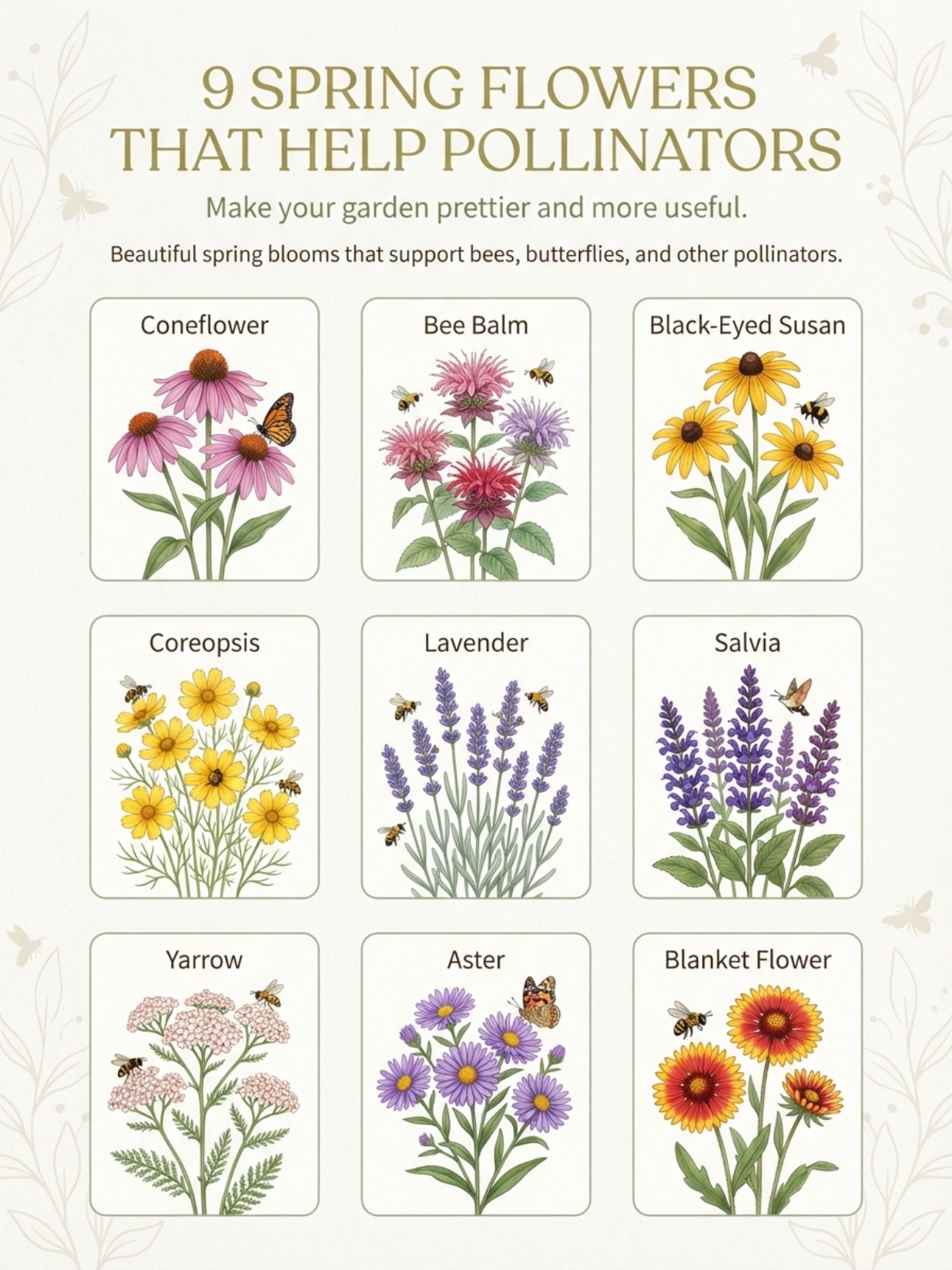
1. Coneflower: one of the most reliable pollinator perennials
Coneflower is one of the most useful flowers you can grow if you want long-term value from one planting. It attracts bees and butterflies, handles summer heat well once established, and keeps the garden colorful for a long stretch.
Best USDA zones: 3–9
Plant character: upright, sturdy, drought-tolerant after establishment
Best use: sunny borders, prairie-style planting, pollinator strips, mixed perennial beds
Practical tip: Leave some seed heads standing after flowering. Pollinators enjoy the blooms in season, and birds benefit later from the seeds. That turns one plant into a multi-season asset.
2. Bee Balm: a pollinator magnet with real garden presence
Bee balm brings vivid color and strong pollinator appeal. It is especially attractive to bees, butterflies, and even hummingbirds in many gardens. It also adds height and movement to the border.
Best USDA zones: 4–9
Plant character: clump-forming, colorful, lively, aromatic foliage
Best use: cottage gardens, pollinator beds, herb-flower borders, near vegetable plots
Practical tip: Give bee balm good airflow. It is generous, but crowded planting can encourage powdery mildew. Space it well and divide clumps when they get too dense.
3. Black-Eyed Susan: simple, cheerful, and highly effective
Black-eyed Susan is one of the easiest flowers for creating a welcoming pollinator bed. Its warm color stands out clearly in the landscape, and it pairs easily with purples, blues, and grasses.
Best USDA zones: 3–9
Plant character: bright, upright, adaptable, easygoing
Best use: sunny perennial borders, wildlife gardens, mass plantings, low-maintenance beds
Practical tip: Plant in drifts rather than singles. Pollinators notice repeated clusters more easily, and the border looks stronger and more intentional.
4. Coreopsis: long bloom with low stress
Coreopsis is a practical flower for gardeners who want something sunny, easy, and useful to insects. It blooms generously and helps bridge the gap between early spring color and stronger summer displays.
Best USDA zones: generally 4–9, depending on variety
Plant character: airy, bright, fine-textured, long-blooming
Best use: front and middle of sunny beds, pollinator patches, dry borders
Practical tip: Shear lightly after the first bloom flush if plants begin looking tired. This often refreshes growth and encourages another wave of flowers.
5. Lavender: fragrant, beautiful, and highly attractive to bees
Lavender is one of the best examples of a flower that is both ornamental and practical. Bees love it, people love it, and it adds structure, scent, and calm color to the garden.
Best USDA zones: 5–9, depending on variety and winter drainage
Plant character: shrubby, fragrant, silver-toned foliage, drought-tolerant
Best use: edging, herb gardens, gravel beds, pollinator borders, containers
Practical tip: Focus on drainage first. Lavender often fails because the soil stays too wet, especially in winter. Raised planting or sandy, fast-draining soil helps far more than extra fertilizer ever will.
6. Salvia: one of the easiest bloomers for busy gardeners
Salvia is a strong choice for pollinator support because it flowers heavily, repeats well, and stands up to warm weather. Many varieties are especially attractive to bees and hummingbirds.
Best USDA zones: often 4–10, depending on the type
Plant character: upright spikes, aromatic foliage, repeat-blooming
Best use: mixed borders, pollinator plantings, sunny foundations, herbaceous strips
Practical tip: Cut back spent flower spikes after the main bloom. This is one of the easiest ways to trigger more flowers without much effort.
7. Yarrow: resilient, useful, and excellent for beneficial insects
Yarrow is more than a pretty flat-topped flower. It is a practical garden plant that tolerates dryness, supports pollinators, and adds a different flower shape that helps a planting feel layered.
Best USDA zones: 3–9
Plant character: ferny foliage, broad bloom clusters, drought-tolerant
Best use: sunny borders, meadow planting, low-water gardens, beneficial insect strips
Practical tip: Avoid overly rich soil. Yarrow usually performs best when growth stays sturdy rather than lush and floppy.
8. Aster: valuable late support after spring beds settle
Asters are often thought of as autumn flowers, but they are important in a pollinator-focused garden plan because they extend feeding opportunities later in the season. That makes them a wise companion to spring and early summer flowers.
Best USDA zones: 3–8, depending on type
Plant character: branching, colorful, late-blooming, pollinator-rich
Best use: back and middle of perennial borders, mixed seasonal pollinator gardens
Practical tip: Use asters as part of a sequence, not as isolated plants. A good pollinator garden offers bloom progression, and asters help you finish the season strongly.
9. Blanket Flower: bright color for hot, sunny gardens
Blanket flower is an excellent choice for gardeners who need strong performance in sunny, drier conditions. It blooms in warm colors, attracts pollinators, and keeps the bed lively through hot weather.
Best USDA zones: 3–10, depending on variety
Plant character: heat-loving, bright, long-blooming, sturdy
Best use: sunny borders, pollinator patches, dry gardens, gravelly beds
Practical tip: Do not smother it with heavy mulch or rich feeding. Blanket flower usually performs best in leaner, well-drained soil.
How to choose the right pollinator flowers for your USDA zone
Zones 3–5
Focus on cold-hardy performers such as coneflower, black-eyed Susan, yarrow, coreopsis, asters, and many salvias. These plants can handle winter and return reliably.
Zones 6–7
This is one of the easiest ranges for building a diverse pollinator border. Nearly all of the flowers listed here can perform well with good drainage and proper sun.
Zones 8–10
Choose heat-tolerant flowers like blanket flower, salvia, coreopsis, coneflower, and black-eyed Susan. Lavender can also do beautifully if soil drainage is excellent. In humid regions, spacing and airflow matter even more.
A practical layout for a pollinator-friendly flower bed
A useful pollinator bed is not just a collection of good flowers. It should be arranged so bloom, access, and visibility all work well.
Build in layers
Place taller plants like bee balm, coneflower, and some salvias toward the middle or back. Use coreopsis, lavender, and blanket flower toward the front or in the middle edge.
Plant in clusters
Pollinators find groups more easily than isolated singles. A drift of five or seven plants is usually more effective than one of each scattered randomly.
Include bloom succession
A stronger garden includes:
- early and mid-spring bloomers
- reliable summer flowers
- late support such as asters
This keeps nectar and pollen available over a much longer period.
Practical care habits that make pollinator flowers work harder
Skip unnecessary spraying
If you want pollinators, avoid broad-spectrum garden sprays whenever possible. A flower border cannot help insects if chemicals erase the benefit.
Deadhead selectively
Deadheading can keep bloom going, but do not remove everything. Leaving some seed heads later in the season supports birds and natural reseeding.
Water deeply during establishment
Most pollinator-friendly perennials become easier after their first season. The early stage is when steady watering matters most.
Add compost, not excess fertilizer
Many flowering perennials bloom better in balanced soil than in overly rich conditions. Too much feeding often means more leaves and softer growth, not better flowers.
Why pollinator flowers improve the whole garden, not just one bed
Once pollinator-friendly flowers settle into the landscape, they begin influencing more than their own space. Vegetable beds benefit from more insect traffic. Herb flowers become more active. Fruiting crops often set better. The garden feels more balanced because it is no longer working as isolated parts.
This is especially valuable for gardeners who want beauty and usefulness at the same time. A border of coneflower, bee balm, salvia, yarrow, and lavender can support pollinators while also framing a path, anchoring a patio, or softening the edge of a vegetable garden.
Final thoughts: plant beauty that gives something back
A truly satisfying spring garden is not only colorful. It is generous. It offers food, habitat, movement, and life. Coneflower, bee balm, black-eyed Susan, coreopsis, lavender, salvia, yarrow, aster, and blanket flower each bring a different strength, but together they create something larger than a pretty border.
They make the garden more useful. More connected. More alive.
And that is where gardening becomes deeply rewarding: when every planting choice adds not only beauty, but purpose.