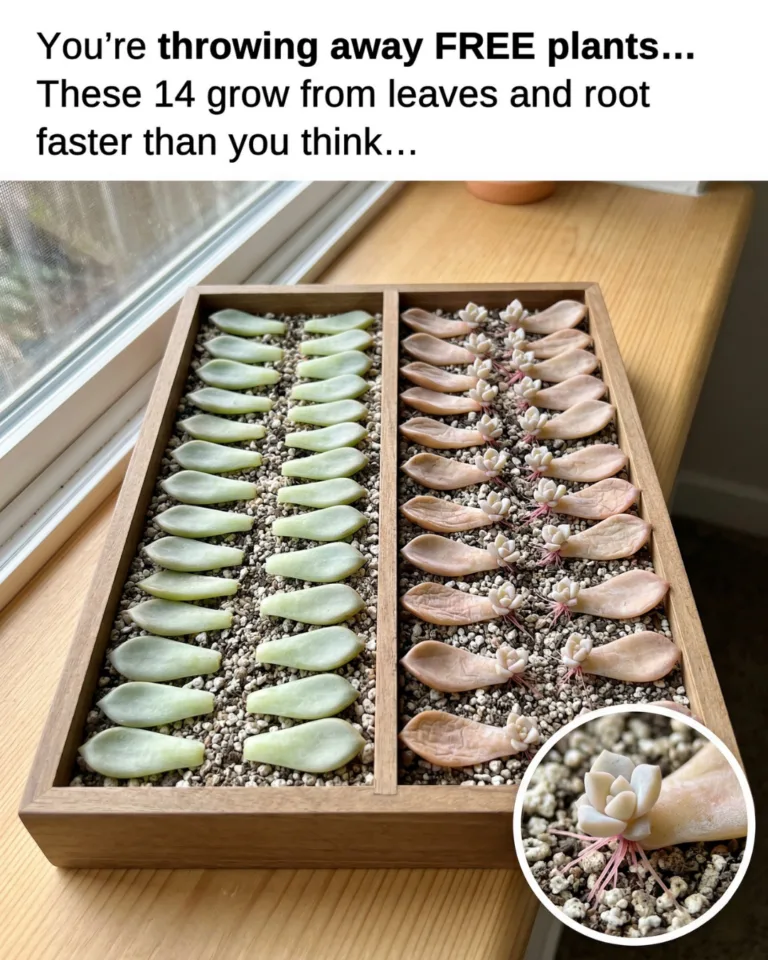
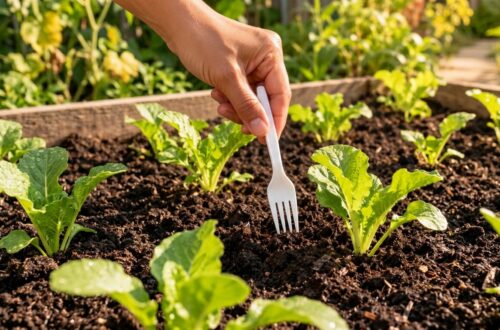
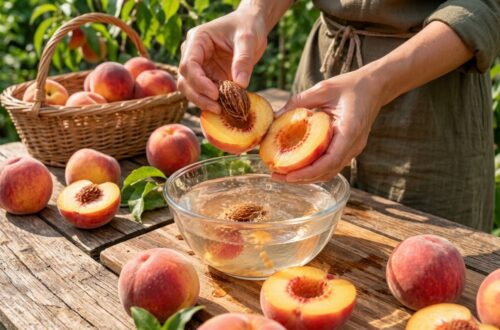
Learning to propagate plants from cuttings is one of the most useful gardening skills you can build. It saves money, helps you preserve favorite plants, and gives you a practical way to grow a fuller garden without starting everything from seed. More importantly, it changes how you see your plants. A healthy stem is no longer just a stem. It becomes future growth, future flowers, future fruit, and future confidence.
For home gardeners, landscape growers, and small-scale plant lovers, propagation from cuttings is one of the simplest ways to turn one successful plant into many. Done well, it improves productivity, expands your planting options, and deepens your understanding of how plants grow. Instead of depending on nursery stock for every new bed, border, or container, you begin creating your own supply.
The key is knowing which plants root well from cuttings, what kind of cutting to take, and how to care for it during that fragile but exciting rooting stage. Some plants root quickly from soft green growth. Others prefer semi-hardwood or dormant hardwood cuttings. A few are very easy. A few take patience. All of them teach something valuable.
Why propagating from cuttings is such a smart gardening skill
Propagation by cuttings gives you a genetic copy of the parent plant. That means if you love a certain rose, hydrangea, rosemary, or fig for its flower color, fruit quality, fragrance, or growth habit, cuttings let you keep those exact traits.
It also helps you:
- replace aging plants with young, vigorous ones
- build privacy screens or edible rows more affordably
- share plants with family and friends
- rescue storm-damaged or pruned material
- improve your plant care skills through hands-on observation
This is gardening at its most practical. You are not just growing plants. You are multiplying success.
The three main cutting types gardeners should know
Softwood cuttings
These come from fresh, flexible new growth, usually in spring or early summer. They root quickly but dry out easily.
Semi-hardwood cuttings
These come from partially matured stems, usually in summer. They are firmer and often ideal for shrubs and some flowering plants.
Hardwood cuttings
These come from dormant, woody stems, usually in late fall or winter. They root more slowly but can be excellent for many fruiting and woody plants.
Choosing the right cutting type matters as much as choosing the right plant.
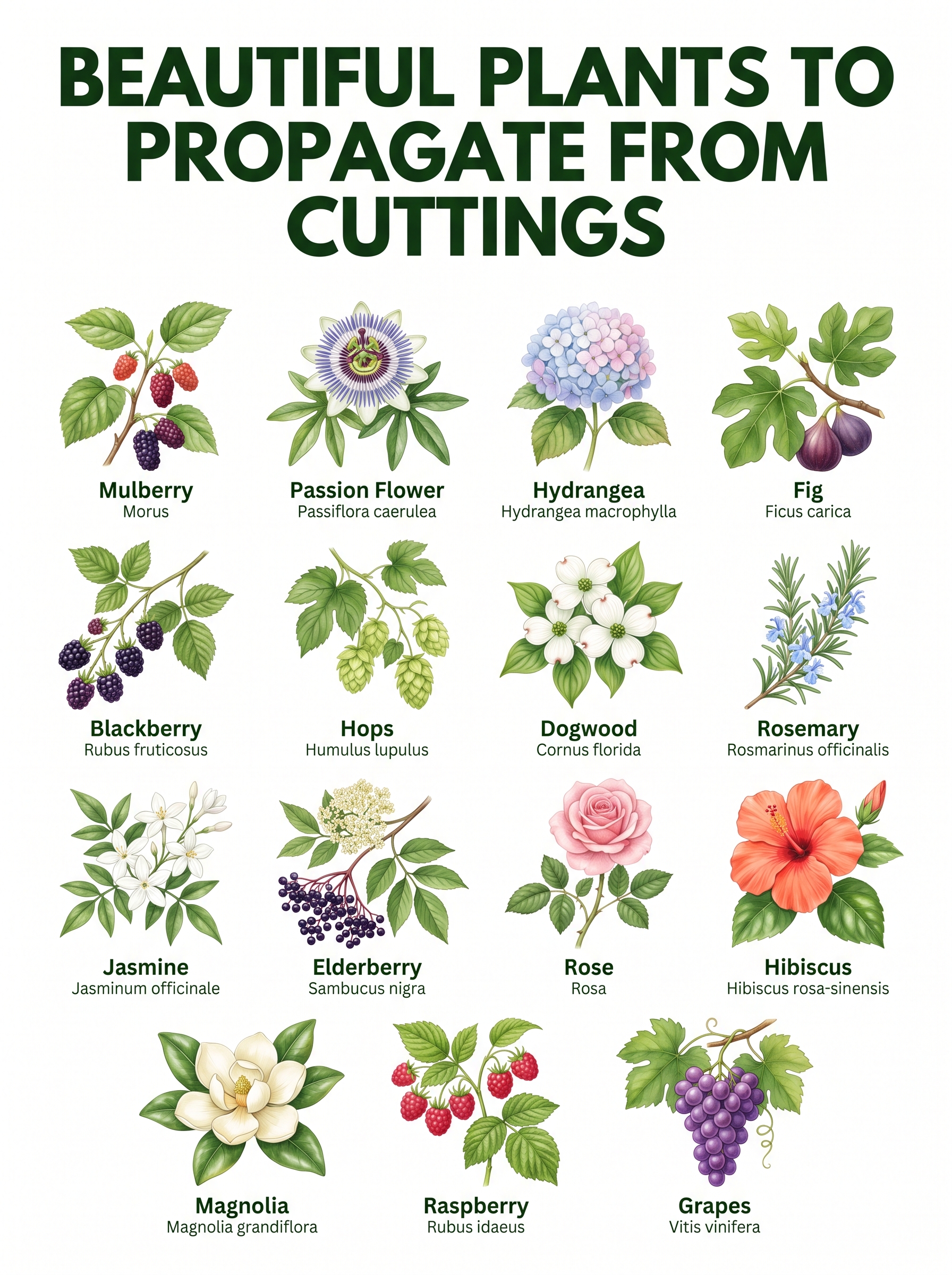
1. Mulberry
Mulberry is an excellent choice if you want a productive fruiting plant that can often be propagated without too much difficulty from cuttings.
Plant character
Fast-growing, fruit-bearing, adaptable, and often vigorous once established.
Best zones
Many mulberries perform well in USDA Zones 4–8, though exact hardiness depends on species and variety.
Practical propagation tip
Take healthy hardwood or semi-hardwood cuttings from strong, disease-free stems. Do not choose weak growth from shaded interior branches.

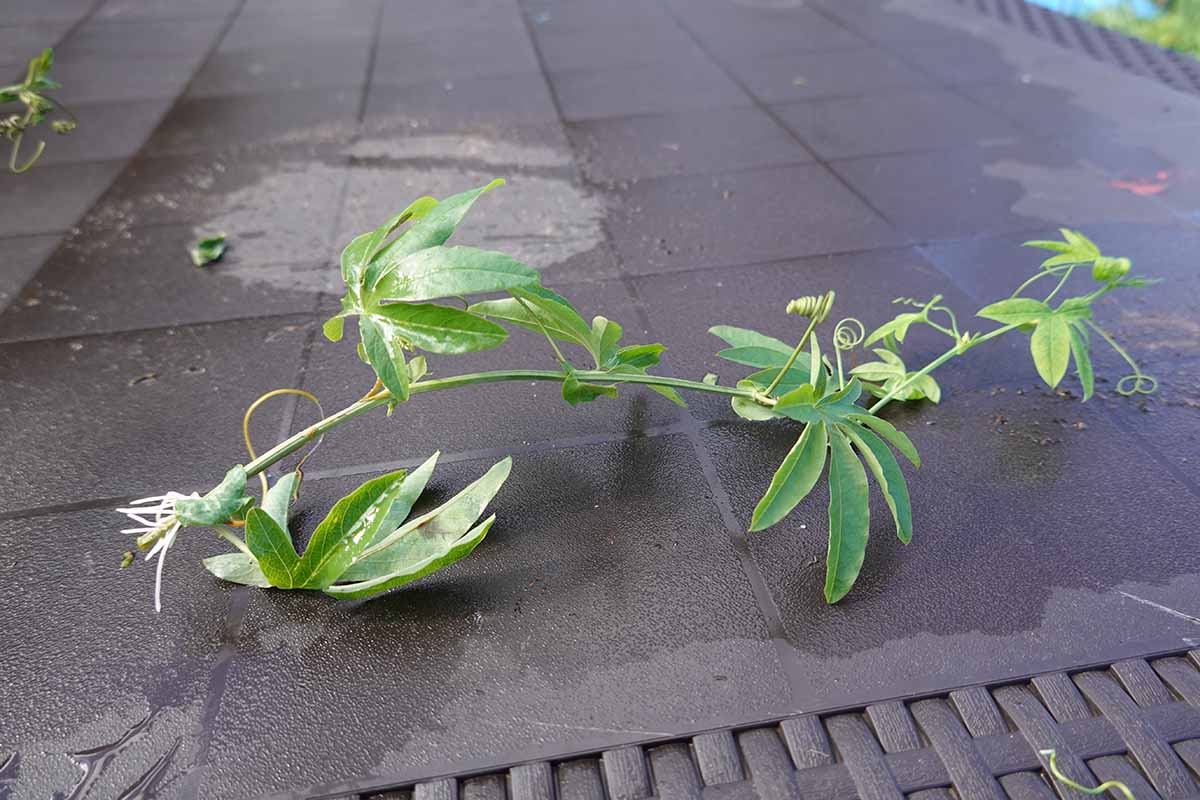
2. Passion Flower
Passion flower is one of the most beautiful plants to propagate because it gives you both ornamental appeal and a vigorous climbing habit.
Plant character
Exotic-looking blooms, twining vines, pollinator appeal, fast seasonal growth.
Best zones
Passiflora caerulea is commonly grown in warmer parts of the U.S., often around Zones 7–10 with some protection in cooler areas.
Practical propagation tip
Softwood cuttings in active growth are usually your best choice. Keep humidity high while rooting because tender vines can wilt quickly.
3. Hydrangea
Hydrangea is one of the most rewarding shrubs to multiply from cuttings, especially if you want to repeat a favorite flower color or form across the garden.
Plant character
Showy flowers, broad leaves, strong landscape value, useful in foundation beds and borders.
Best zones
Many hydrangeas, including bigleaf hydrangea, grow well in Zones 5–9, depending on variety.
Practical propagation tip
Take non-flowering softwood cuttings. Remove lower leaves, keep only a few upper leaves, and protect the cutting from harsh sun while roots form.

4. Fig
Fig is one of the best fruit plants for propagation from cuttings. It is especially valuable for gardeners who want to expand a productive edible planting without buying more trees.
Plant character
Broad leaves, sweet fruit, strong summer growth, excellent for warmer climates and containers.
Best zones
Common fig generally performs best in Zones 7–10, though hardy varieties can go a bit colder with protection.
Practical propagation tip
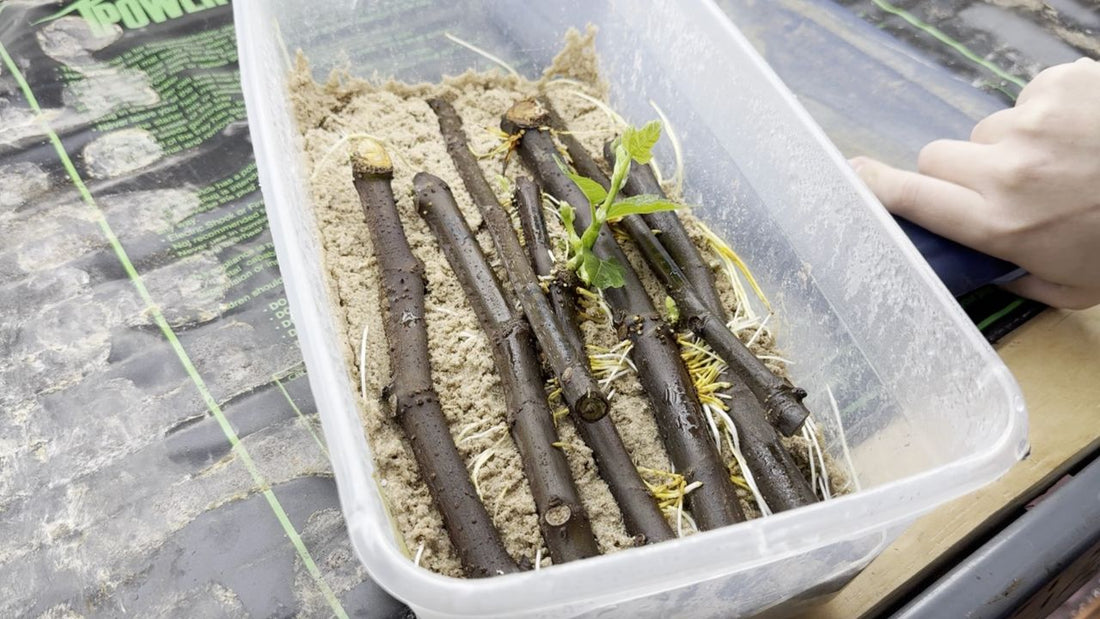
Hardwood cuttings taken during dormancy are often very successful. Use thick, healthy pencil-width stems rather than thin weak wood.
5. Blackberry
Blackberry is practical, productive, and worth propagating if you want more fruit without a large investment.
Plant character
Cane-forming, vigorous, fruitful, often thorny depending on cultivar.
Best zones
Many blackberries grow well in Zones 5–9.
Practical propagation tip
Semi-hardwood cuttings can work, but blackberry is also often multiplied by tip layering. If you use cuttings, choose healthy young canes with strong nodes.

6. Hops
Hops is a fast-growing climber with ornamental and practical value, especially for gardeners who enjoy brewing, herbal growing, or dramatic vertical growth.
Plant character
Vigorous bines, textured foliage, seasonal cones, strong vertical habit.
Best zones
Often well suited to Zones 4–8.
Practical propagation tip
Take cuttings from strong spring growth and root them in evenly moist medium. Hops grows quickly, but young cuttings still need stable moisture and shelter.

7. Dogwood
Dogwood can be propagated from cuttings, though it is not always the easiest on the list. It is worth trying if you want to preserve a beautiful ornamental specimen.
Plant character
Elegant branching, spring bloom, strong landscape presence, wildlife value.
Best zones
Flowering dogwood commonly suits Zones 5–9.
Practical propagation tip
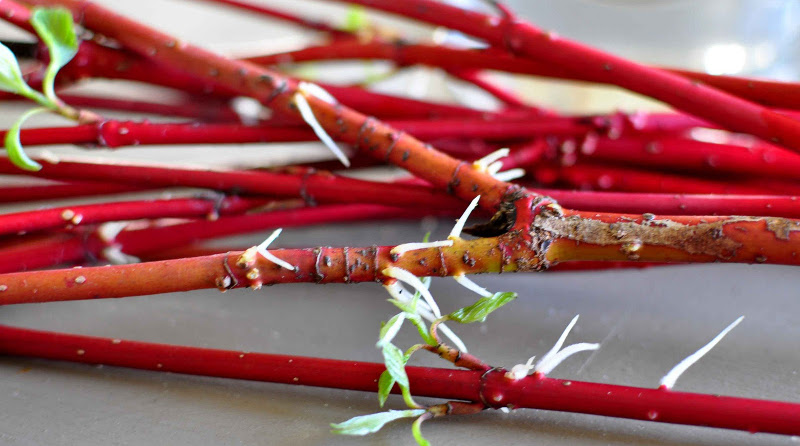
Use softwood cuttings from healthy new growth and be patient. Dogwood benefits from careful humidity control during the rooting stage.
8. Rosemary
Rosemary is one of the best herbs to propagate from cuttings because older plants can become woody, and new young plants are often more productive and easier to shape.
Plant character
Aromatic, woody, drought-tolerant, beautiful in herb gardens and containers.
Best zones
Generally perennial in Zones 8–10, sometimes 7 with protection; often grown in pots elsewhere.
Practical propagation tip
Take semi-soft cuttings from fresh growth, not old woody branches. Keep the mix barely moist and do not overwater.

9. Jasmine
Jasmine is a wonderful plant to propagate if you want fragrant vines or shrubs for patios, trellises, and warm-climate gardens.
Plant character
Fragrant blooms, twining or shrubby habit depending on type, elegant seasonal growth.
Best zones
Jasminum officinale is often grown in Zones 7–10, with regional variation.
Practical propagation tip
Softwood or semi-hardwood cuttings usually perform best. Warmth and humidity help tremendously during rooting.

10. Elderberry
Elderberry is one of the most practical shrubs to propagate because it offers flowers, berries, and wildlife value.
Plant character
Fruitful, multi-stemmed, pollinator-friendly, useful in edible and habitat gardens.
Best zones
Sambucus nigra and related elderberries commonly grow in Zones 4–8 or wider depending on type.
Practical propagation tip
Hardwood cuttings are often very reliable. Use straight, healthy dormant stems and keep the polarity correct when planting them.

11. Rose
Rose propagation is deeply satisfying because it lets you preserve a favorite bloom, fragrance, or sentimental plant.
Plant character
Flowering shrub or climber, diverse in size and form, often repeat-blooming.
Best zones
Varies widely by class, but many garden roses suit Zones 5–9.
Practical propagation tip
Take cuttings from healthy, recently flowered stems that are neither too soft nor too woody. Remove flowers and buds so the cutting puts energy into rooting.

12. Hibiscus
Hibiscus is a strong choice for propagation if you love lush tropical color and want more patio or warm-border plants.
Plant character
Large showy blooms, glossy foliage, strong warm-weather growth.
Best zones
Tropical hibiscus is best in Zones 9–11 and often grown in containers elsewhere.
Practical propagation tip
Softwood cuttings root best when kept warm, humid, and out of direct midday sun.

13. Magnolia
Magnolia is more advanced than some of the easier plants here, but it is absolutely possible and rewarding for patient gardeners.
Plant character
Glossy leaves, dramatic flowers, strong ornamental value.
Best zones
Magnolia grandiflora is usually grown in Zones 7–10, with some variation by cultivar.
Practical propagation tip
Use semi-hardwood cuttings and expect slower progress than with herbs or soft shrubs. Good sanitation and humidity control matter.

14. Raspberry and Grapes
These are both excellent edible plants to propagate, especially if you are expanding a productive backyard garden.
Raspberry character
Cane-forming, fruiting, vigorous, highly useful in edible landscapes.
Grape character
Vining, fruiting, long-lived, ideal for arbors and trellises.
Best zones
Raspberry commonly suits Zones 4–8; grapes vary by type, but many are suited to Zones 5–9.
Practical propagation tip
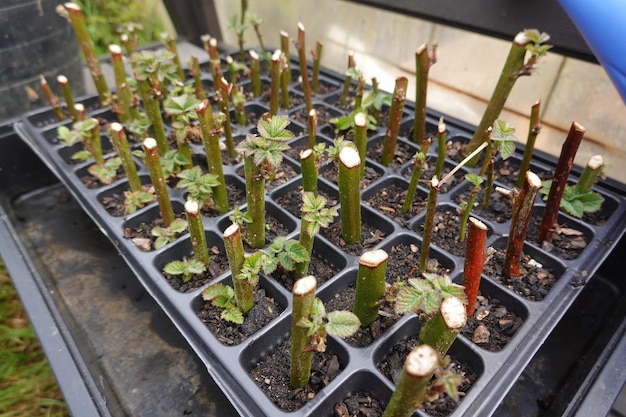
Raspberries are often easier from suckers or divisions, but cane cuttings can work depending on type. Grapes are classic hardwood cutting plants and are often very rewarding for gardeners willing to wait.
The best basic propagation method for beginners
A reliable beginner process looks like this:
- Cut a healthy stem just below a node.
- Remove lower leaves.
- Keep only the top leaves needed for photosynthesis.
- Dip the base in rooting hormone if desired.
- Insert the cutting into a moist, airy propagation mix.
- Keep it in bright indirect light.
- Maintain humidity without letting the medium turn soggy.
This works especially well for hydrangea, rosemary, jasmine, hibiscus, passion flower, and rose.
Common mistakes that ruin good cuttings
Using unhealthy parent material
Weak or diseased stems rarely become strong new plants.
Taking flowering stems
Flowers use energy the cutting needs for root production.
Overwatering
Most cuttings fail from rot, not thirst.
Too much sun
Bright indirect light is ideal. Harsh direct sun dehydrates cuttings fast.
Pulling them up too early
Do not keep checking for roots by tugging constantly. Watch for new growth instead.
How to know a cutting is ready to pot up
A rooted cutting usually shows:
- firm resistance when gently tugged
- fresh top growth
- visible roots through the propagation mix or drainage holes
- no wilting between waterings
Once this happens, move it into a small pot first, not directly into a giant container or exposed garden bed.
Final thoughts
Propagating from cuttings is one of the most empowering skills a gardener can learn. It teaches observation, timing, restraint, and trust. A mulberry branch, a hydrangea stem, a rosemary sprig, or a rose cutting becomes more than plant material. It becomes possibility.
And that is the quiet magic of propagation: you stop seeing your garden as a finished thing. You start seeing it as something you can multiply, shape, and carry forward with your own hands.