Keep Those Zinnia Blooms Coming All Season Long!
There’s nothing quite like the cheerful burst of color zinnias bring to a garden. They’re such giving plants, gracing us with a continuous display of vibrant flowers from summer right into fall. But sometimes, as the season wears on, you might notice your beloved zinnias starting to slow down a little. That’s perfectly normal! All that beautiful blooming takes a lot of energy, and a little thoughtful midseason feeding can give them just the boost they need to keep those flowers popping.
Think of it like us needing a good snack after a busy morning – a gentle pick-me-up can make all the difference. For zinnias, a smart feeding strategy mid-season means more of those gorgeous blooms you love, without overdoing it.
Why Give Your Zinnias a Midseason Boost?
Zinnias are prolific bloomers, which means they’re constantly using up the nutrients in your soil to produce new buds and flowers. While healthy soil rich in organic matter is the best foundation, even the best soil can get depleted over time, especially with hardworking plants like zinnias. A little extra nourishment can:
- Encourage More Blooms: It provides the energy needed for continuous flower production.
- Support Strong Growth: Healthy plants are more resistant to pests and diseases.
- Extend the Flowering Season: Keep those vibrant colors coming for longer!
When’s the Best Time to Feed Them?
The sweet spot for feeding your zinnias is usually mid-summer, once they’ve been blooming for a while and you might start to see a slight decrease in flower production, or if they just look a little less vigorous than they did earlier in the season. This is when they’re actively working hard and can really benefit from a gentle boost.
Choosing the Right Fuel: What to Feed Your Zinnias
This is where “gentle” is the key word! Zinnias don’t appreciate heavy-handed fertilizing. A balanced approach is best. Here’s what to look for:
- Balanced, All-Purpose Fertilizer: Look for a fertilizer with a balanced NPK ratio (Nitrogen-Phosphorus-Potassium), like 5-10-5, 10-10-10, or even 5-5-5. The numbers represent the percentage of each nutrient.
- Go Easy on Nitrogen (N): While nitrogen promotes lush green growth, too much of it can actually lead to fewer flowers and more leaves. We want blooms, right? So, avoid fertilizers with a very high first number (e.g., 20-5-5).
- Organic Options: If you prefer an organic approach, consider well-rotted compost, compost tea, or an organic granular flower food with a balanced analysis. These options feed the soil, which in turn feeds your plants, in a gentle, sustained way.
How to Feed Your Zinnias (The Gentle Way)
Now that you know what to use, let’s talk about how to apply it properly to ensure your zinnias get just what they need without any harm.
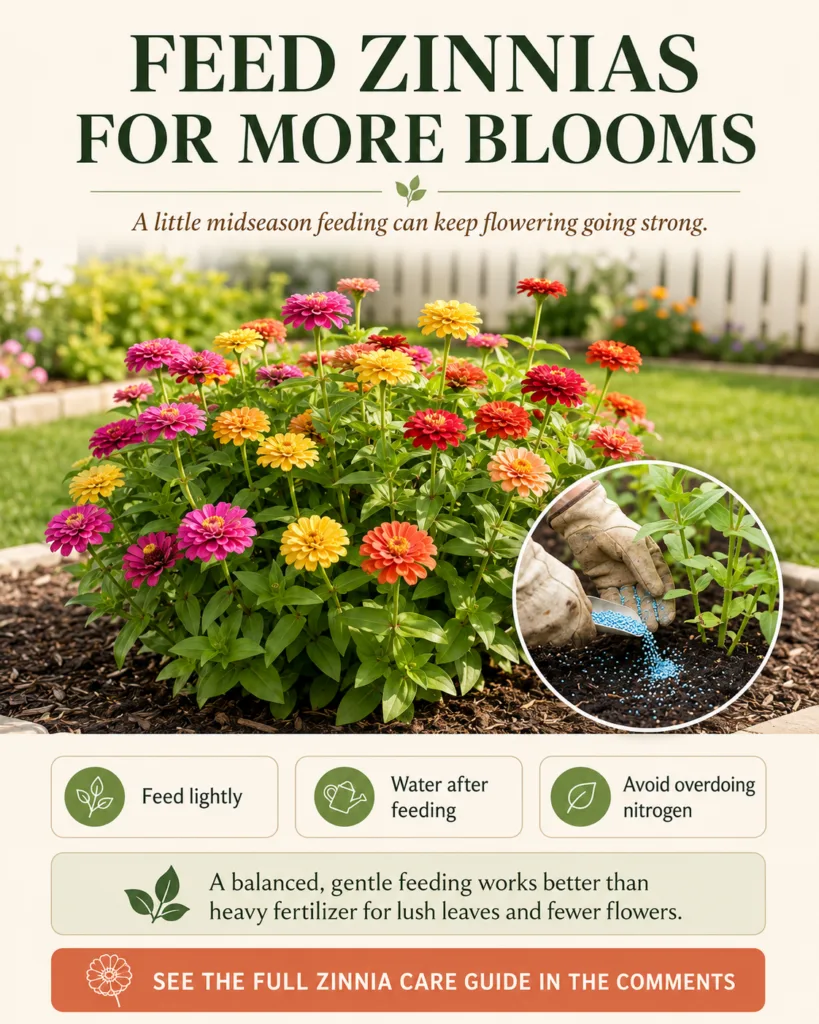 Apply fertilizer gently around the base of your zinnia plants, avoiding direct contact with stems.
- Read the Label: Always, always start by reading the instructions on your fertilizer package. Every product is different, and they’ll tell you the recommended dosage.
- Feed Lightly: Err on the side of using less than recommended, especially if you’re using a synthetic fertilizer. A little goes a long way. Sprinkle the granular fertilizer around the base of the plant, being careful not to let it touch the stems or leaves directly, as this can cause burn.
- Water After Feeding: This step is crucial! Immediately after applying fertilizer, water your zinnias thoroughly. This helps dissolve the nutrients and carry them down to the roots where the plant can absorb them, and it also prevents potential root burn.
- Avoid Overdoing It: One gentle midseason feeding is usually enough. Resist the urge to fertilize frequently. Over-fertilizing can be more damaging than not fertilizing at all.
Beyond Feeding: Other Tips for Bountiful Zinnia Blooms
While feeding helps, remember it’s just one piece of the puzzle for truly spectacular zinnias. Don’t forget these other key care tips:
- Deadhead Regularly: Pinching or cutting off spent flowers (deadheading) is one of the best ways to encourage zinnias to produce more blooms. It tells the plant to put its energy into making more flowers instead of seeds.
- Plenty of Sunshine: Zinnias are sun-lovers! Ensure they get at least 6-8 hours of direct sunlight per day for the best flowering.
- Consistent Watering: While mature zinnias are somewhat drought-tolerant, consistent moisture (especially during dry spells) helps them thrive. Water deeply at the base of the plant to keep the foliage dry and prevent fungal issues.
- Good Air Circulation: Space your plants adequately to allow for good airflow, which helps prevent powdery mildew, a common zinnia problem.
Happy Blooming!
With a little bit of midseason attention, your zinnias will reward you with a continuous parade of colorful blooms, brightening your garden and your spirits well into the autumn months. It’s a simple act of care that makes a big difference. Happy gardening, neighbor!