Well, hello there, fellow gardeners! Isn’t it just the most wonderful feeling to step out into your garden, see those vibrant greens, and anticipate a delicious harvest? But let’s be honest, sometimes those beautiful plants have unwelcome visitors, don’t they? Garden pests are a natural part of gardening, and they can certainly throw a wrench in our plans if we’re not careful. But don’t you fret! Identifying these little critters is the very first step to keeping your garden healthy and happy.
Think of it like being a detective in your own backyard. Once you know who the culprits are and what kind of mischief they’re up to, you can choose the best way to gently encourage them to move along without harming your precious plants or the environment. Today, we’re going to take a closer look at 9 common vegetable garden pests you might encounter. Knowing what to look for will give you the upper hand!
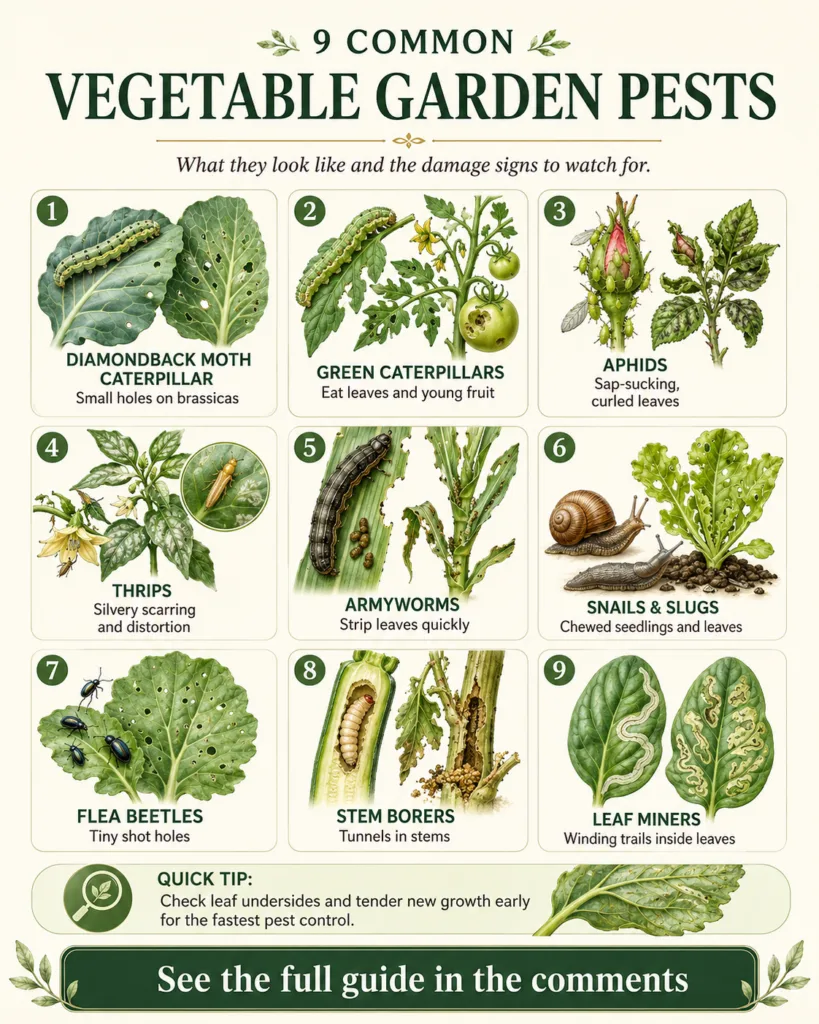 A handy guide to help you identify some of the most common garden pests.
Your Guide to Spotting Common Garden Pests
Let’s walk through some of the usual suspects you might find nibbling or setting up shop in your vegetable patch:
1. Aphids: The Tiny Sap-Suckers
- What they look like: These are tiny, soft-bodied insects, often green, black, yellow, or pink. They tend to cluster on new growth, the undersides of leaves, or on stems.
- What they do: Aphids suck the sap from your plants, which can cause leaves to curl, yellow, or distort. They also excrete a sticky substance called ‘honeydew,’ which can lead to sooty mold growth.
- Quick tip: A strong spray of water from your hose can often dislodge them. Keep an eye out, especially in spring!
2. Tomato Hornworms: The Big Eaters
- What they look like: These are large, green caterpillars with a ‘horn’ at their rear end, often blending perfectly with tomato and pepper plants.
- What they do: They have a voracious appetite, capable of defoliating a plant almost overnight. Look for missing leaves and their distinctive black droppings on the leaves below.
- Quick tip: Hand-picking them off your plants is very effective, especially if you have chickens who love a good snack!
3. Slugs and Snails: The Slimy Trail Makers
- What they look like: Slugs are soft-bodied mollusks without a shell, while snails have a visible shell. They are most active at night or on damp, cloudy days.
- What they do: They chew irregular holes in leaves, especially tender seedlings, and leave behind tell-tale silvery slime trails.
- Quick tip: Set out shallow dishes of beer or hand-pick them during the evening hours.
4. Cabbage Worms (Imported Cabbageworm): The Leaf Chewers
- What they look like: Small, velvety green caterpillars that blend in well with cabbage, broccoli, and kale leaves. They hatch from the eggs of small white butterflies.
- What they do: They chew ragged holes in leaves, often near the veins, and can burrow into the heads of cabbage and broccoli.
- Quick tip: Cover your brassicas with a lightweight row cover to prevent the butterflies from laying eggs.
5. Squash Bugs: The Sap Drainers
- What they look like: Adult squash bugs are grayish-brown and somewhat flat, often found on the undersides of squash and pumpkin leaves. Their eggs are copper-colored and laid in clusters.
- What they do: They suck sap from leaves, causing them to yellow, then turn brown and crispy. Entire plants can wilt and die.
- Quick tip: Check plants regularly and remove egg clusters and adult bugs. Diatomaceous earth can help deter them.
6. Cucumber Beetles: The Leaf & Fruit Feasters
- What they look like: Small, yellow-green beetles with black stripes or spots. They are active and often fly away when disturbed.
- What they do: They chew holes in leaves, stems, and even developing fruits. They can also spread bacterial wilt and mosaic virus to cucumber and melon plants.
- Quick tip: Early detection is key. Consider using floating row covers over young plants.
7. Flea Beetles: The Shot-Hole Makers
- What they look like: Tiny, dark, shiny beetles that jump like fleas when disturbed.
- What they do: They chew many small, round holes (often called ‘shot holes’) in leaves, which can severely stunt young plants.
- Quick tip: Keep your garden free of weeds, as some weeds can host flea beetles. Try planting a trap crop like radishes.
8. Spider Mites: The Tiny Web Spinners
- What they look like: These are almost microscopic, but you’ll often see fine webbing on the undersides of leaves, especially in hot, dry conditions.
- What they do: They suck plant cell contents, causing tiny yellow or white spots on leaves (stippling). Leaves can turn bronzed or yellow and eventually drop.
- Quick tip: Increase humidity around affected plants and use a strong spray of water to dislodge them.
9. Cutworms: The Seedling Assassins
- What they look like: Grayish, plump caterpillars that curl into a ‘C’ shape when disturbed. They are active at night.
- What they do: They chew through young plant stems at or just below the soil line, often severing the plant completely.
- Quick tip: Protect young seedlings with ‘cutworm collars’ made from toilet paper rolls or plastic cups placed around the stem at planting.
Keeping Your Garden Thriving: A Few General Principles
Remember, a healthy garden is your best defense against pests. Here are a few friendly reminders:
- Healthy Soil, Healthy Plants: Just like us, strong, well-nourished plants are better able to fend off challenges. Focus on building rich, organic soil.
- Regular Garden Walks: Spend a few minutes each day observing your plants. The earlier you spot a pest problem, the easier it is to manage.
- Encourage Beneficial Insects: Ladybugs, lacewings, and predatory wasps are your garden allies! Plant flowers like dill, cilantro, and marigolds to attract them.
- Crop Rotation: Don’t plant the same crops in the same spot year after year. This helps break pest cycles.
- Cleanliness: Remove plant debris and weeds where pests might hide or overwinter.
Wrapping Up Our Pest Patrol!
Don’t let a few garden visitors discourage you. Every gardener, no matter how experienced, deals with pests now and then. The key is to be observant, learn to identify who’s who, and then choose a gentle, effective method to keep your plants flourishing. You’ve got this! Happy gardening, friends!