Often dismissed as a common lawn weed, white clover (Trifolium repens) is, in fact, a humble powerhouse teeming with ancient wisdom and powerful properties. This resilient wildflower, familiar to many, holds incredible potential for natural health and beauty remedies, just waiting to be rediscovered. Join us as we unlock the secrets of this abundant plant and learn how to transform it into valuable homemade remedies.
The Hidden Power of White Clover
For centuries, various cultures have recognized white clover not just for its nitrogen-fixing capabilities in soil but also for its therapeutic value. While modern science is still catching up to fully document all its traditional uses, historical records and anecdotal evidence highlight its significant role in folk medicine.
Key Medicinal Properties
White clover is rich in beneficial compounds, including flavonoids, coumarins, and essential oils, contributing to its diverse range of properties:
- Anti-inflammatory: Helps soothe irritation and reduce swelling, both internally and externally.
- Antioxidant: Combats free radicals, protecting cells from damage and supporting overall health.
- Astringent: Can help tighten and tone tissues, useful for skin and minor wounds.
- Expectorant: Traditionally used to aid in clearing respiratory passages.
- Diuretic: May assist in promoting urine flow, supporting kidney function (use with caution and professional guidance).
White Clover for Skin and Hair Health
Thanks to its anti-inflammatory and astringent properties, white clover can be a wonderful addition to your DIY skincare and hair care routines:
- Soothes Irritated Skin: Infusions or poultices can calm minor rashes, insect bites, and general skin irritation.
- Acne Support: Its astringent qualities may help reduce oiliness and inflammation associated with breakouts.
- Hair Rinse: A cooled white clover infusion can be used as a hair rinse to promote scalp health and add shine.
Beyond Topical: Internal Benefits
Traditionally, white clover has been used for various internal ailments. A mild tea made from the flowers and leaves can be consumed for:
- Respiratory Support: As a gentle expectorant for coughs and colds.
- General Wellness: Some traditions believe it supports liver health and acts as a mild detoxifier.
Important Note: While generally considered safe for most, always consult with a healthcare professional before using white clover for internal medicinal purposes, especially if you have pre-existing conditions or are on medication.
Your Guide to Harvesting White Clover
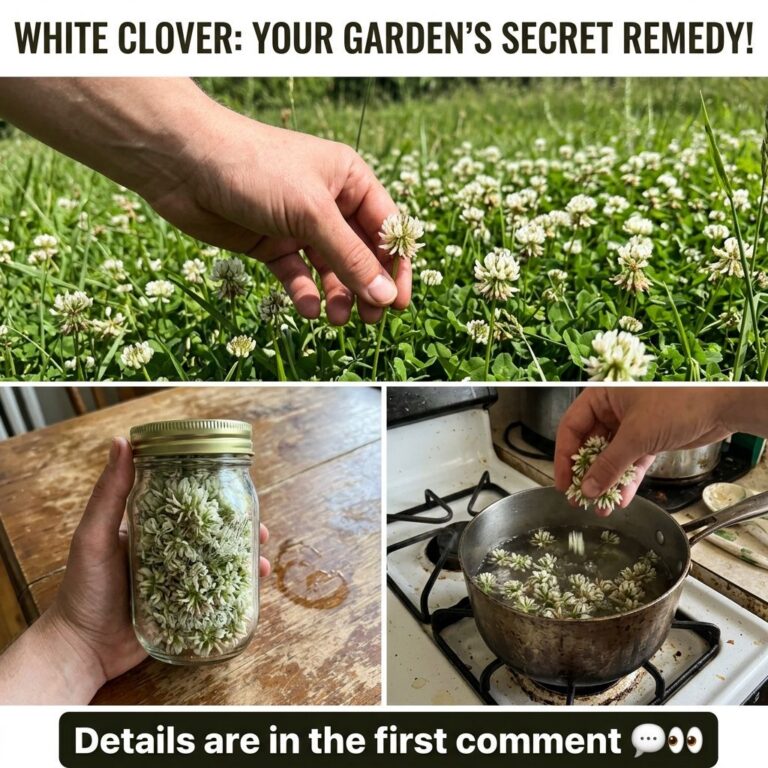
The first step in creating your own natural remedies is responsible and effective harvesting. As beautifully illustrated in the image, the journey begins with gently gathering this precious wildflower.
- Identification: Ensure you are correctly identifying Trifolium repens. White clover is characterized by its three leaflets (occasionally four, hence the ‘lucky clover’), often with a pale chevron mark, and its spherical clusters of small, white flowers.
- Location Matters: Choose a harvesting spot far from roadsides, industrial areas, or any place where pesticides or herbicides might have been used. Look for healthy, vibrant plants in clean, open fields or your own chemical-free garden.
- Timing: The best time to harvest white clover flowers is on a dry, sunny morning after the dew has evaporated but before the intense midday sun. This ensures the highest concentration of beneficial compounds.
- Method: Gently pinch off the entire flower head, leaving the rest of the plant intact. Avoid over-harvesting from one area to allow the plant to continue thriving.
- Cleaning: Once harvested, gently shake off any loose dirt or insects. Avoid washing if possible, as it can reduce the potency and make drying more difficult.
Crafting Your Own White Clover Remedies
With your freshly harvested white clover, you’re ready to create simple yet effective natural remedies. The image’s bottom panels perfectly capture the next steps: gathering your harvested clover in a jar and beginning the infusion process in a pot.
Basic White Clover Infusion (Tea)
This is the simplest way to extract the beneficial properties of white clover, suitable for both internal consumption (with caution) and topical applications.
- Ingredients: 1-2 teaspoons of fresh white clover flowers (or 1 teaspoon dried), 1 cup of hot water.
- Preparation: Place the clover in a mug. Pour boiling water over it.
- Steeping: Cover the mug and steep for 5-10 minutes. Covering helps to retain volatile oils.
- Strain and Use: Strain the liquid, discarding the plant material.
- For Tea: Enjoy warm. Add honey if desired. (Remember the safety note above for internal use).
- For Topical Use: Let it cool completely. Use as a skin wash, compress, or hair rinse. Store any leftover infusion in the refrigerator for up to 24 hours.
White Clover Infused Oil or Salve
For more potent topical applications, an infused oil or salve can be incredibly beneficial for soothing dry skin, minor irritations, or muscle aches.
- Drying the Clover: First, gently air-dry your white clover flowers and leaves for several days in a well-ventilated, shaded area until they are completely dry and brittle. This prevents mold in your oil.
- Infused Oil: Fill a clean, dry glass jar loosely with dried white clover. Cover completely with a carrier oil like olive oil, almond oil, or jojoba oil. Ensure all plant material is submerged.
- Infusion Process: Seal the jar and place it in a cool, dark place for 4-6 weeks, shaking daily. Alternatively, use a double boiler on low heat for 2-4 hours for a quicker infusion.
- Strain: Strain the oil through cheesecloth, squeezing out all the oil from the plant material.
- Making a Salve (Optional): Gently heat 1 cup of your infused oil with 1/4 cup of beeswax pellets in a double boiler until the beeswax is melted. Pour into clean tins or jars and let cool completely.
- Storage: Store the infused oil or salve in a cool, dark place. It can last for several months to a year, depending on the carrier oil.
Important Safety Considerations
While white clover is generally considered a gentle herb, a cautious and informed approach is always best when using natural remedies:
- Accurate Identification: Always be 100% certain of your plant identification. If in doubt, do not consume or apply it.
- Pesticide-Free Zones: Only harvest from areas you know are free of chemicals.
- Patch Test: Before applying any new herbal preparation extensively to your skin, perform a patch test on a small area to check for allergic reactions.
- Consult a Professional: If you are pregnant, nursing, have a chronic health condition, or are taking medication, consult your doctor or a qualified herbalist before using white clover internally.
- Avoid Overconsumption: When used internally, consume in moderation. Large quantities of any herb can have unexpected effects.
White clover is more than just a green carpet in your yard; it’s a testament to nature’s quiet generosity. By understanding its properties and learning how to safely harvest and prepare it, you can unlock a world of natural wellness right from your garden. Embrace the wisdom of this common wildflower and integrate its powerful secrets into your holistic health journey.