Hey there, fellow garden enthusiasts! Have you ever wondered if there’s a simple, natural way to give your plants a little extra boost? What if I told you that a common kitchen waste item, something many of us just toss into the trash, could be a secret weapon for a thriving garden? We’re talking about humble eggshells!
That’s right! Those leftover eggshells from your morning omelet or baking adventure are packed with calcium, a vital nutrient that can help some of your favorite garden plants grow stronger, healthier, and produce more bountiful harvests. Let’s dig into why eggshells are a gardener’s friend and which plants especially love this calcium-rich treat.
Why Eggshells Are Good for Your Garden
Eggshells are primarily made of calcium carbonate, which is the same compound found in agricultural lime. When crushed and added to your garden soil, eggshells break down slowly, releasing calcium over time. This makes them an excellent long-term soil amendment, providing a steady supply of this crucial nutrient.
What Does Calcium Do for Plants?
- Strengthens Cell Walls: Calcium is essential for forming strong cell walls, which helps plants stand tall and resist disease.
- Prevents Blossom End Rot: This is a big one, especially for common garden vegetables! Blossom end rot, characterized by a dark, sunken spot on the bottom of fruits like tomatoes and peppers, is often a sign of calcium deficiency. Eggshells can help prevent this disheartening issue.
- Supports Root Development: Healthy roots are the foundation of healthy plants, and calcium plays a role in their development and function.
It’s important to remember that eggshells are a *slow-release* calcium source. They won’t provide an instant fix, but rather a gradual enrichment of your soil over weeks and months.
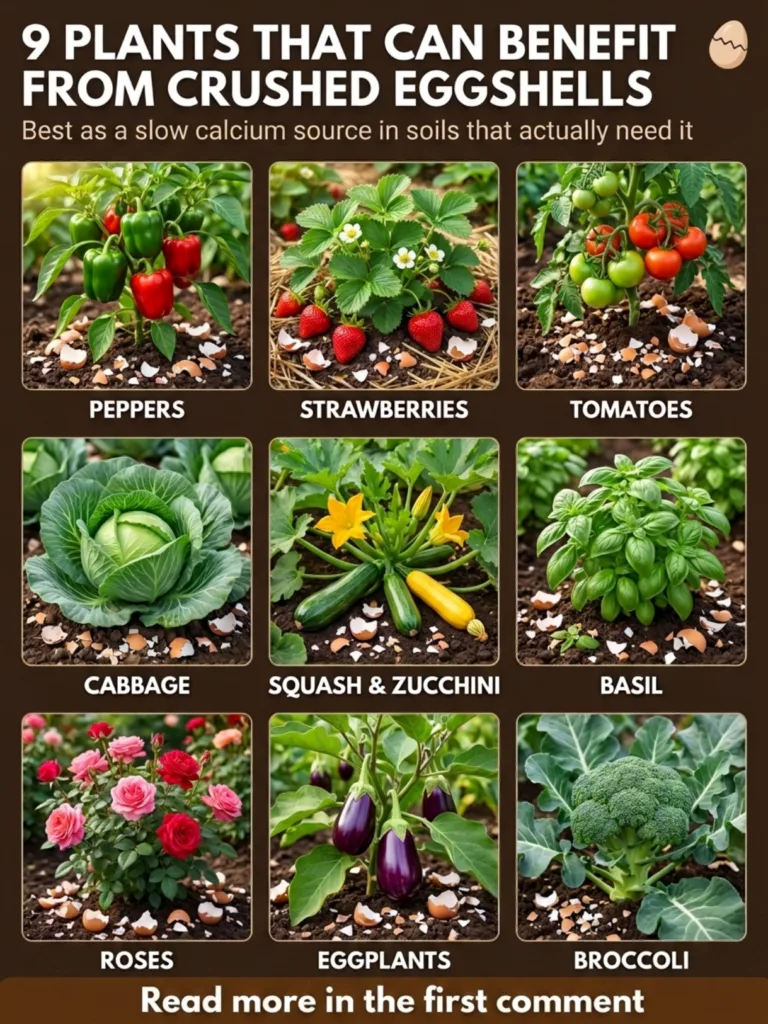 Some of your garden favorites will thank you for adding crushed eggshells to their soil!
How to Prepare and Use Crushed Eggshells
Using eggshells in your garden is incredibly simple, but a little preparation goes a long way:
- Collect and Clean: Rinse your eggshells under running water to remove any egg residue. This prevents odors and pests from being attracted to your garden.
- Dry Thoroughly: Let them air dry completely, or speed up the process by baking them on a baking sheet at 200°F (93°C) for about 10-15 minutes. Drying makes them easier to crush and sterilizes them.
- Crush Them Up: The finer the crush, the quicker the calcium becomes available to your plants. You can crush them by hand, put them in a bag and roll over them with a rolling pin, or use a coffee grinder or food processor for a fine powder.
Ways to Apply Eggshells to Your Garden:
- Before Planting: Mix a handful of finely crushed eggshells into the soil at the bottom of each planting hole before placing your seedling.
- Around Established Plants: Sprinkle crushed eggshells around the base of plants, gently working them into the top layer of soil.
- In Your Compost Pile: Eggshells are a fantastic addition to your compost, enriching the final product.
- Seed Starting: Add a small amount of finely powdered eggshell to your seed-starting mix for an early calcium boost.
A little neighborly advice: While eggshells are great, remember they are primarily calcium. A balanced soil is key, so don’t forget your regular composting and other organic amendments! A soil test can also tell you if your soil actually needs more calcium.
9 Garden Plants That Absolutely Love Crushed Eggshells
While most plants can tolerate calcium, certain ones genuinely thrive with an extra dose. Here are 9 garden favorites that will thank you for the eggshell treatment:
1. Tomatoes
This is probably the most famous beneficiary! Tomatoes are highly susceptible to blossom end rot. Mixing eggshells into the soil at planting time, or even creating a “calcium ring” around established plants, can make a huge difference in preventing this common issue.
2. Peppers (Bell, Chili, etc.)
Just like their tomato cousins, peppers are prone to blossom end rot. A good calcium supply from eggshells can ensure your peppers develop perfectly from blossom to harvest.
3. Eggplants
Another member of the nightshade family, eggplants can also suffer from blossom end rot. Providing them with calcium helps ensure smooth, blemish-free fruit production.
4. Squash & Zucchini
These prolific producers can sometimes fall victim to blossom end rot as well, especially during periods of inconsistent watering. Eggshells offer a great preventative measure.
5. Cabbage
Cabbage and its brassica relatives (like broccoli and kale) are heavy feeders and benefit from calcium for strong, healthy leaf development and to prevent internal tipburn.
6. Broccoli
For robust florets and strong plant structure, broccoli appreciates the calcium boost from eggshells. It helps them grow vigorously and resist certain physiological disorders.
7. Strawberries
To help your strawberry plants produce firm, sweet berries and develop strong runners, calcium is a great aid. It contributes to overall plant health and fruit quality.
8. Basil
While not typically associated with blossom end rot, basil and other leafy herbs can benefit from stronger cell structures provided by calcium, leading to more robust and healthier growth.
9. Roses
Beyond edibles, roses can also benefit from calcium. It contributes to stronger stems, more vibrant blooms, and overall healthier foliage, helping them resist diseases.
Beyond Calcium: A Little Bonus Benefit
Some gardeners also find that coarser crushed eggshells can act as a physical barrier against soft-bodied pests like slugs and snails. While not a foolproof solution, the sharp edges can make it uncomfortable for them to cross, offering a small extra layer of protection around vulnerable plants.
Ready to Give It a Try?
There you have it! Don’t let those valuable eggshells go to waste. Incorporating them into your garden is a simple, sustainable, and effective way to give specific plants the calcium they need to truly thrive. So next time you crack an egg, remember you’re holding a little piece of garden gold. Your plants (and your harvest!) will thank you for it!
Happy gardening!