Ever looked at the bare ground under your trees and wished it could be as vibrant and lively as the rest of your garden? You’re not alone! Planting around trees can seem tricky, with concerns about root competition, shade, and dry soil. But with a little know-how and the right plant choices, you can turn those challenging spots into beautiful, thriving havens. It’s like discovering a whole new canvas in your garden!
As your neighbor sharing some garden wisdom, I’m here to tell you it’s entirely possible to create stunning under-tree displays. Not only do these plantings add incredible curb appeal and charm, but they can also help suppress weeds and keep the soil cooler and more consistent for your tree. It’s a win-win for everyone!
Why Bother Planting Under Trees?
- Aesthetic Appeal: Instantly beautifies an often neglected area, adding color, texture, and interest.
- Weed Suppression: A dense planting acts as a living mulch, crowding out unwanted weeds.
- Soil Improvement: Helps retain moisture and can improve soil structure over time, beneficial for both the tree and the underplantings.
- Wildlife Habitat: Many flowering plants attract pollinators and beneficial insects, contributing to a healthier ecosystem.
Understanding the Challenges: It’s Not as Hard as It Seems!
Before we dive into plant recommendations, let’s briefly touch on the common hurdles:
- Root Competition: Tree roots are thirsty and hungry! They’ll compete with your new plants for water and nutrients.
- Shade: Most trees cast significant shade, meaning sun-loving plants won’t thrive.
- Dry Soil: The tree canopy can intercept rain, leaving the soil underneath drier than open garden beds.
The good news? We can work with these conditions, not against them!
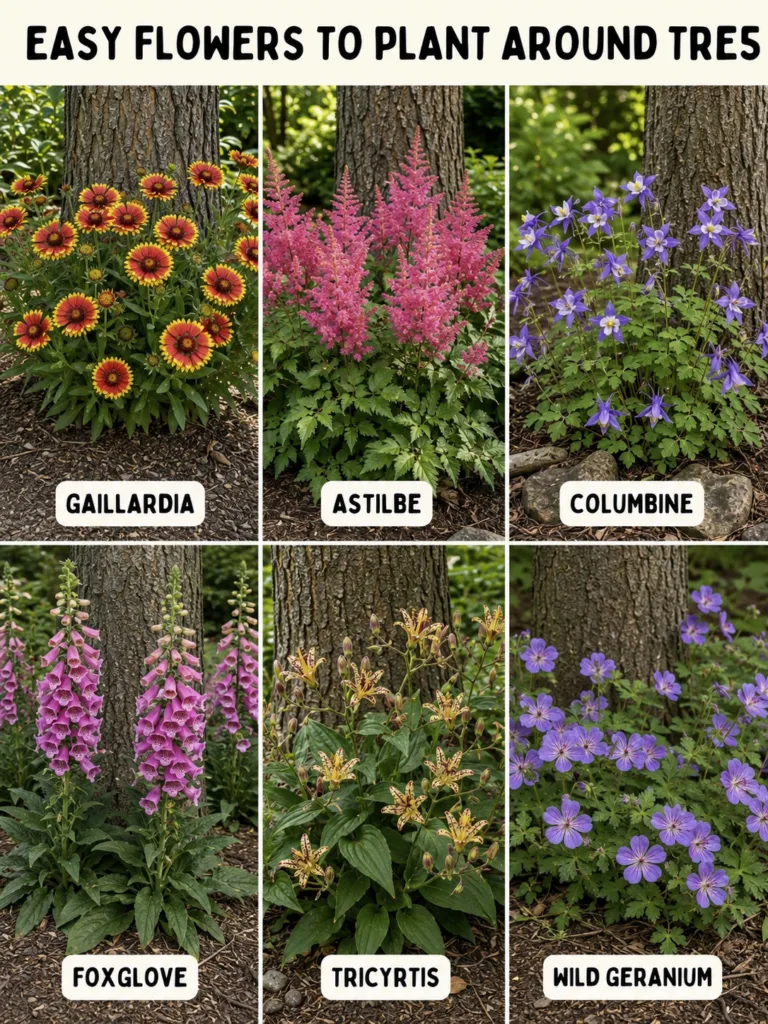 Turn those bare tree bases into beautiful focal points with these easy-care blooms.
Our Top Picks: Easy Flowers for Under-Tree Beauty
Here are some of my favorite, easy-to-grow plants that absolutely shine in those challenging spots, categorized for clarity. Remember to check your specific USDA hardiness zone to ensure they’ll thrive in your area!
From Our Garden Photo Album: Tried and True Beauties
1. Astilbe (False Spirea)
- Characteristics: Known for their feathery plumes of flowers in shades of pink, red, purple, and white, rising above fern-like foliage.
- Care: Prefers consistent moisture and partial to full shade. Great for brightening up darker areas.
- Why it works: Tolerates competition from tree roots and loves the cooler, shadier conditions.
2. Columbine (Aquilegia)
- Characteristics: Delicate, bell-shaped flowers with unique spurs, often in striking two-tone colors. Foliage is a lovely blue-green.
- Care: Enjoys partial shade and well-drained soil. They can self-seed gently.
- Why it works: Adapts well to dappled shade and adds a whimsical touch with its intricate blooms.
3. Foxglove (Digitalis purpurea)
- Characteristics: Tall, majestic spires of bell-shaped flowers, often speckled inside. A real cottage garden classic.
- Care: Thrives in partial shade to full sun with moist, well-drained soil. Often biennial, meaning it blooms its second year and then sets seed.
- Why it works: Adds vertical interest and drama to under-tree plantings, especially in areas with morning sun and afternoon shade.
4. Tricyrtis (Toad Lily)
- Characteristics: Exquisite, orchid-like flowers with unique speckled patterns, often blooming in late summer or fall when other shade plants are fading.
- Care: Prefers moist, rich soil and partial to full shade.
- Why it works: A truly unique plant that extends the flowering season in shady spots.
5. Wild Geranium (Geranium maculatum)
- Characteristics: Charming, simple five-petaled flowers in shades of pink, purple, or white, with attractive lobed foliage.
- Care: Very adaptable, growing in partial to full shade and a variety of soil types. Native to many parts of North America.
- Why it works: Tough, reliable, and spreads to form a lovely groundcover, suppressing weeds naturally.
6. Gaillardia (Blanket Flower)
- Characteristics: Bright, daisy-like flowers in warm shades of red, orange, and yellow, often with a two-tone effect.
- Care: While typically a full-sun lover, Gaillardia can do surprisingly well in dappled sunlight or locations under trees that receive several hours of direct sun. It prefers well-drained soil.
- Why it works: If you have a tree that allows more sunlight through, or if you’re planting at the sunnier edge of the tree’s canopy, Gaillardia brings a burst of cheerful color.
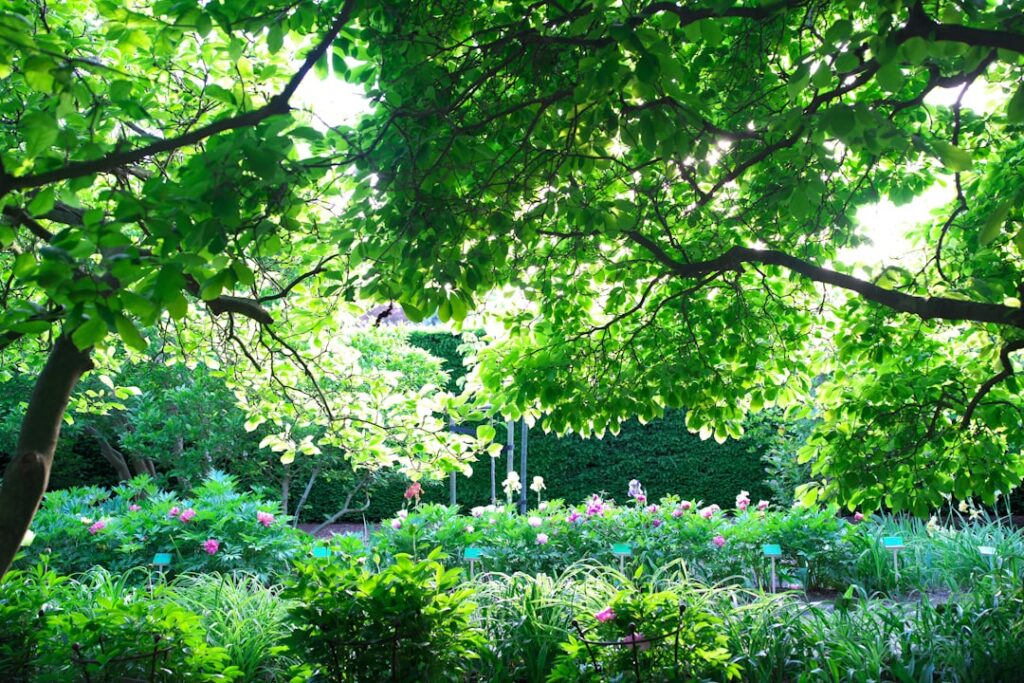 Combining different textures and foliage colors creates an inviting and dynamic under-tree landscape.
More Wonderful Choices for Under-Tree Beauty
7. Hosta (Plantain Lily)
- Characteristics: Renowned for their incredible variety of foliage – from tiny to giant, blue-green to variegated, smooth to heavily textured. Some even have fragrant flowers!
- Care: Prefers partial to full shade and consistent moisture. Generally easy to grow.
- Why it works: The ultimate shade garden plant, offering endless foliage interest and groundcover.
8. Liriope (Lilyturf)
- Characteristics: Grass-like clumps with spikes of purple or white flowers in late summer, followed by dark berries. Available in variegated forms.
- Care: Extremely tough and adaptable to dry shade once established.
- Why it works: Provides evergreen structure and is nearly indestructible, making it perfect for challenging dry shade.
9. Bleeding Heart (Dicentra spectabilis)
- Characteristics: Arching stems with charming, heart-shaped pink or white flowers in spring. Foliage often dies back in summer heat.
- Care: Prefers moist, rich soil and partial shade.
- Why it works: Brings early spring cheer to shady spots before the tree canopy fully leafs out.
10. Lungwort (Pulmonaria)
- Characteristics: Beautifully spotted or silver-splashed foliage provides year-round interest, complemented by clusters of pink, blue, or purple flowers in early spring.
- Care: Thrives in moist, rich soil and partial to full shade.
- Why it works: Offers both striking foliage and early season blooms, a true workhorse for shade.
11. Foamy Bells (Tiarella)
- Characteristics: Delicate, foamy white or pink flower spikes in spring, rising above attractive, often deeply lobed and patterned foliage.
- Care: Prefers moist, well-drained soil and partial to full shade.
- Why it works: A wonderful native plant that forms a lovely groundcover with beautiful texture and soft blooms.
12. Ferns (Various types like Lady Fern, Christmas Fern, Maidenhair Fern)
- Characteristics: Unmatched for their elegant, architectural foliage that brings a sense of calm and lushness to any shade garden.
- Care: Most ferns love consistent moisture and partial to full shade.
- Why it works: Provides incredible texture and a soothing green backdrop, filling in spaces beautifully where flowers might struggle.
Keys to Planting Success Under Trees
To give your new under-tree garden the best start, follow these simple steps:
- Assess the Site: Observe the light conditions throughout the day. Is it deep shade, dappled light, or does it get a few hours of morning sun?
- Prepare the Soil (Carefully!): Avoid digging too deeply, as you don’t want to damage tree roots. Instead, add a layer (2-4 inches) of good quality compost or well-rotted leaf mold over the existing soil. This enriches the soil without disturbing roots.
- Choose Young Plants: Smaller, younger plants establish more easily than large, root-bound specimens.
- Mind the Roots: When planting, gently loosen the roots of your new plant. Dig holes only as deep as the root ball and just wide enough to accommodate it. If you encounter large tree roots, plant slightly off-center or find a pocket of soil where you can fit the plant without cutting major roots.
- Water, Water, Water: New plantings under trees will need more frequent watering initially, as they compete with the tree for moisture. Water deeply and regularly until established.
- Mulch: After planting, apply a 1-2 inch layer of organic mulch (like shredded leaves or aged bark) to help retain moisture and suppress weeds. Keep mulch away from the tree trunk.
Ongoing Care for Your Under-Tree Garden
- Consistent Watering: Especially during dry spells, keep an eye on your plants. A good, deep watering once a week might be enough, but check the soil moisture.
- Light Fertilization: A light feeding with a balanced organic fertilizer in spring can give your plants a boost. Remember, less is often more.
- Pruning and Deadheading: Remove spent flowers to encourage more blooms and keep the area tidy.
Ready to Transform Your Tree Bases?
Gardening under trees doesn’t have to be a daunting task. With these fantastic, easy-to-grow plants and a few careful steps, you can create stunning, low-maintenance displays that will be the envy of your neighborhood. Imagine sipping your morning coffee, admiring a lush, vibrant garden where there once was just bare earth. It’s truly rewarding!
So, grab your gardening gloves, pick out a few of these beauties, and start turning those shady spots into captivating havens. Happy gardening!