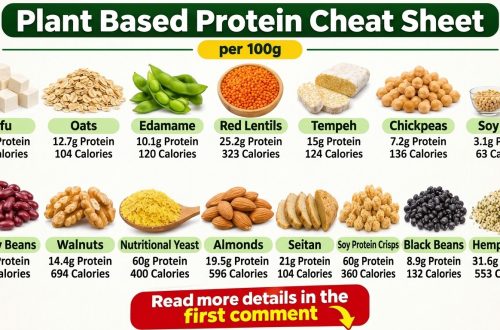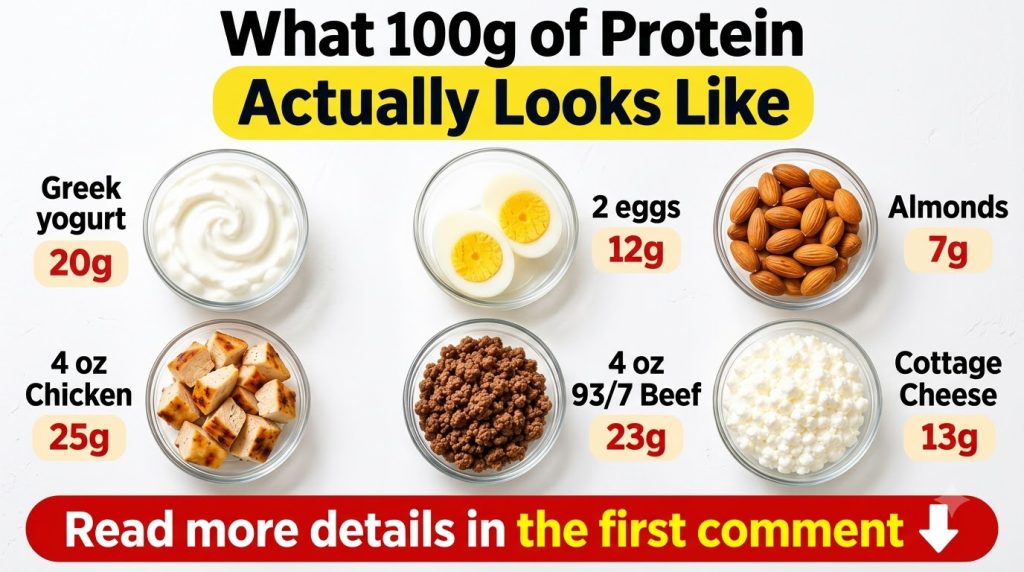
Protein helps build and repair muscles, keeps you feeling full between meals, and plays a role in many body functions. Yet many people are not sure how much food it actually takes to add up to a meaningful amount. Let’s look at how much of your favorite foods gets you close to 100 grams of protein.
Think of this guide as a starting point. It can help you plan meals with more confidence and spot easy ways to add protein to what you already eat.
Why Protein Matters for Everyday Eating
Protein is made of amino acids, which your body uses for muscle, skin, hair, and immune health. Spreading protein across meals and snacks is a simple habit that many nutrition experts recommend.
- Protein can make breakfast and lunch feel more satisfying.
- It pairs well with fiber-rich vegetables and whole grains.
- Including a protein source at every meal may help with steady energy.

How Much Food Adds Up to 100 Grams?
The amounts below are approximate. Exact values vary by brand, cooking method, and portion size, so use them as a general guide.
| Food | Typical Serving | Approx. Protein |
|---|---|---|
| Cooked chicken breast | 3 oz (85 g) | About 26 g |
| Cooked lean ground beef | 3 oz (85 g) | About 22 g |
| Plain nonfat Greek yogurt | 1 cup (245 g) | About 23 g |
| Low-fat cottage cheese | 1 cup (226 g) | About 28 g |
| Large egg | 1 egg | About 6 g |
| Almonds | 1 oz (about 23 nuts) | About 6 g |
| Cooked lentils | 1 cup | About 18 g |
| Cooked black beans | 1 cup | About 15 g |
Using these numbers, you can estimate roughly how much of each food gets you to 100 grams. For example, about four 3-ounce servings of cooked chicken breast come close to that goal. Greek yogurt, cottage cheese, and beans can also get you there, though they require larger portions.
Easy Ways to Mix and Match Protein Sources
Few people eat only one protein food all day. Mixing animal and plant sources gives you variety in flavor, texture, and nutrients.
- Start your morning with Greek yogurt topped with berries and nuts.
- Add hard-boiled eggs or cottage cheese to a midday salad.
- Build dinner around lean chicken, beef, or a bean-based chili.
- Choose almonds or a handful of edamame for a protein-rich snack.
Practical Tips for Reaching Your Protein Goals
- Plan one protein food for each meal to make the habit easier.
- Batch-cook chicken or lentils at the start of the week for quick lunches.
- Keep hard-boiled eggs and single-serve yogurt in the fridge for busy days.
- Pair protein with vegetables and whole grains for balanced plates.
- Track your intake for a few days to see where you already do well.
Common Mistakes to Avoid
Chasing protein numbers can lead to imbalanced eating if you are not careful. Watch out for these common pitfalls.
- Relying only on protein bars or shakes instead of whole foods.
- Choosing very fatty cuts of meat more often than you need to.
- Forgetting that plant foods like beans also provide protein and fiber.
- Eating large portions at one meal and very little at others.
Frequently Asked Questions
How much protein does an adult need each day?
Needs vary by age, body size, activity level, and health status. Many adults follow general guidelines based on body weight, so a personal plan from a healthcare professional or registered dietitian can be helpful.
Is plant protein as good as animal protein?
Both can be part of a healthy diet. Animal proteins contain all essential amino acids in good amounts, while many plant foods work well when you eat a variety of them across the day.
Are eggs still a good protein source?
Yes, eggs are an affordable, versatile option. Most healthy adults can enjoy them as part of a balanced eating pattern.
Does Greek yogurt have more protein than regular yogurt?
Usually, yes. Greek yogurt is strained, which concentrates its protein. Always check the label, since brands differ.
Can I get enough protein without eating meat?
Many people do. Combining beans, lentils, tofu, tempeh, nuts, seeds, dairy, and eggs can meet protein needs for most healthy adults when planned well.
Should I eat protein right after a workout?
A protein-containing snack or meal within a few hours of exercise can be a good choice. Total daily intake usually matters more than exact timing.
Conclusion
Reaching 100 grams of protein is easier than it sounds when you combine a few reliable foods across your meals. Start with one or two changes this week, and you will likely feel the difference. If you enjoyed this guide, explore more of our healthy eating content, such as high protein breakfast ideas, batch-cooking meal prep tips, and the best beans for everyday meals.
What is your go-to protein source? Share it in the comments below!
This content is for educational purposes only and should not be considered medical advice. Consult a qualified healthcare professional for personalized dietary recommendations.