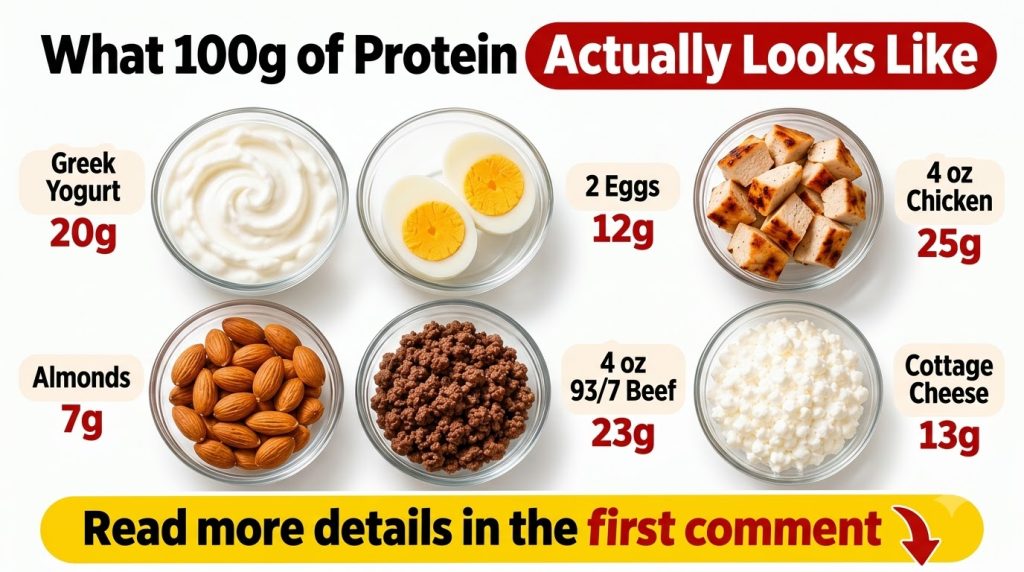
Wondering which foods pack the most protein? Seeing the numbers side by side can make it much easier to plan your meals. This visual guide compares everyday foods like Greek yogurt, eggs, chicken, and almonds, showing roughly how much of each you would need to reach about 100 grams of protein.
This article is for anyone who wants to eat more protein without guessing. It is especially helpful for busy home cooks, people building meals around fitness goals, and families looking for filling, healthy options.
Why Protein Portions Matter
Protein helps build and repair muscles, keeps you feeling full, and supports many everyday body functions. Many people eat plenty of protein without realizing how much they actually get from each food.
Measuring protein by the gram makes meal planning simpler. Once you know the rough numbers, you can swap foods based on taste, budget, and what you already have in the kitchen.
Protein Comparison Chart
The amounts below are approximate. Exact values vary by brand, fat content, and cooking method.
| Food | Approx. Amount for 100g Protein | Protein per 100g (Approx.) | Best Use |
|---|---|---|---|
| Chicken breast (cooked) | about 320g | 31g | Dinner bowls, salads, wraps |
| Ground beef (85% lean, cooked) | about 385g | 26g | Tacos, chili, skillet meals |
| Nonfat plain Greek yogurt | about 1,000g | 10g | Breakfast bowls, dips, sauces |
| Cottage cheese (low-fat) | about 830g | 12g | Snacks, toast, savory bowls |
| Almonds | about 475g | 21g | Snacks, oatmeal, topping |
| Eggs (about 15 large eggs) | about 770g | 13g | Breakfast, quick lunches |
What the Numbers Teach Us
Lean meats and poultry are some of the most protein-dense foods. You can reach your goal with a smaller portion.
Greek yogurt and cottage cheese are lighter in protein per gram, but they still add a lot to snacks and breakfasts. Almonds also provide protein along with healthy fats and fiber, though they are calorie-dense.
Practical Ways to Add More Protein
- Add a boiled egg or two to salads, grain bowls, or lunch boxes.
- Stir a spoonful of Greek yogurt into sauces instead of sour cream.
- Keep a small bag of almonds for an easy snack.
- Pair beans or lentils with rice for a plant-based protein boost.
- Use diced chicken in stir-fries, soups, and wraps to stretch your meals.
Who Should Pay Extra Attention to Protein
Older adults, active people, and anyone recovering from illness or injury may have higher protein needs. Growing kids and pregnant or breastfeeding women also benefit from steady protein intake. Your needs depend on your age, health, and activity level, so a healthcare professional can help you find the right target.
Tips for Using This Guide
- Spread protein across breakfast, lunch, and dinner rather than loading it all into one meal.
- Choose lower-fat options when you want more protein with fewer calories.
- Use the chart as a starting point, then check labels for exact numbers.
- Mix animal and plant proteins to add variety to your week.

Frequently Asked Questions
How much protein do most adults need each day?
Many health organizations suggest a general daily target for adults, but needs vary widely. Speak with a healthcare professional for guidance that fits your body and goals.
Is plant protein as good as animal protein?
Plant proteins like beans, lentils, and tofu can meet your needs when you eat a variety of them. Some plant foods are lower in certain amino acids, so mixing sources helps.
Why does the chart show such large amounts for some foods?
Foods like Greek yogurt and cottage cheese contain less protein per gram than chicken or lean beef. You need larger portions to reach the same total.
Can I get enough protein without eating meat?
Yes, many people do. Eggs, dairy, beans, lentils, nuts, seeds, and soy foods can all contribute to a balanced eating pattern.
Does cooking change the protein content?
Cooking removes water, so cooked meat has more protein per gram than raw meat. Frying with added oil also changes the total calories and fat.
Are protein powders necessary?
Most people can meet their needs with whole foods. Protein powder can be convenient, but it is not required for good nutrition.
Conclusion
Seeing protein portions side by side makes healthy choices easier. Lean meats, eggs, dairy, and nuts can all play a role in your meals. Start with one or two swaps this week and see what fits your routine. If you enjoyed this guide, explore our related articles on high protein breakfasts, healthy snacks, and easy meal prep ideas.
This content is for educational purposes only and should not be considered medical advice. Consult a qualified healthcare professional for personalized dietary recommendations.
What is your favorite protein source? Share your go-to food in the comments below!