Few things brighten a garden like a carpet of tulips, daffodils, or crocuses pushing up through the last cold patches of spring. The secret to those early blooms usually starts months earlier, in the fall, when you tuck the bulbs into the soil. Planting at the right depth and spacing is one of the simplest ways to get strong, healthy flowers year after year.
Why Planting Depth Matters
Bulbs store all the energy they need to flower inside their papery layers. When they are planted too shallow, they can dry out, freeze, or get dislodged by heavy rain and curious squirrels. When they are planted too deep, they may use up their stored energy before reaching the surface, resulting in few or no blooms. A good rule of thumb is to plant bulbs at a depth about two to three times their own height, measured from the base of the bulb to the soil surface.
Planting Depths for Popular Spring Bulbs
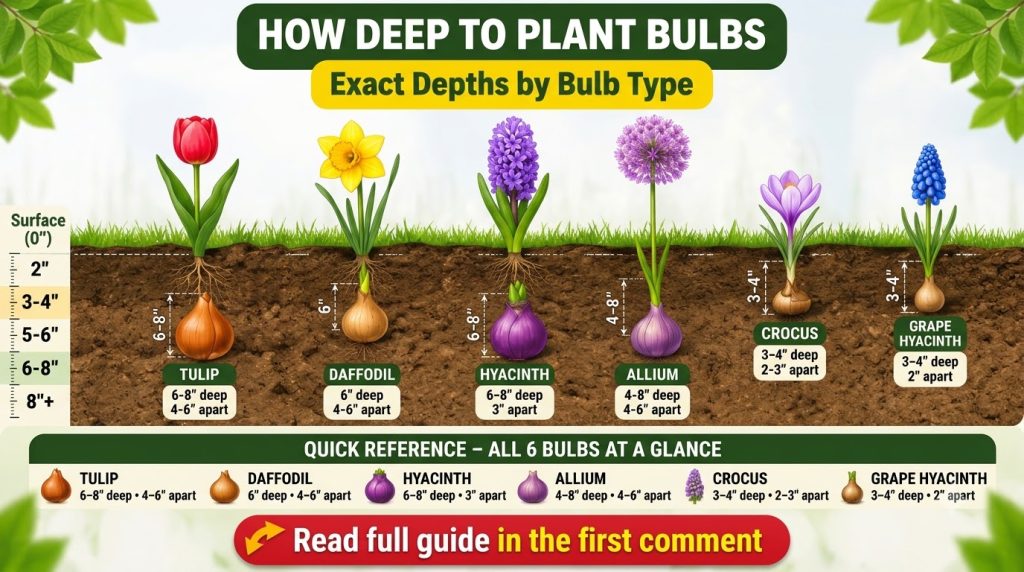
Every bulb has its own ideal depth. Here is a simple overview of six favorites that work well in home gardens across North America, the United Kingdom, and Australia:
- Tulips: Plant about 6 to 8 inches deep, with the pointed end facing up.
- Daffodils: Plant about 6 inches deep, roughly three times the bulb’s height.
- Hyacinths: Plant about 6 inches deep, with the pointed tip upward.
- Alliums: Plant about 4 to 6 inches deep, depending on bulb size.
- Crocuses: Plant about 3 to 4 inches deep for early color.
- Grape hyacinths: Plant about 3 inches deep and spread them in drifts for a natural look.
These are general guidelines. Check the packaging that came with your bulbs, since regional climate and soil type can slightly change the ideal depth.
How to Plant Bulbs Step by Step
- Choose the right time. Plant in fall, typically six to eight weeks before the ground freezes, so roots can establish.
- Prepare the soil. Loosen the soil to the planting depth and mix in compost. Good drainage helps prevent rot.
- Position the bulbs. Set each bulb pointed end up, spacing it about two to three bulb widths apart.
- Cover and water. Backfill the hole, firm the soil gently, and water thoroughly to settle the bulbs.
- Mulch lightly. A thin layer of shredded leaves or straw keeps the soil temperature steady through winter.
Common Mistakes to Avoid
Even experienced gardeners sometimes make small errors. Planting bulbs upside down, crowding them too closely, or planting in waterlogged soil are the most frequent problems. Squirrels and voles can also dig up unprotected bulbs, so consider lining the planting area with wire mesh or choosing bulbs they tend to avoid, such as alliums and daffodils.
Caring for Your Bulbs After Planting
Once the shoots emerge in spring, let the foliage die back naturally. The leaves are gathering energy for next year’s blooms, so resist the urge to cut them early. Feed the bulbs with a balanced, organic fertilizer after flowering, and divide crowded clumps every few years to keep the display vibrant.
Start Your Spring Garden Today
With the right depth, good soil, and a little patience, your bulb planting can reward you with color for years to come. Pick a sunny spot, gather a mix of early and late bloomers, and enjoy a garden that changes with every season.