Before you toss those potato peels into the bin, consider this: they can become a useful part of your garden routine. Potato peels are a simple kitchen scrap that many gardeners reuse in a few easy ways, from mulching to composting to making a mild, homemade liquid for watering. This guide explains the most common methods, what they can and cannot do, and how to use them safely.
Why Potato Peels Are Worth Reusing
Potato peels are plant material, so they break down over time and add organic matter to the soil. They are not a complete fertilizer and will not replace a balanced soil plan, but they are a practical way to reduce kitchen waste and give your garden a little extra organic material. Think of them as one small part of a healthy, sustainable gardening habit.
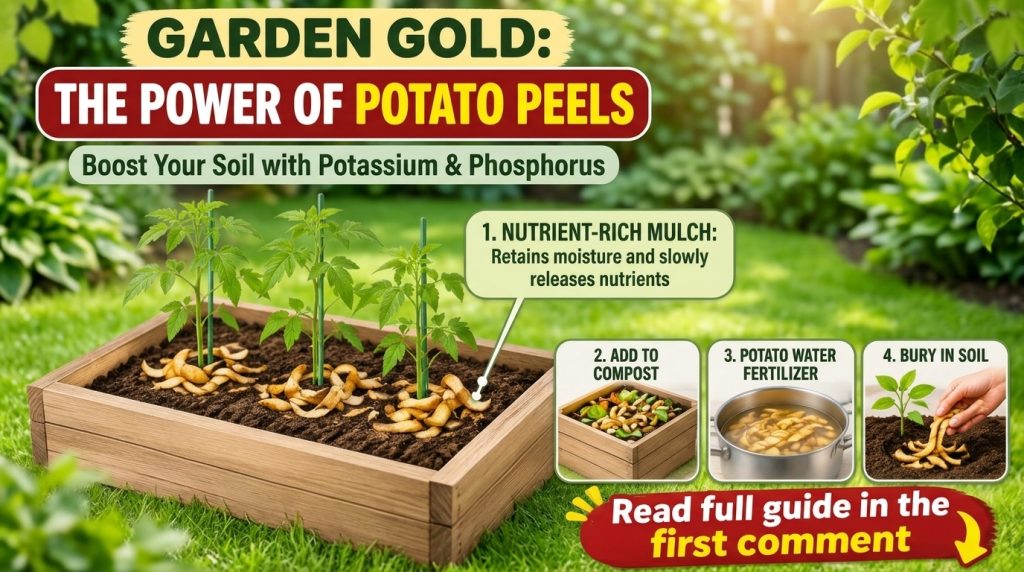
Method 1: Use Peels as Mulch
Mulch helps the soil hold moisture, keeps weeds down, and slowly adds organic matter as it decomposes. To use potato peels this way:
- Rinse the peels to remove dirt and excess starch.
- Let them dry fully, or chop them into smaller pieces so they break down more evenly.
- Spread a thin layer around the base of your plants, keeping it away from the stems.
- Check the area regularly for mold or pests, and remove any peels that are wet or smelly.
Keep the layer thin. A thick pile of wet peels can invite fungus gnats and rot, which works against the healthy growth you want.
Method 2: Add Peels to Your Compost
Composting is one of the most reliable ways to use kitchen scraps. Potato peels add carbon-rich and nutrient-containing material to the pile. For the best results, chop the peels into small pieces, mix them with dry leaves, straw, or shredded paper, and keep the pile moist but not soggy. Turning it every week or two helps it break down faster. Avoid adding peels from green-treated or spoiled potatoes, and do not compost any potatoes that show signs of disease.
Method 3: Make Potato Water for Watering
Many gardeners save the water used to boil or soak unpeeled potatoes. Once it has cooled to room temperature, it can be used to water houseplants or garden beds in place of some plain water. Its benefit is mild: it contains small amounts of dissolved nutrients and starch, so it is best viewed as a gentle supplement rather than a strong fertilizer.
- Use only plain, unsalted water from cooking or soaking.
- Let it cool completely before applying it to plants.
- Water the soil, not the leaves, and avoid overwatering.
- Do not use water that has been seasoned, oiled, or left standing for several days.
Method 4: Bury Peels Directly in the Soil
Another option is to bury chopped peels in a garden bed or planting hole before planting. As they break down, they add organic matter that can help soil structure over time. Dig a shallow trench or hole, place the chopped peels inside, and cover them with soil. Bury them away from the root zone of seedlings so the young roots are not disturbed.
Tips for Getting the Best Results
- Start small and observe how your plants and soil respond over a season.
- Use peels from clean, healthy potatoes only.
- Combine these methods with good soil care, such as adding compost and keeping the bed well drained.
- Rotate the locations where you bury or mulch peels to avoid buildup in one spot.
Final Thoughts
Potato peels are a simple, low-cost way to bring more sustainability into your gardening. Used as a light mulch, added to compost, turned into cooled potato water, or buried in the soil, they can support a healthier garden ecosystem over time. Results will vary depending on your soil, climate, and plants, so keep expectations realistic and pay attention to how your garden responds. Happy gardening!