Why Rodents Visit Gardens in the First Place
Mice and rats are drawn to gardens for simple reasons: shelter, moisture, and food. Fallen fruit, spilled birdseed, dense ground cover, and compost piles can all invite rodents to linger. Before you think about plants, it helps to walk your garden and remove the things that make it attractive to them. Keeping the area tidy is one of the most effective first steps you can take.
Plants Often Recommended for Rodent Deterrence
Many gardeners use strong-scented herbs and flowers as part of a natural approach to pest management. The plants below are commonly mentioned for their aromatic qualities, and some gardeners find that they help discourage rodents when planted thoughtfully.
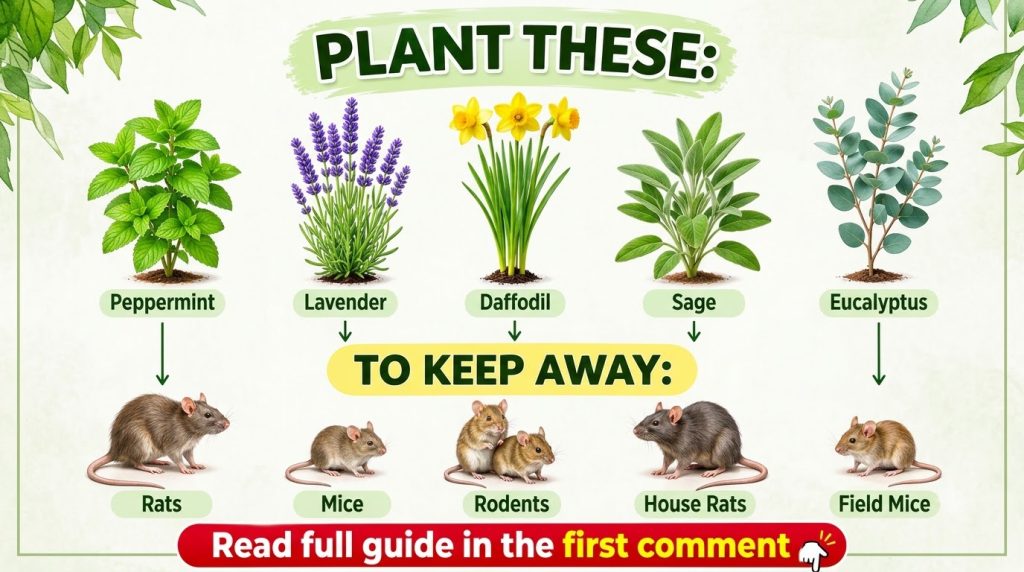
- Peppermint: A vigorous herb with a sharp scent. It spreads quickly, so it is often grown in containers.
- Lavender: Beautiful in borders and loved by pollinators, with a fragrance many people enjoy.
- Sage: A hardy culinary herb that tolerates dry conditions and adds greenery to the garden.
- Daffodil: A spring bulb that brightens early-season beds. Its bulbs and foliage are toxic if eaten, so plant with care.
- Eucalyptus: A fragrant tree or shrub that suits larger spaces and warm climates.
How to Use These Plants Wisely
Plants work best as one part of a broader plan. Try these practical ideas:
- Place aromatic herbs near entry points, sheds, or garden beds where rodents tend to travel.
- Grow herbs in pots near seating areas or along paths so you can enjoy their scent and easily harvest them.
- Mix flowers and herbs into borders instead of relying on a single plant type.
- Check your plants regularly and replace any that struggle, since healthy plants are more useful than weak ones.
Pair Plants With Simple Habits
Natural methods are most effective when combined with good garden habits. Pick up fallen fruit promptly, store birdseed in sealed containers, keep compost covered, and trim dense shrubs so they are not used as hiding places. Inspect your garden shed and outdoor storage for gaps, and seal any openings that rodents could use.
Safety and Realistic Expectations
Some plants on this list can be harmful to pets, children, and wildlife if eaten, including daffodil and eucalyptus. Research each plant before adding it to a family or pet-friendly space. It is also important to know that no plant offers a guaranteed solution. Results vary depending on your climate, the local rodent population, and how much food and shelter your garden provides.
Final Thoughts
Growing aromatic plants is a pleasant way to add beauty and fragrance to your garden while supporting a more natural approach to pest awareness. Combine thoughtful planting with tidy habits and regular monitoring, and you will give your garden the best chance to stay balanced. If you found this guide helpful, save it for your next planning session and share it with fellow gardeners.