Pests can turn a lovely garden into a frustrating one very quickly. Aphids cluster on new growth, ants march along the soil, and mosquitoes seem to appear right when you want to relax outside. The good news is that many common culinary and fragrant herbs can help make your garden less inviting to unwanted visitors, all without harsh chemicals.
Why Aromatic Herbs Work as Natural Pest Deterrents
Many herbs produce strong essential oils and scents that insects find unpleasant or confusing. When you plant them among vegetables, flowers, or around seating areas, their fragrance can help mask the scents that attract pests. This approach is a form of companion planting, and it fits well with organic gardening goals.
It is important to keep expectations realistic. Herbs can support a healthy garden ecosystem and reduce some pest pressure, but they are rarely a complete solution on their own. Combining them with good watering habits, healthy soil, regular inspection, and crop rotation gives the best results.
Five Herbs to Plant for Natural Pest Support
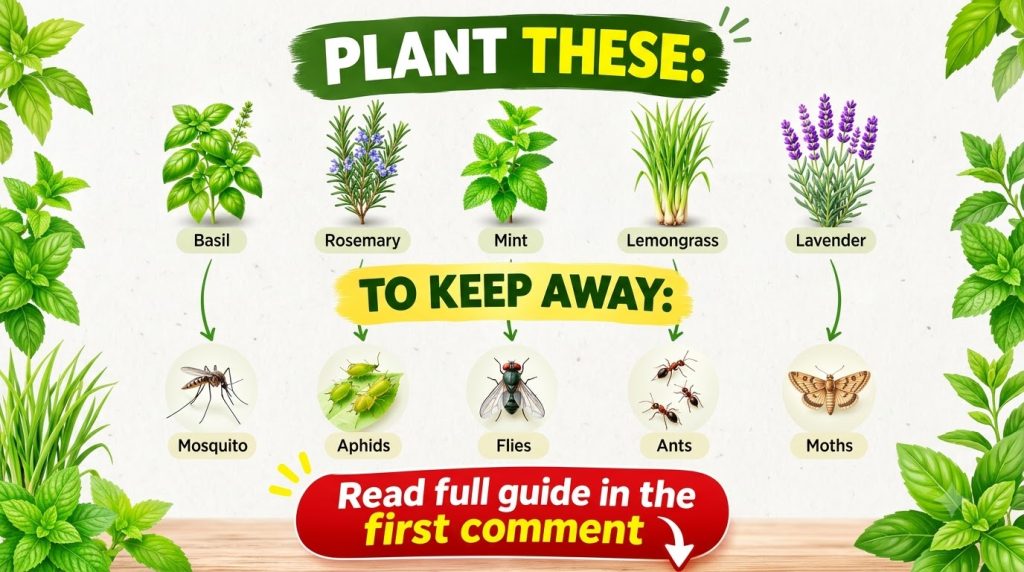
- Basil: Often planted near tomatoes and peppers, basil is popular for its sweet scent and is commonly used as a companion plant to help deter flies and mosquitoes.
- Rosemary: This woody, aromatic herb is valued in gardens for its strong fragrance, which many gardeners associate with keeping moths and other insects away from nearby plants.
- Mint: Mint spreads vigorously, so it is best grown in containers. Its strong aroma is often used to discourage ants and some flying insects.
- Lemongrass: With its citrusy scent, lemongrass is a striking addition to sunny beds and is often grown to help repel mosquitoes.
- Lavender: Lavender adds beautiful color and fragrance to the garden and is a favorite for pollinator-friendly planting while also helping to deter certain pests.
How to Use Herbs in Your Garden
Start small by placing herbs in spots where pests are most noticeable. Basil can be tucked between vegetable rows, rosemary and lavender work well along pathways or near patios, and mint and lemongrass look lovely in containers near doors and seating areas.
- Choose herbs that suit your climate and the amount of sunlight your garden receives.
- Plant aromatic herbs near the crops or areas you want to protect.
- Water consistently and avoid overcrowding so air can circulate.
- Check leaves regularly for early signs of aphids, ants, or other pests.
- Trim herbs regularly to keep plants healthy and encourage fresh growth.
Tips for a Healthier, Greener Garden
Natural pest management is most effective when it becomes part of your everyday routine. Healthy plants are naturally more resilient, so focus on rich soil, proper spacing, and balanced watering. Attract beneficial insects such as ladybugs and hoverflies by growing a variety of flowering plants, and avoid overusing any single treatment.
Herbs also bring practical benefits beyond pest support. Many can be harvested for cooking, teas, or homemade garden projects, so your efforts can give you fresh flavor as well as a more balanced garden.
Final Thoughts
Using aromatic herbs is a simple, friendly way to support a healthier garden without relying on harsh products. Start with one or two favorites, observe what works in your space, and expand your herb collection over time. Happy gardening!