Why Host Plants Matter for Butterflies
Butterflies are one of the most cheerful sights in any garden, but many gardeners don’t realize that adult butterflies and their caterpillars have very different needs. Adult butterflies feed mainly on nectar, while caterpillars need specific host plants to eat and grow. Without the right host plant, a butterfly may visit your garden but never lay its eggs there.
This is why a butterfly-friendly garden works best when it includes both nectar-rich flowers and the host plants that caterpillars depend on. Planting with both in mind turns a pretty flower bed into a complete habitat where butterflies can live through every stage of their life cycle.
Understanding the Butterfly Life Cycle
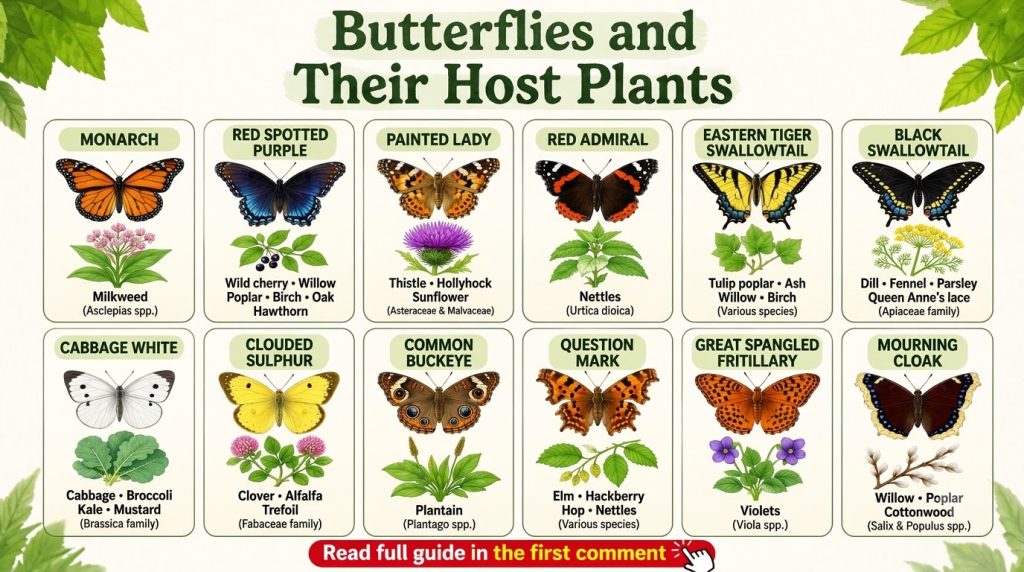
Every butterfly goes through four stages: egg, caterpillar, chrysalis, and adult. Female butterflies usually lay their eggs on a particular plant, and the caterpillars that hatch feed on that same plant. Many species are quite picky, so a monarch needs milkweed, while a swallowtail typically depends on plants in the parsley or carrot family.
Knowing this helps you choose plants with purpose. Instead of only asking which flowers look best, you can also ask which butterflies you want to welcome and what they need to survive.
Popular Host Plants to Consider
Many common garden plants double as host plants. Here are some well-known examples that gardeners often include:
- Milkweed: Essential for monarch caterpillars and a favorite of many pollinators.
- Parsley, dill, and fennel: Host plants for swallowtail caterpillars.
- Passionflower: A key host for several fritillary species.
- Nettles and hollyhocks: Support a variety of moth and butterfly larvae in many regions.
- Violets: Food for fritillary caterpillars and an easy addition to shady spots.
Host plant needs vary by region, so check which butterflies are native to your area before planting.
Tips for Building a Butterfly Garden
- Plan for every life stage: Combine host plants for caterpillars with nectar plants for adults.
- Choose native plants when possible: Local species are often the most reliable food sources for local butterflies.
- Plant in sunny, sheltered spots: Butterflies need sunlight to warm their wings and calm breezes to feed comfortably.
- Provide shallow water and flat stones: These give butterflies a safe place to drink and rest.
- Avoid pesticides: Chemical sprays can harm caterpillars and other beneficial insects, so rely on gentle, organic methods instead.
Creating a Partnership That Lasts
Growing host plants is a simple way to support butterflies and enjoy a richer, more natural garden. Start with a few plants that suit your climate, leave some corners a little wild, and watch the seasons unfold. With patience, your garden can become a welcoming home for butterflies year after year.