Learn which foods that supports improving health testosterone levels and which ones may work against them, explained with science and practical tips.
Testosterone is not just about muscle or libido. It supports energy, mood, bone density, red blood cell production, and sperm health. But it is also sensitive to lifestyle factors like sleep, stress, alcohol, and overall diet.
Why Diet Influences Testosterone
Testosterone production depends on:
- Enough calories and protein to avoid the “starvation signal”
- Healthy fats (cholesterol is a hormone precursor)
- Key micronutrients like vitamin D, zinc, and magnesium
- Lower chronic inflammation and better insulin sensitivity
Diet rarely “boosts testosterone overnight,” but it can support healthier hormone patterns over time, especially if you are deficient in nutrients or dealing with metabolic stress.
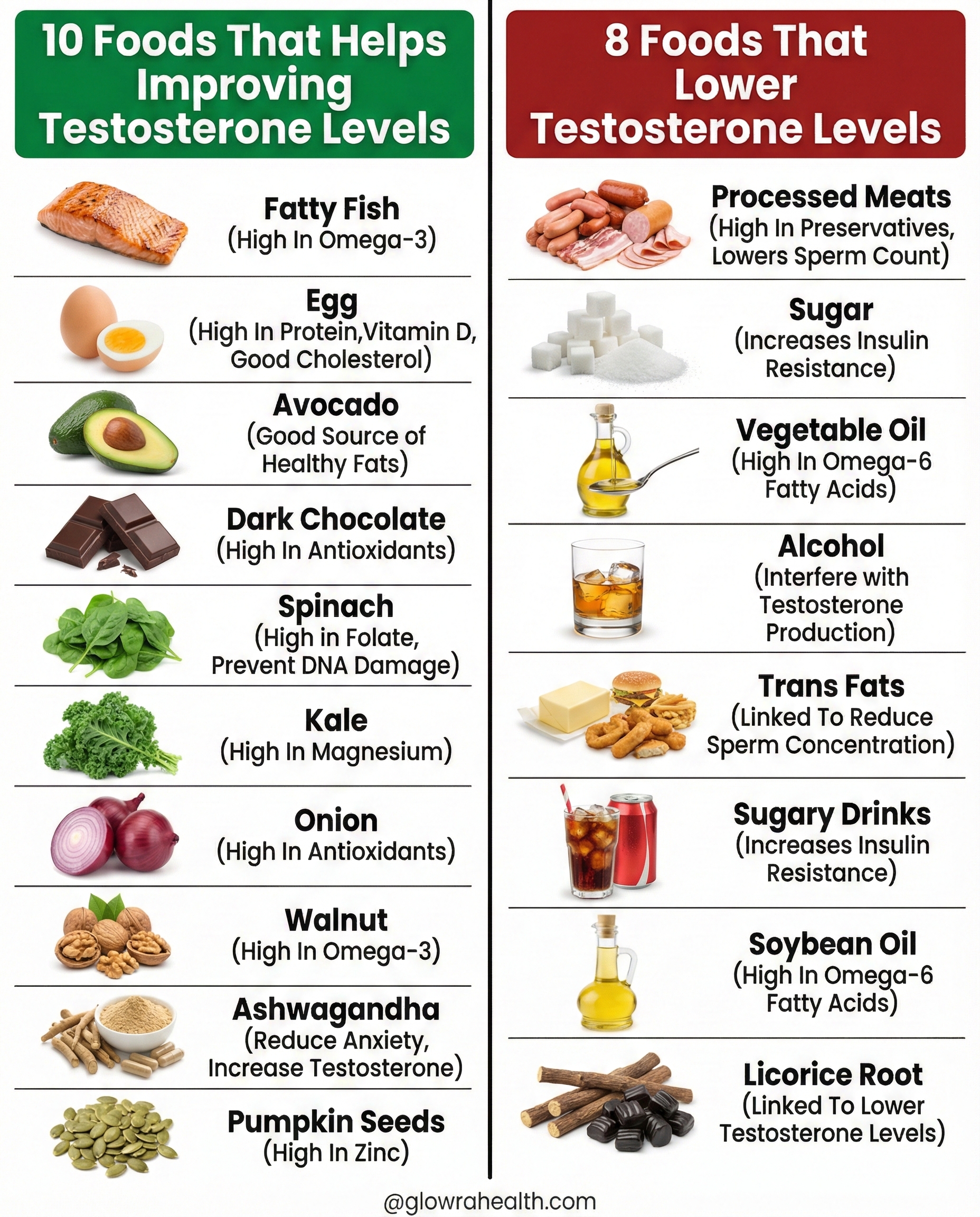
Foods That Helps Improving Testosterone Levels
1. Fatty Fish (High In Omega-3)
Omega-3 intake is associated with better metabolic health, and some research suggests fish oil or omega-3 status may relate to reproductive markers and possibly testosterone in certain contexts. Results are mixed across studies, so it is best viewed as supportive rather than a guaranteed booster.
How to use it: Aim for fatty fish a few times per week, and keep overall diet quality high.
2. Egg (High In Protein, Vitamin D, Good Cholesterol)
Eggs provide high-quality protein and fat-soluble nutrients. Vitamin D status is commonly linked to hormonal health, and eggs can help you reach protein targets that support muscle and recovery. Eggs do not “force” testosterone up, but they can support the nutrition environment that makes healthy levels more likely.
How to use it: Include eggs in breakfast or post-workout meals alongside fiber (vegetables or fruit).
3. Avocado (Good Source of Healthy Fats)
Avocados provide monounsaturated fats and fiber. A diet with adequate healthy fats supports hormonal balance, especially when it replaces ultra-processed fats or excess refined carbs.
How to use it: Add avocado to meals that are otherwise low-fat (salads, bowls, eggs).
4. Dark Chocolate (High In Antioxidants)
Dark chocolate contains polyphenols that may help oxidative stress. That matters because oxidative stress is tied to poor metabolic and reproductive health. The key is portion control because chocolate can come with added sugar.
How to use it: Choose higher cocoa percentage and keep servings small.
5. Spinach (High in Folate, Prevent DNA Damage)
Spinach is rich in folate and antioxidants. Folate supports cell division and general health. The “prevent DNA damage” claim is broadly true in the sense that antioxidant-rich diets support cellular protection, but it does not translate directly to testosterone in a simple, guaranteed way.
How to use it: Add spinach to soups, omelets, smoothies, and stir-fries.

6. Kale (High In Magnesium)
Magnesium is important for energy metabolism and muscle function. Low magnesium status can show up alongside poor sleep, stress, and lower performance, which indirectly affects testosterone patterns. Kale is not the only source, but it helps.
How to use it: Massage kale with olive oil and lemon for easier digestion, or sauté it.
7. Onion (High In Antioxidants)
Onions contain sulfur compounds and flavonoids like quercetin. Animal data exists on oxidative stress pathways, but human testosterone outcomes are not as clear. Still, onions support overall diet quality.
How to use it: Use daily in savory dishes to improve flavor without relying on sugar-heavy sauces.
8. Walnut (High In Omega-3)
Walnuts provide ALA omega-3, plus antioxidants. They are more strongly linked with heart and metabolic support than direct testosterone increases, but metabolic health matters for hormone balance.
How to use it: Add a small handful to breakfast bowls or salads.
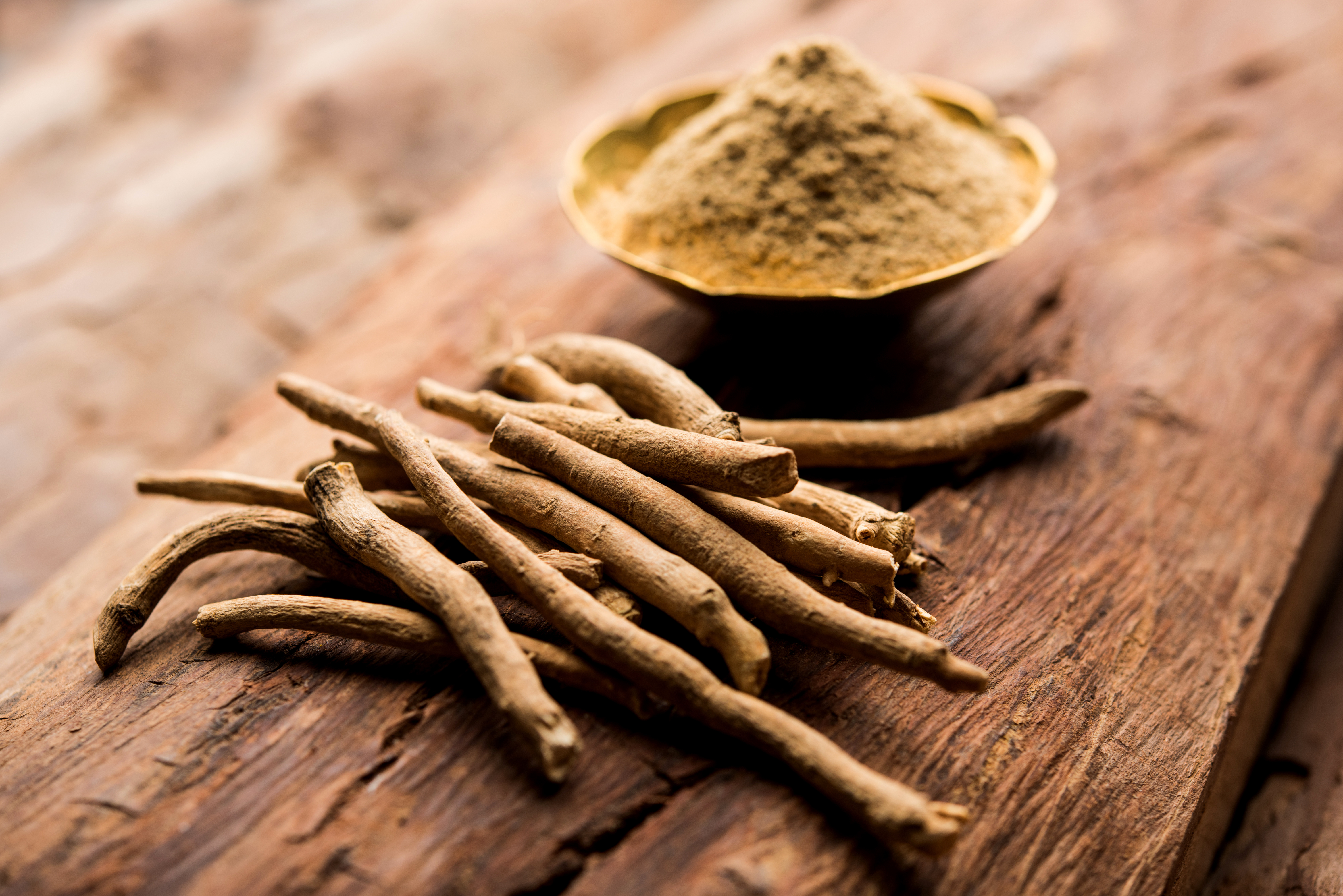
9. Ashwagandha (Reduce Anxiety, Increase Testosterone)
Ashwagandha has the strongest direct evidence among “natural” options. Several randomized controlled trials show improvements in stress markers and sometimes increases in testosterone, though results vary by population and product standardization. It is not magic, but it can be meaningful for stress-affected men.
How to use it: Consider standardized extracts and avoid stacking many supplements at once.
10. Pumpkin Seeds (High In Zinc)
Zinc is essential for testosterone production and sperm health, especially if intake is low. Pumpkin seeds are a practical food source. Just remember: more zinc is not always better.
How to use it: Sprinkle on salads or blend into sauces.
Foods That Lower Testosterone Levels
1. Processed Meats (High In Preservatives, Lowers Sperm Count)
Human research suggests processed meat intake is associated with poorer sperm parameters such as morphology in some studies. That does not prove processed meat “kills testosterone,” but it supports the idea that frequent intake can work against reproductive health overall.
What to do instead: Keep processed meats occasional, not daily.
2. Sugar (Increases Insulin Resistance)
High added sugar intake can worsen insulin resistance over time. Insulin resistance and poor metabolic health are commonly linked with lower testosterone patterns in many men. Evidence on sugar and testosterone varies by study design, but limiting sugar is still a smart foundation move.
What to do instead: Prioritize fiber-rich carbs and protein at meals.
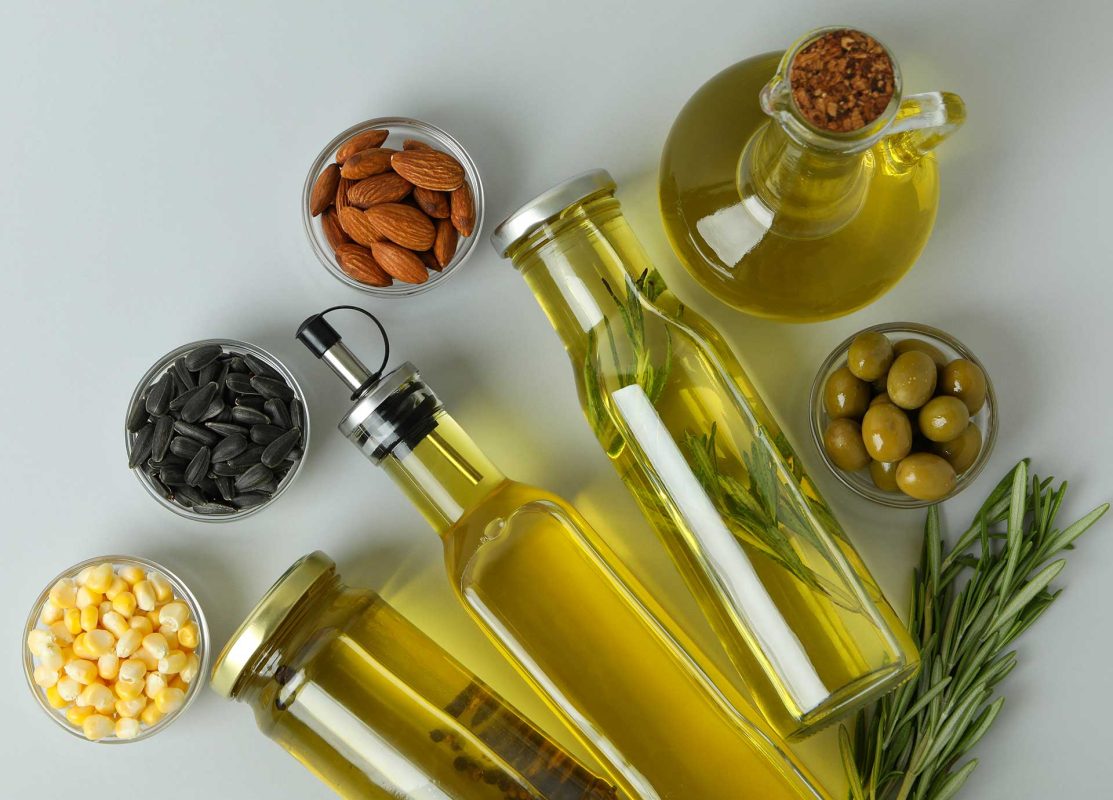
3. Vegetable Oil (High In Omega-6 Fatty Acids)
This one is often overstated online. Omega-6 fats are not automatically harmful. The bigger issue is that many “vegetable oils” show up in ultra-processed foods. Some studies suggest relationships between fatty acid profiles and hormones, but this is not a simple “omega-6 lowers testosterone” rule.
What to do instead: Focus on overall food quality and balance fats rather than demonizing one oil.
4. Alcohol (Interfere with Testosterone Production)
Heavy alcohol intake is consistently linked with worse reproductive health markers. Meta-analyses suggest alcohol can negatively affect sex hormone levels, including testosterone, especially with higher intake.
What to do instead: Keep alcohol moderate or take breaks if energy, libido, or sleep are suffering.
5. Trans Fats (Linked To Reduce Sperm Concentration)
There is evidence that trans fatty acids in sperm or higher trans fat intake is associated with poorer semen quality. This supports limiting industrial trans fats and ultra-processed fried foods.
What to do instead: Choose whole-food fats and check labels.
6. Sugary Drinks (Increases Insulin Resistance)
Sugary drinks are an easy way to overconsume sugar without fullness. Research has explored relationships between sugar-sweetened beverages and testosterone levels in certain populations, with mixed findings, but sugary drinks still strongly worsen metabolic markers in many people.
What to do instead: Sparkling water, unsweetened tea, or coffee.
7. Soybean Oil (High In Omega-6 Fatty Acids)
Like “vegetable oil,” soybean oil is not automatically a testosterone-lowering villain in small amounts. The concern is usually the dietary pattern it represents: high ultra-processed intake.
What to do instead: Reduce ultra-processed foods overall and rotate fat sources.
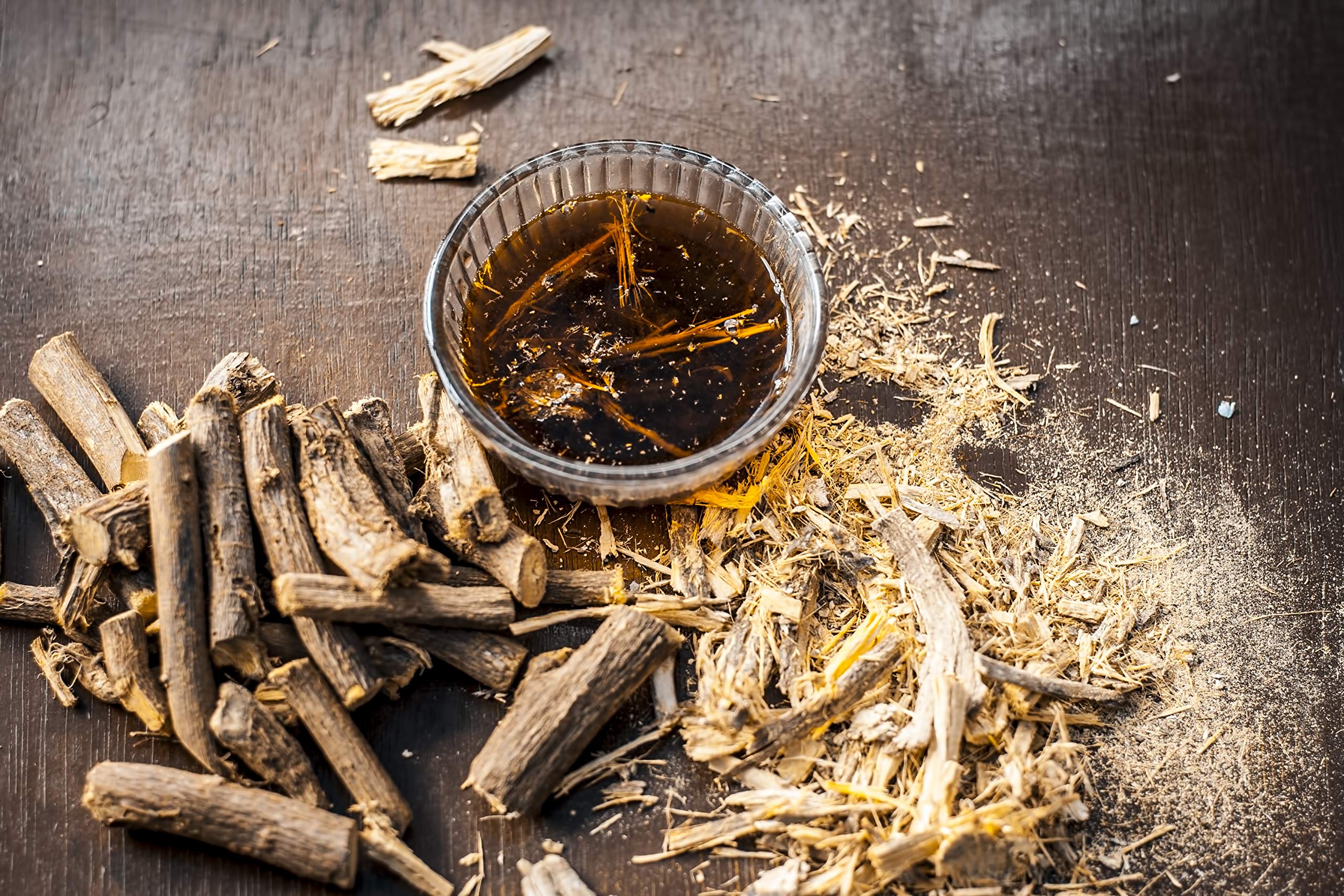
8. Licorice Root (Linked To Lower Testosterone Levels)
Licorice has evidence showing testosterone reductions in men in small studies, and reviews discuss this effect while also noting the clinical impact may vary with dose and duration. Licorice can also raise blood pressure in some people.
What to do instead: If you are actively trying to support testosterone, limit regular licorice root use.
How to Build a Testosterone-Supportive Day
Try a simple structure:
- A protein-rich breakfast (eggs or yogurt plus fruit)
- A lunch with leafy greens (spinach or kale) plus healthy fats (avocado or nuts)
- A dinner with fatty fish and vegetables
- Snacks that add minerals (pumpkin seeds, walnuts) instead of sugary drinks
When You’ll Notice Changes
Realistic timeline if you improve diet, sleep, and activity:
- 1–2 weeks: Better energy and appetite control, improved sleep quality
- 3–6 weeks: Better workout recovery and mood stability
- 8–12 weeks: More noticeable changes in body composition and libido for many men
Bloodwork-confirmed deficiencies (like vitamin D or zinc) may show improvements faster once corrected, but consistency still matters.
Safety Notes
- If you suspect low testosterone, the best first step is to confirm with proper testing and medical guidance.
- Supplements like ashwagandha can interact with conditions and medications. Use standardized products and avoid taking many “test boosters” at once.
- Licorice can affect blood pressure and electrolytes, especially with frequent use.
Final takeaway
The “best testosterone diet” is not about one magic food. It is about building a pattern that supports metabolism, inflammation control, sleep, and nutrient sufficiency.
Save this guide if you want to reference it later. Share it with someone who needs a smarter, calmer approach to men’s hormone health today.
A: Many men notice energy and recovery improvements in 3–6 weeks, with hormonal changes becoming more noticeable after 8–12 weeks.
Source links
https://link.springer.com/article/10.1186/s12958-018-0378-2
https://www.sciencedirect.com/science/article/abs/pii/S0952327820301629
https://www.thelancet.com/journals/lancet/article/PIIS0140-6736%2801%2906664-8/fulltext